

Hatfield Motor Group takes top honours at Audi Dealer Awards
Audi South Africa honoured the outstanding achievements of its national dealer network at the annual Audi Vorsprung Awards.
- Dealer News
- 28 April 2026
South Africa is experiencing its fastest shift yet towards electric mobility, driven not by environmental policy but by sheer economics.
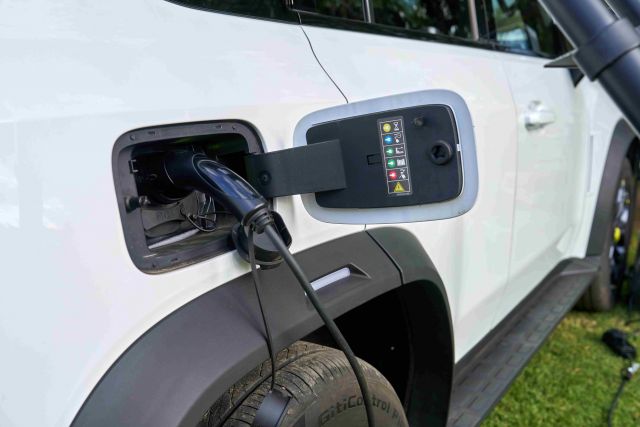
Rising fuel costs, falling electric vehicle (EV) prices and greater product availability have combined to reshape consumer behaviour in ways few anticipated. What was once seen as a lagging market is now catching up rapidly with global trends.
A market in motion:
For years, South Africa appeared to trail international markets in adopting new-energy vehicles (NEVs) like hybrids and electric vehicles (EVs). That perception is now outdated. According to AutoTrader, electric vehicle searches surged by 45% year on year between February and March, while listing shares nearly doubled between April 2024 and April 2026.
Engagement has risen by 200%, with EVs generating more leads per listing than any other fuel type, outperforming petrol and diesel by 74% and 92% respectively. As George Mienie, AutoTrader’s chief executive, observed, “South Africa is no longer just talking about electric vehicles. They are searching for them, buying them and pivoting at a rate we haven’t seen before.”
Economics over ecology:
The driving force behind this transition is cost. With diesel at R27.44 per litre and petrol consistently above R25, motorists are abandoning traditional engines. Interest in diesel vehicles has dropped sharply, while hybrids and EVs are gaining traction. The consumer mindset has shifted almost overnight, with affordability now outweighing environmental considerations.
Hybrids lead, EVs gain:
Despite the surge in EV interest, hybrids remain dominant, accounting for around 85% of NEV sales. They provide a practical solution to South Africa’s challenges of range anxiety, charging infrastructure and affordability. Models such as the Toyota Corolla Cross Hybrid continue to lead the market, while new entrants like Chery’s hybrids intensify competition with high specifications at lower prices. EV, however, are closing the gap.
EV sales increased by 55% between 2024 and 2025, supported by a broader range of models and improved availability. Median EV prices dropped by 16% between April 2024 and April 2026, falling from R943 000 to R790 500. Affordable models from Asian manufacturers, such as the BYD Dolphin, have quickly gained traction, becoming one of the country’s top ten best-selling EV in 2025.
Supply shifts, traditional segments decline:
Supply data reflects the same trend. EV listings have nearly doubled in two years, while hybrid listings have grown even faster. Together, they now account for more than 3.3% of all listings, double the share recorded two years ago. Meanwhile, petrol and diesel listings are in decline, with used diesel listings falling by 15.73% year on year in 2026. Although internal combustion engines still dominate, their position is eroding steadily.
Barriers to adoption:
Despite strong momentum, structural challenges remain. Import duties on EVs stand at 25%, compared to 18% for petrol and diesel, placing EVs at a disadvantage. Persistent load shedding has undermined confidence in home charging, while long-distance travel still requires a more robust charging network. Public charging stations are vulnerable to power disruptions unless supported by backup systems, adding to operational costs.
Moreover, there are no direct consumer incentives. While government policy supports local manufacturing through a 150% tax deduction, buyers receive no rebates or subsidies to offset upfront costs.
South Africa’s transition will not mirror Europe’s. It is likely to be slower, uneven and led by hybrids rather than full EVs. Yet the surge in consumer interest suggests the shift is already underway.
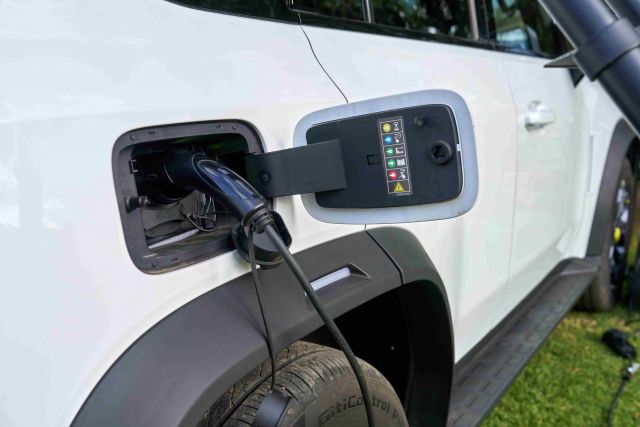
Audi South Africa honoured the outstanding achievements of its national dealer network at the annual Audi Vorsprung Awards.
CMS Systems is celebrating 25 years in business, marking a significant milestone for a company that has become a central player in automotive retail technology.
Oil prices jumped on Wednesday after Iran's seizure of container ships in the strait.
 Advertisement
 Advertisement
You can't buy happiness but you can buy cars and that's kind of the same thing.
Unknown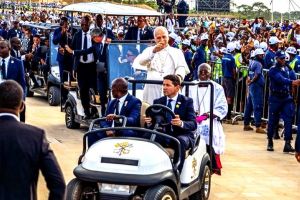
Supporting the Pope on Africa soil in or on vehicles assembled on the continent, is the story of OPAIA Motors.
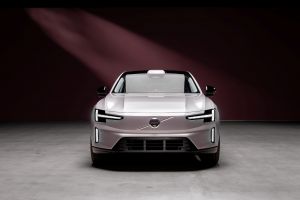
Europe’s shift to electric vehicles (EVs) gathered fresh momentum at the start of 2026, as soaring petrol prices prompted drivers to rethink the cost and security of running petrol and diesel vehicles.
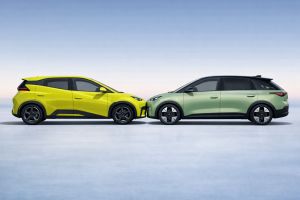
Two years ago, the cheapest mainstream electrical vehicles (EVs) in South Africa were mostly premium products priced well above R700 000.