
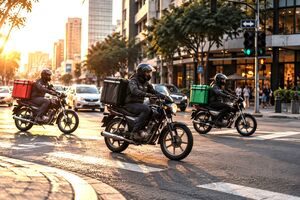
TVS powers South Africa’s growing delivery economy
South Africa’s rapidly expanding delivery sector is driving strong demand for affordable, dependable motorcycles that can withstand the demands of daily commercial use.
- Product News
- 20 November 2026
This past Friday (14 October), the National Union of Metalworkers of South Africa (NUMSA) signed an above-inflation wage agreement with the Automobile Manufacturers Employers Organisation (AMEO) that will see workers in the automotive industry receive an 8.5% increase.

AMEO represents motor manufacturers such as Mercedes Benz, BMW, Nissan, Toyota and Volkswagen, while NUMSA is the country’s biggest union with over 400 000 members.
According to the deal that was signed at the National Bargaining Forum, the workers will receive the 8.5% increase in the first year followed by a 7% increase in both the second and third year of the three-year deal, which will be valid until 30 June 2025.
In addition, each employee will also receive a taxable one-off gratuity payment of R10 000.
The union said that workers could expect back pay from July to September at the end of this month.
In August, NUMSA rejected AMEO’s offer of a 6.2% increase in year one, followed by an increase of 5.6% in year two and 4.7% in year three.
In the statement NUMSA released to announce the agreement, they said that it was “significant that we have maintained the standard for the sake of workers and their families, when other unions are encouraging members to sign agreements and settle with (sic) 3%”.

South Africa’s rapidly expanding delivery sector is driving strong demand for affordable, dependable motorcycles that can withstand the demands of daily commercial use.
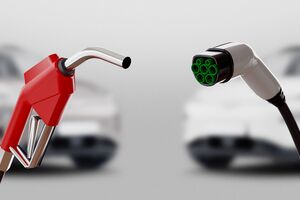
One of the main results of the 2026 Global EV Driver Survey, released by the Global EV Alliance (GEVA) this week, show that South African battery electric vehicle (EV) drivers are among the most satisfied in the world.
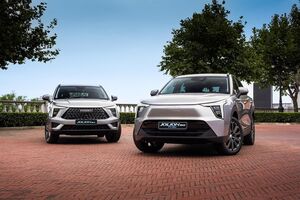
GWM South Africa has broadened its popular Jolion range with the introduction of the all-new Haval Jolion Max. Designed with modern families in mind, the newcomer combines increased interior space, new technology and a wider choice of powertrains, including petrol, hybrid and plug-in hybrid options.
 Advertisement
Have you ever noticed that anybody driving slower than you is an idiot, and anyone going faster than you is a maniac?
George Carlin
Isuzu Motors South Africa (IMSAf) has achieved a 38% reduction in Scope 1 and Scope 2 CO₂ emissions compared with its 2013 baseline while increasing vehicle production by 21% during the 2025/26 financial year at its Gqeberha manufacturing facility.

Diversifying oil supplies, investing in pipelines and rail infrastructure, improving port operations and expanding inland storage facilities are among the measures needed to reduce South Africa's vulnerability to international fuel supply disruptions.

Combined Motor Holdings (CMH) has appointed Charles Webber as the new Group CEO.