However, naamsa (the automotive business council) CEO, Mikel Mabasa, says the improvement in the new vehicle market is expected to continue at a slower pace in 2022 in line with the lower projected GDP growth rate for the country.
Mabasa stressed that a sustained higher domestic economic growth rate is essential to support higher domestic new vehicle sales volumes.
“However, with a GDP growth rate forecast of a moderate 1.8% in 2022, the new vehicle market is expected to continue its gradual recovery during the year, but at a slower pace.
“At this stage, a year-on-year improvement of around 8% in aggregate new vehicle sales volumes is projected for 2022,” he says.
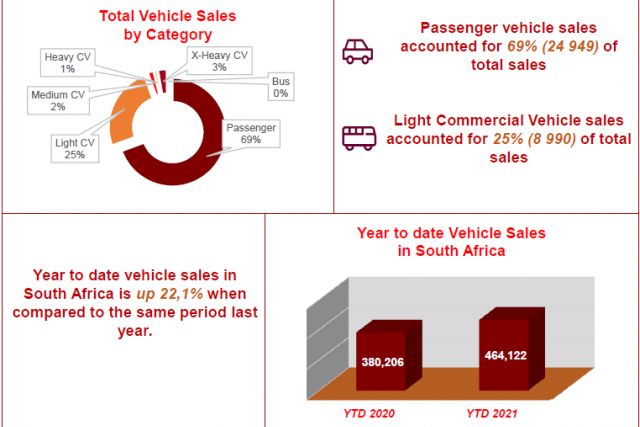
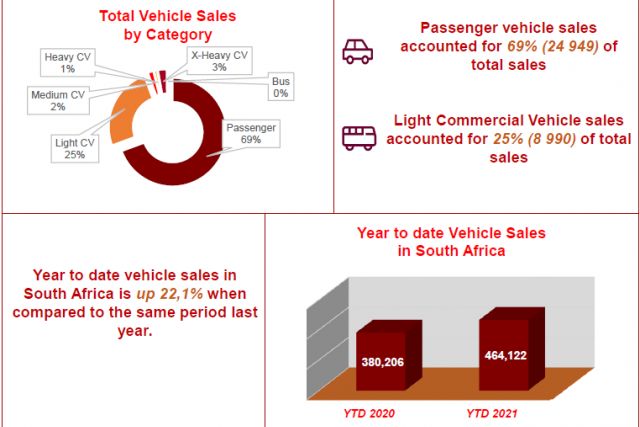
New vehicle sales slumped to 380 206 units in 2020 from the 536 612 units sold in 2019 and rebounded strongly in 2021 to register a 22.1% year-on-year increase to 464 122 units.
Mabasa says a close correlation exists between domestic new vehicle sales and the overall performance of the economy, and the new vehicle market’s performance was aligned with the country’s projected GDP growth rate of around 5% for 2021.
He says the performance by the industry in 2021 was very satisfying considering that it has had to deal with numerous challenges over the course of the year.
These ranged from global supply chain disruptions, insufficient model availability, persistent load-shedding, escalating logistics costs and several domestic shocks.
Mabasa says renewed activity in the vehicle rental industry, which is a major seasonal contributor to the new vehicle market, supported passenger car sales during the second half of 2021 as the country’s economy started to open up to overseas visitors.
He says overall market conditions in the new passenger car and light commercial vehicle market continued to be characterised by a buying down trend, with sales of pre-owned vehicles offering the most enticing option during the year.
Mabasa says sales of medium and heavy commercial vehicles also showed signs of resilience, and the sales performance mirrored the improved macro-economic climate in the country.
However, despite the strong year-on-year improvement in new vehicle sales in 2021, it was insufficient to return the market to pre-COVID-19 levels.
naamsa’s forecast of 8% year-on-year growth in new vehicle sales in 2022 also means the new vehicle market will still be below pre-COVID-19 sales for the year.
Mabasa says the domestic automotive industry is under no illusion that the pandemic will continue to have a significant impact on the economy and the automotive industry in 2022.
He says many COVID-19 disruptive elements are expected to remain in play in 2022, and prevailing market conditions will continue to be hampered by escalating cost increases and supply chain disruptions, such as the global semiconductor shortages impacting on the availability of certain models.
“Load-shedding will remain an area of great concern in 2022, limiting the economy’s ability to reach full capacity.
“Furthermore, the realities of rising interest rates and fuel prices are expected to impact vehicle affordability as household budgets remain under pressure, dimming the hopes of a further strong recovery in the economy any time soon,” he says.
Nedbank’s group economic unit says the new vehicle market remained quite resilient in 2021, weathering a multitude of challenges throughout the year.
“Overall, it was a year of recovery, which is expected to continue into 2022,” it says.
Nedbank says GDP growth of around 1.8% will support new vehicle sales but a much higher and sustained economic growth will be required to move sales to a higher plane altogether.
It also warned that the combined threat of the coronavirus, load shedding and unemployment remains the most significant downside risk to the rebound in sales.
“The obstacles presented by supply chain issues, high logistics costs and the semiconductor shortage are expected to persist, the extent of which depends on the highly uncertain trajectory of the virus across the globe,” it says.
To download a PDF infographic of the December vehicle sales, click here.