Zero Emissions Day: Off-grid EV charging the answer
Ahead of Zero Emissions Day on 21 September 2024, Zero Carbon Charge reaffirms its commitment to driving sustainable, zero-emission mobility in South Africa.
Share with friends
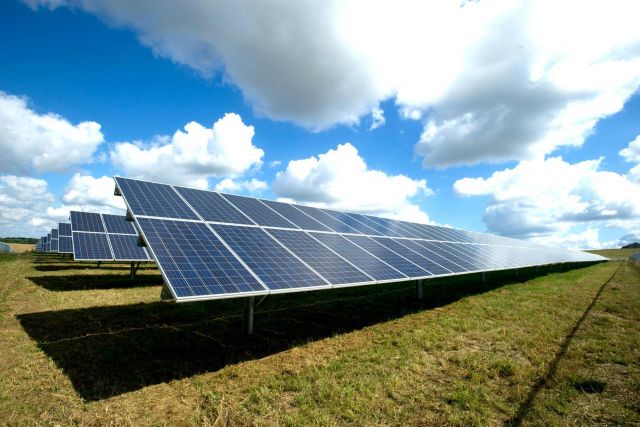
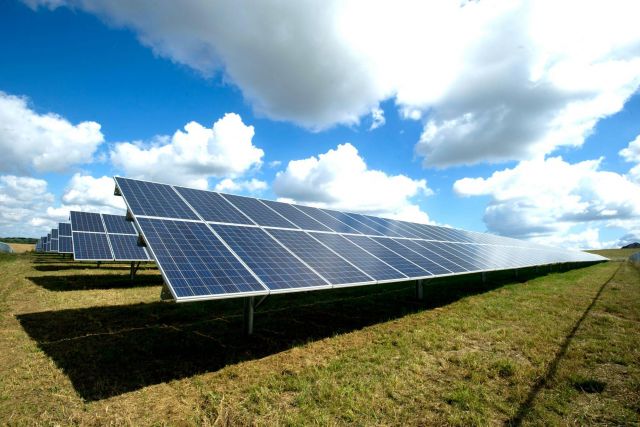
The nationwide development of 120 off-grid, solar-powered electric vehicle (EV) charging stations is poised to play a critical role in helping South Africa meet its CO2 reduction targets, as outlined by the Department of Forestry, Fisheries and the Environment (DFFE), the Paris Climate Agreement, and the Climate Change Act of South Africa.
In response to the increasing demand for electric mobility, Executive Chairman of Zero Carbon Charge, Joubert Roux, emphasises the urgent need for sustainable infrastructure: "As South Africa ramps up its EV adoption in line with global and national climate-change commitments, it is vital to acknowledge that our national grid is not equipped to sustain the level of electricity required to charge an entire fleet of EVs.
“If we rely solely on the grid, we risk exacerbating the CO2 emissions problem, as the grid is largely powered by coal. Simply shifting from petrol to grid-powered EVs won't solve the problem—it's just increasing and moving the emissions upstream."
Joubert Roux, Executive Chairman of Zero Carbon Charge.
Zero Carbon Charge’s off-grid EV-charging approach directly addresses South Africa’s dual challenges of achieving its CO2
reduction targets while navigating the limitations of its energy infrastructure. According to research conducted by Zero Carbon Charge, over one million tonnes of CO2e will be reduced from EVs charged on their charging network between 2026 and 2030.
Zero Carbon Charge is, at its core, a large-scale, national carbon emission reduction initiative - as it aims to mitigate the impact of climate change through renewable energy-driven charging stations, offering a totally green alternative to grid-tied chargers. Every EV charged at these stations will be entirely carbon-free, supporting the DFFE’s target of reducing seventy six and a half million (76,500,000) tonnes of CO2
by 2030.
For context, an average diesel car emits 8.6 tonnes of CO2 a year, while a petrol car emits 4.4 tonnes annually. In comparison, an EV charged from the South African grid indirectly emits 5.8 tonnes of CO2 a year, depending on the energy sources used for electricity generation. This emphasises why off-grid, renewably powered EV charging is the only viable option for carbon emission reduction. It will also be a vital part of meeting the Department of Transport’s target of net-zero emissions by 2050.
"We are calling on the government to recognise the importance of off-grid, renewable-powered charging infrastructure in the fight against climate change," concludes Joubert. "It’s time to take bold action to ensure that the transition to electric vehicles truly supports our net-zero goals. We cannot afford to fall short of our climate commitments. We owe it to our children to do this with speed."
As fuel prices continue to climb across South Africa, many motorists are beginning to question whether owning a car still makes financial sense. With in-land petrol prices now at R26.63 a litre and diesel costs rising sharply in May, transport expenses are placing growing pressure on household budgets.
Pinewood.AI has added two new embedded modules to its Business Intelligence Solution, giving dealers and OEMs greater insight into financial performance and the customer journey, it says.
House lawmakers in the United States (US) have proposed bipartisan legislation that would require electric vehicles (EVs) to pay a R2 227 ($130) fee annually for road repairs, and R578 ($35) for some plug-in hybrid models, according to Reuters.
BYD is exploring the possibility of taking over underused car plants in Europe as it looks to expand its manufacturing base and strengthen its foothold in the region’s electric vehicle (EV) market.