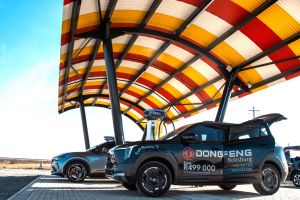
This partnership demonstrates that SANY, a top tier Chinese and global company, is eager to enter the South African market and support the development of six renewable energy charging stations designed specifically for electric trucks that use the N3 route between Johannesburg and Durban, which has over 8 576 trucks per day, making it one of the busiest truck routes in the country.
The MOU was signed at SANY’s Premium Customer Summit for Africa BU2024 in China, which showcased new innovations in the manufacturing of electric trucks and electric-charging technologies. Over the past few years, SANY has invested billions into research and development to develop cutting-edge heavy electric machinery as well as the charging infrastructure to power these products.
“We are thrilled to be partnering with global electromobility leader SANY for the development and long-term operation of the six solar powered truck charging sites that we will initially build along the N3 highway.
“The company’s technical expertise and superior design capabilities will ensure that these facilities offer ultra-fast seamlessly integrated green charging technology that will be able to charge trucks within 20 minutes with chargers, or battery swapping in under five minutes,” says Joubert Roux, co-founder of Zero Carbon Logistics.
These six charging stations will form part of the 120-truck charging network that Zero Carbon Logistics will be developing on major freight routes across South Africa over the next few years. The process to permit these six sites has started owing to the experience of permitting processes being long and arduous, and after the next 24 months, they will be operational.
In addition to collaborating on the technology for Zero Carbon Logistics’ N3 electric truck highway, the MOU also envisages both parties working together on the introduction and supply of overseas manufactured electric trucks and battery technology in South Africa.
“If government wants to realise its goal of achieving net-zero transport by 2050, it needs to introduce real incentives to encourage South Africans to choose electric vehicles or electric trucks over internal combustion models (ICE).
“This must include opening the market to cheaper imported models by implementing a six-year tax holiday on the import of EVs. This is the only way we will achieve real penetration of EVs in the country and this will also create a conducive environment for local EV and battery manufacturing,” he says.
However, it is important to be aware that a mass transition to electric trucks could potentially create a major strain on the country’s predominantly coal-fired national grid. If one views the N3 highway between Durban and Johannesburg alone, the electricity required to charge the 8 576 trucks using this route daily would add an additional 2.3 billion kWh/year in electricity demand to the grid. It is therefore critical that the country starts to invest in charging infrastructure to power these electric trucks.
Zero Carbon Charge’s own research shows that an electric truck charged by the Eskom network could emit 37.5% more CO2
emissions per kilometre compared to an equivalent diesel-powered truck. The development of a green charging network is also crucial to prevent the real risk of an increase in CO2 emissions created by a transition to electric trucks.
“Zero Carbon Logistics has already entered into agreements with landowners for 79 of the 120 off-grid electric truck charging sites that it plans to build on long-haul routes across the country. We have also started the permitting process for the first six sites on the N3 with the aim of building these charging stations by November 2027.
“However, in order to speed up the development of national EV-charging infrastructure, which will support the country’s EV transition and help promote renewable energy, the national government must create a regulatory framework that includes less stringent land use and environmental application processes to establish solar-powered charging stations,” Joubert adds.
- Important note for media members: Zero Carbon Charge is the holding company that is developing the network of 120 charging stations for electric passenger vehicles & light commercial trucks of up to eight tons. Zero Carbon Logistics is the holding company for the electric truck route development, separate from Zero Carbon Charge.