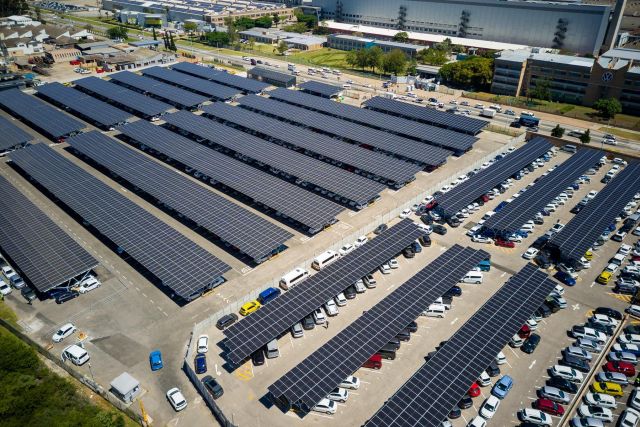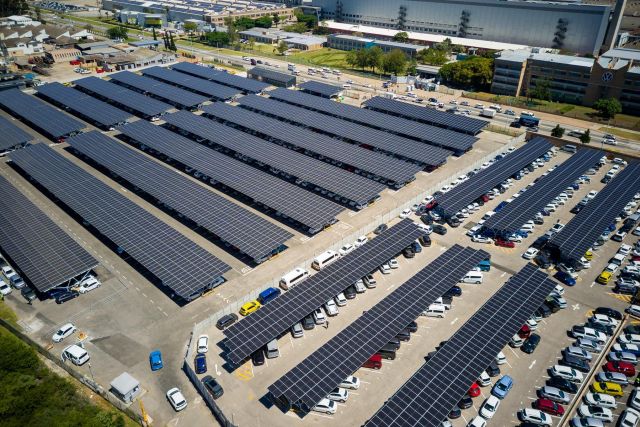
The multi-phase solar project located at the VWGA employee car park began in 2022, as part of VWGA’s long-term plan to transition its operations toward renewable energy sources.
The first phase of 3.1MWp, completed in 2024 and comprising 5 712 panels, laid the foundation for the current expansion and demonstrated Plant Kariega’s potential to effectively integrate solar energy into its production network.
The second phase has added 2.1MWp to the existing renewable infrastructure at the plant. The newly installed 3 582 solar panels (each 585W) are projected to generate approximately 2 699MWh of clean energy.
The R35 million capital investment in phase two, adding up to a total investment of R90 million, underscores VWGA’s ongoing efforts to align its operations with its goal of carbon neutral production.
With both phases now complete, the total solar power capacity of the project stands at 5.2MWp, capable of producing 7 125MWh annually.
“The completion of the second phase of our solar project marks another major milestone in our journey towards fully sustainable manufacturing,” says Ulrich Schwabe, Production Director at Volkswagen Group Africa. “This shows our commitment to using cleaner energy and making our operations even more environmentally responsible,” Ulrich adds.