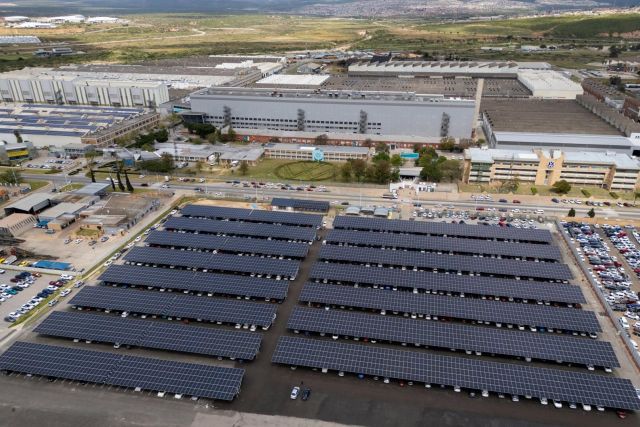
Volkswagen Group Africa has added an additional 3 megawatt (MW) solar power to its grid, bringing the total output of renewable energy to 5.9MW. This is enough energy to power at least 2 000 two-bedroom houses fitted with geysers and electrical appliances.
Share with friends
The total number of solar photovoltaic (PV) panels across the company now stands at 12 097 of which 5 710 panels were recently installed in the employee car park. The first phase started two years ago with 3 030 panels on the Engine Plant roof and 3 136 panels on the Final Assembly building roof. More PV panels will be installed during the next phase.
Volkswagen Group Africa has invested close to R100 million in solar energy to date. The renewable energy share at the company has increased from 1.5% in 2018 to 17.1% in 2023, which reduces the reliance on electricity supplied by the municipality. The combined solar energy capacity can save approximately 7 500 tonnes of carbon dioxide (CO₂) emissions per year.
Ulrich Schwabe, Volkswagen Group Africa’s Production Director, says that the reduction in dependence on fossil fuels, which is projected to reach 23% by 2025, highlights Plant Kariega’s goal to be a Zero Impact Factory by 2030.
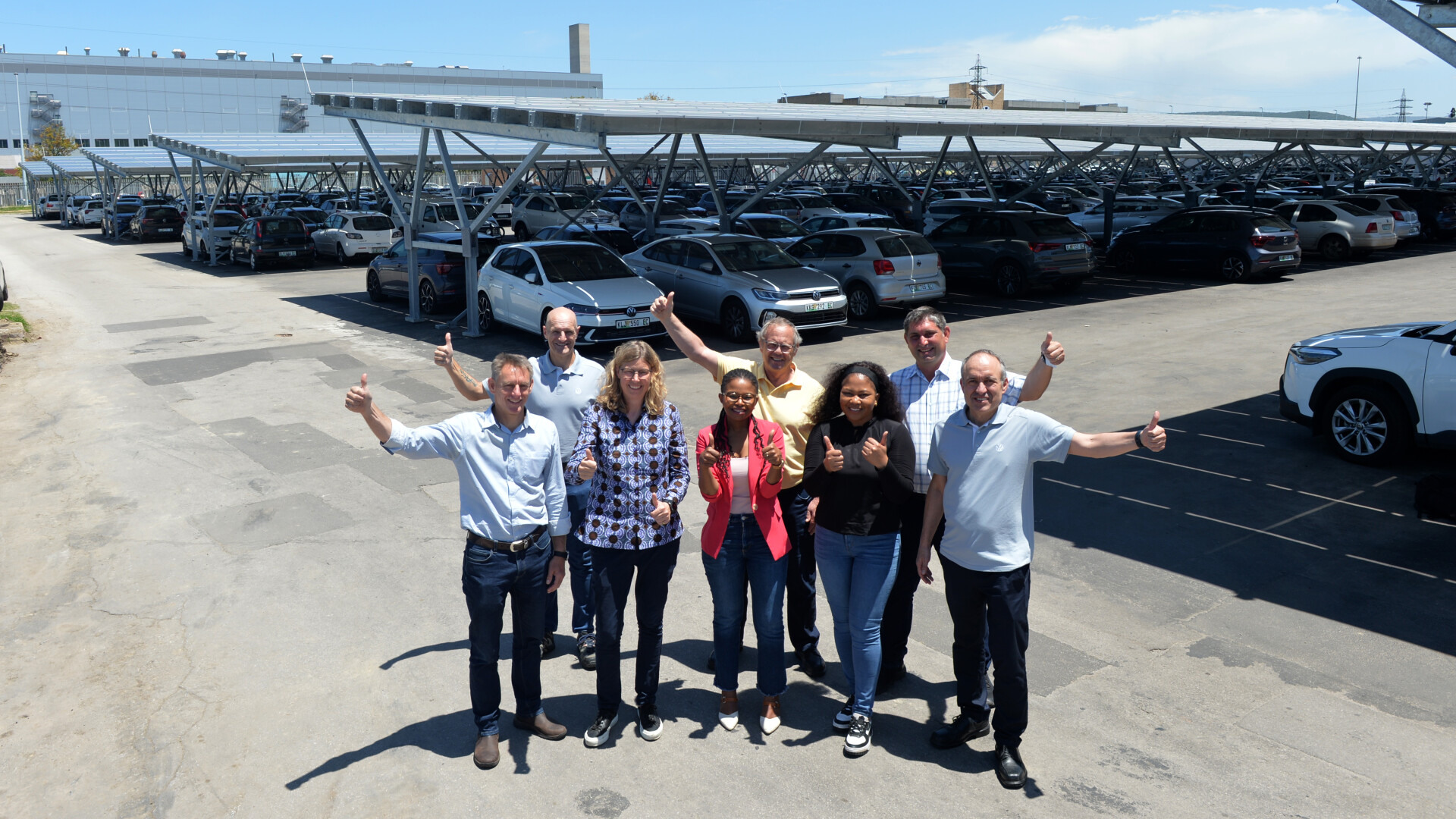
Seen here are Mike Petrie, Nick Chapman, Martina Biene, Ntsapokazi Ningiza, Graham Partington, Reabetsoe Kgoedi, Deon Nel and Ulrich Schwabe.
“Our efforts to reduce carbon emissions are in line with Volkswagen Group’s global Go To Zero Environmental Strategy, aimed at achieving carbon-neutrality, which is aligned with the Paris Agreement. As a result, all Volkswagen Group plants are highly focused on decarbonisation, with renewable energy playing a key role in this effort,” Ulrich says.
He added that between 2010 and 2023, the electricity usage per vehicle manufactured has decreased by 54%. These reductions were achieved through various initiatives such as an effective Demand Side Management plan. “We are constantly monitoring processes and influencing mindsets towards energy consumption, such as air conditioner usage,” he adds.
Energy usage reduction is one of several environmental indicators that paves Volkswagen’s way to zero impact. Since 2010, Plant Kariega’s environmental impact has improved by 57.7%, which includes reduction in energy consumption, water, waste, solvent and carbon emissions.
As fuel prices continue to climb across South Africa, many motorists are beginning to question whether owning a car still makes financial sense. With in-land petrol prices now at R26.63 a litre and diesel costs rising sharply in May, transport expenses are placing growing pressure on household budgets.
Pinewood.AI has added two new embedded modules to its Business Intelligence Solution, giving dealers and OEMs greater insight into financial performance and the customer journey, it says.
House lawmakers in the United States (US) have proposed bipartisan legislation that would require electric vehicles (EVs) to pay a R2 227 ($130) fee annually for road repairs, and R578 ($35) for some plug-in hybrid models, according to Reuters.
BYD is exploring the possibility of taking over underused car plants in Europe as it looks to expand its manufacturing base and strengthen its foothold in the region’s electric vehicle (EV) market.