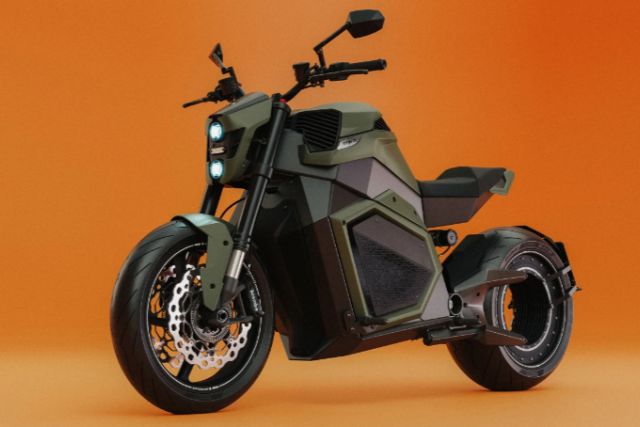
Verge Motorcycles, the Finnish company that will begin selling its electric superbikes in the US market at the end of this year, joins the ranks of well-known car giants, General Motors and Ford, in announcing its intention to utilise Tesla’s NACS charging network.
Share with friends
Electric superbike pioneer, Verge Motorcycles, has taken a stand on the recently much talked about electric plug-in war and announced at the end of June that it would be the first in the industry to adopt Tesla’s NACS charging connector.
“We have been following the discussion with interest about the future of the charging infrastructure and Tesla’s decision to open up its NACS charging standard. Providing our customers with a comprehensive and easy, fast charging system is vital in terms of Verge’s growth. We are currently preparing to enter the US market, and as the Tesla of motorcycles, this decision seemed like a natural solution for us,” says Marko Lehtimäki, Chief Technology Officer at Verge.
“Total customer service is everything for Verge. We want Verge owners to have access to the most extensive fast charging system in North America, which is why we plan to utilise Tesla’s network of 17 000 charging stations,” says Pekka Parnanen, Chief Operating Officer of Verge’s US operations.
Tesla’s decision to remove all the patents for its NACS charging standard has received a lot of international attention recently, after several major players in the industry, including General Motors, Ford and most recently electric car manufacturer, Rivian, announced that they would adopt the charging system developed by Tesla.
Following the move to open up the NACS charging standard, competing operators can also add charging devices equipped with NACS connectors to their networks. Until now, the patent-protected system could only be used to charge Tesla’s own vehicles.
As fuel prices continue to climb across South Africa, many motorists are beginning to question whether owning a car still makes financial sense. With in-land petrol prices now at R26.63 a litre and diesel costs rising sharply in May, transport expenses are placing growing pressure on household budgets.
Pinewood.AI has added two new embedded modules to its Business Intelligence Solution, giving dealers and OEMs greater insight into financial performance and the customer journey, it says.
House lawmakers in the United States (US) have proposed bipartisan legislation that would require electric vehicles (EVs) to pay a R2 227 ($130) fee annually for road repairs, and R578 ($35) for some plug-in hybrid models, according to Reuters.
BYD is exploring the possibility of taking over underused car plants in Europe as it looks to expand its manufacturing base and strengthen its foothold in the region’s electric vehicle (EV) market.