

Hatfield Motor Group takes top honours at Audi Dealer Awards
Audi South Africa honoured the outstanding achievements of its national dealer network at the annual Audi Vorsprung Awards.
- Dealer News
- 28 April 2026
In line with its parent company’s recent strategic realignment to new-energy vehicles (NEV), Toyota South Africa recently laid its NRV cards for SA on the table.
Although the company maintains that internal combustion engines (ICE) still have a role to play, it said it will be shifting a large part of its focus to traditional hybrid vehicles (HEV), plug-in hybrid vehicles (PHEV) and other engine conversions over the next few years, as far as the SA market is concerned.
The biggest news is that Toyota will be launching a new, mildly hybrid Hilux and Fortuner in early 2024 consisting of the standard ICE combined with an integrated starter generator and 12V-48V battery.
The company will also be introducing the Toyota Crown to South Africa this year. This crossover Crown variant is powered by a 2.5-litre, parallel-hybrid drivetrain with an output in the neighbourhood of 170kW and a fuel consumption of under 5.0L/100km.
Another NEV addition to the local market from Toyota will be a hybrid version of the new Urban Cruiser.
It is also rumoured that the plug-in hybrid RAV4, Lexus NX and RX are on their way.
Toyota has said that owing to the current scarcity of electricity on the African continent, that BEVs won’t be a practical solution yet for local consumers.
Audi South Africa honoured the outstanding achievements of its national dealer network at the annual Audi Vorsprung Awards.
South Africa is experiencing its fastest shift yet towards electric mobility, driven not by environmental policy but by sheer economics.
CMS Systems is celebrating 25 years in business, marking a significant milestone for a company that has become a central player in automotive retail technology.
 Advertisement
 Advertisement
Have you ever noticed that anybody driving slower than you is an idiot, and anyone going faster than you is a maniac?
George Carlin
South Africa is experiencing its fastest shift yet towards electric mobility, driven not by environmental policy but by sheer economics.
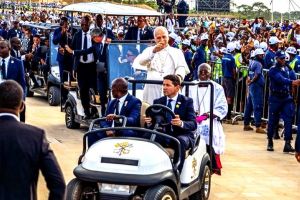
Supporting the Pope on Africa soil in or on vehicles assembled on the continent, is the story of OPAIA Motors.
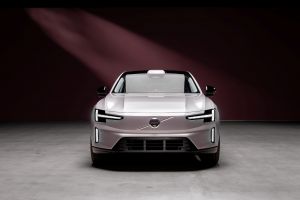
Europe’s shift to electric vehicles (EVs) gathered fresh momentum at the start of 2026, as soaring petrol prices prompted drivers to rethink the cost and security of running petrol and diesel vehicles.