The company argues that hydrogen has an important role to play alongside battery-electric power, especially in applications where trucks need long range, rapid refuelling and the ability to carry heavy loads without compromising productivity. For fleet operators running intensive schedules over long distances, Toyota believes fuel cell electric vehicles could provide a strong alternative to diesel.
A key part of this strategy is Toyota’s third-generation fuel cell system, developed for demanding commercial use. The latest unit is claimed to offer twice the power and twice the durability of the previous generation, while also delivering a 20% improvement in fuel efficiency. Toyota says these advances, combined with lower system costs, will help make hydrogen trucks more attractive to transport companies seeking familiar operating capability with no tailpipe emissions.
The technology will soon move into wider real-world testing. Scania plans to equip 40 heavy-duty trucks with Toyota’s 300kW fuel cell system through its Pilot Partner programme, with the first vehicles expected to enter operation in early 2027. The trial will generate practical data on performance, efficiency and running costs.
Toyota is also working with IVECO under the EMPOWER project, which is backed by the European Union’s Horizon Europe programme. In this collaboration, Toyota will provide the fuel cell system while IVECO develops and validates the vehicle. The IVECO S-eWay Fuel Cell is being designed to travel more than 900 km and deliver over 25 000 hours of durability. Testing is scheduled to begin late in 2026, with public road trials planned for the first half of 2027.
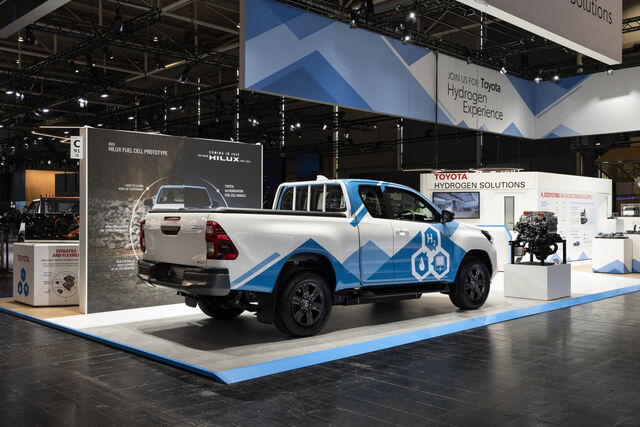
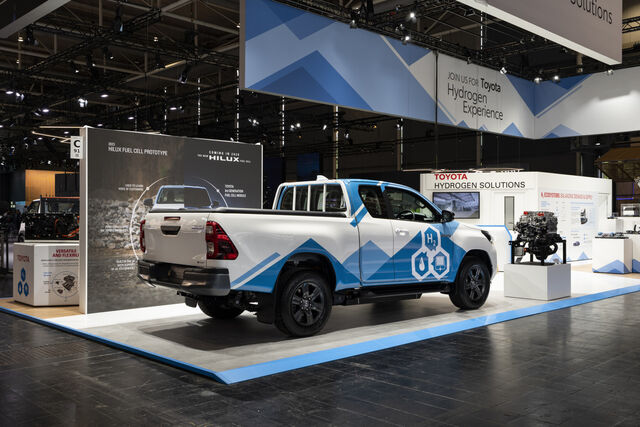
Hydrogen development is not limited to road freight. Toyota GAZOO Racing intends to enter a fuel cell Hilux in the Dakar Rally’s Future Mission 1000 category in 2027, using the event to test the technology in extreme conditions. A production-focused Hilux Fuel Cell is expected in 2028, targeting more than 400 km of range and towing capacity of up to 2.5 tonnes.
Toyota says the success of hydrogen mobility will depend on more than vehicles alone. Reliable hydrogen supply, refuelling infrastructure, customer demand and supportive policy must develop together. Pilot ecosystems in Germany and the Netherlands are being used as early models for wider regional growth.
The company’s latest activity follows its move to become an equal partner in cell centric with Volvo Group, Daimler Truck AG and cell centric, subject to regulatory approval, strengthening its position in fuel cell development for commercial vehicles.