

Hatfield Motor Group takes top honours at Audi Dealer Awards
Audi South Africa honoured the outstanding achievements of its national dealer network at the annual Audi Vorsprung Awards.
- Dealer News
- 28 April 2026
Spain will channel an impressive R27.6 billion into its electric vehicle (EV) sector next year, as part of a bold initiative to ensure that 95% of vehicles produced in the country are electric by 2035, Prime Minister Pedro Sánchez confirmed recently.

Current figures highlight the scale of the challenge: during the first ten months of 2025, only 10% of vehicles manufactured in Spain were fully electric or plug-in hybrids, while self-charging hybrids accounted for 26.7%. By comparison, across the European Union, around 20% of vehicles sold last year fell into the fully electric or plug-in hybrid category.
The Spanish government’s plan includes R8.5 billion in direct subsidies for consumers purchasing EVs in 2026, alongside R12.3 billion through an EU-backed programme to stimulate industrial investment. A further R6.4 billion will be allocated to expanding charging infrastructure along roads that remain underserved.
This decisive move comes as Chinese EV giants such as BYD gain ground in Europe, undercutting local manufacturers and exploiting Spain’s lack of a dominant domestic car brand. Sánchez stressed that the strategy is designed to protect jobs during the transition to EV production and to maintain Spain’s status as Europe’s second-largest car producer.
Foreign investment is already reshaping Spain’s battery industry, with projects like Chinese firm CATL’s R85 billion plant in partnership with Stellantis creating thousands of jobs. However, Sánchez cautioned that without robust domestic support, Spain risks losing technological expertise and market share.
Under the roadmap, Spain aims for 100% electrified vehicle sales by 2035, signalling a transformative shift towards sustainable transport.

Audi South Africa honoured the outstanding achievements of its national dealer network at the annual Audi Vorsprung Awards.
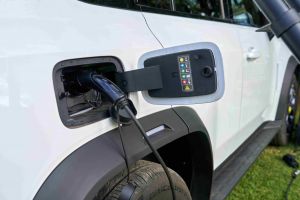
South Africa is experiencing its fastest shift yet towards electric mobility, driven not by environmental policy but by sheer economics.
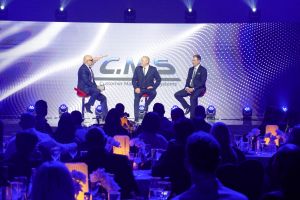
CMS Systems is celebrating 25 years in business, marking a significant milestone for a company that has become a central player in automotive retail technology.
 Advertisement
 Advertisement
Have you ever noticed that anybody driving slower than you is an idiot, and anyone going faster than you is a maniac?
George Carlin
South Africa is experiencing its fastest shift yet towards electric mobility, driven not by environmental policy but by sheer economics.
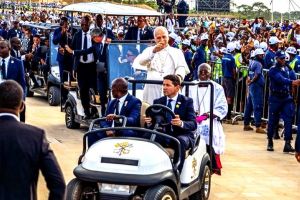
Supporting the Pope on Africa soil in or on vehicles assembled on the continent, is the story of OPAIA Motors.
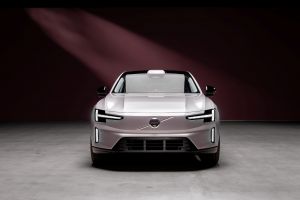
Europe’s shift to electric vehicles (EVs) gathered fresh momentum at the start of 2026, as soaring petrol prices prompted drivers to rethink the cost and security of running petrol and diesel vehicles.