

Springboks score tries in Nissan Navara Pro4X
Two leading Springbok rugby players, Aphelele Fassi and Jordan Hendrikse, have taken delivery of their new Nissan Navara Pro4X bakkies in Durban.
- Industry News
- 12 May 2026
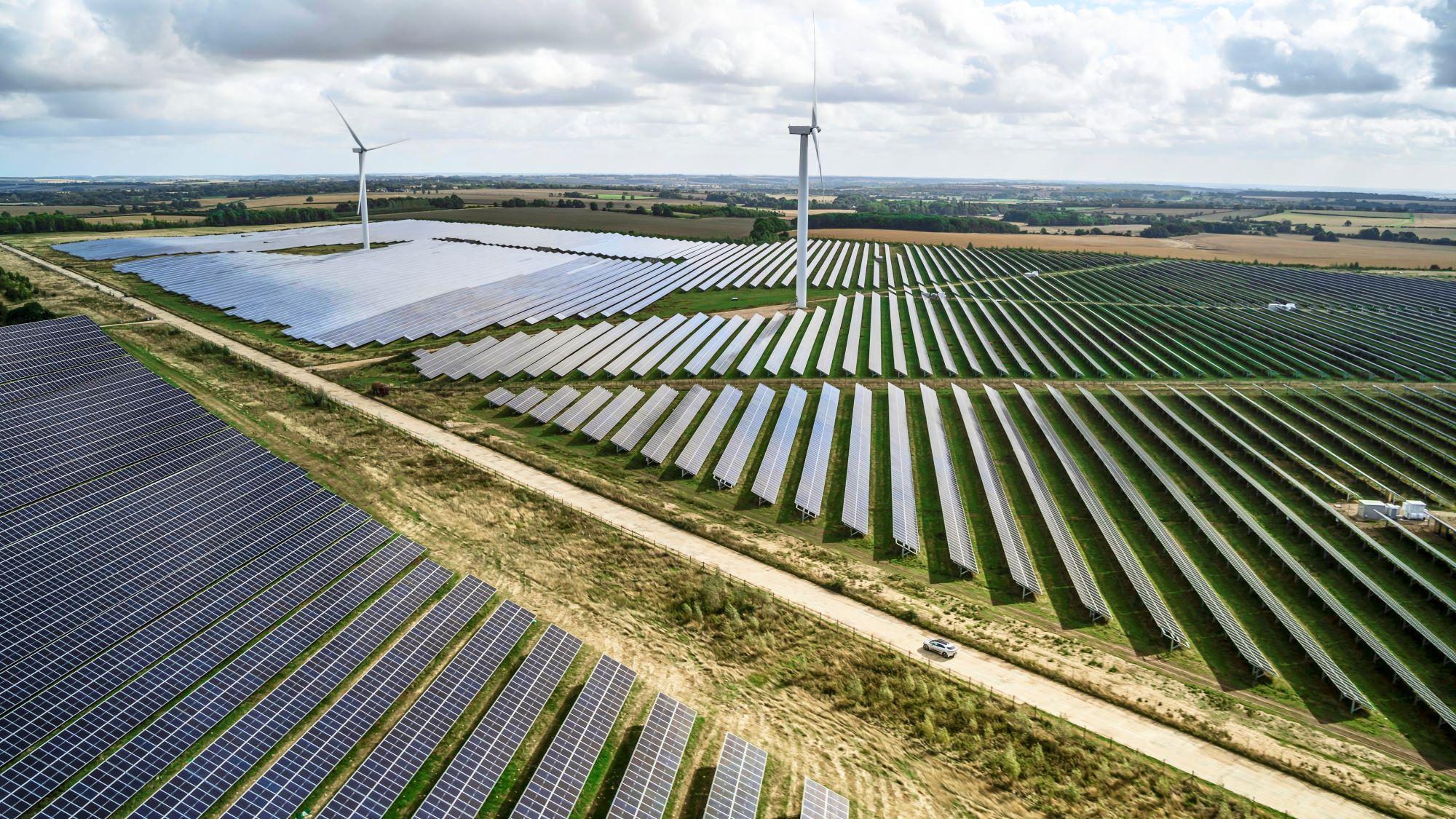
JLR (Jaguar Land Rover) has partnered with Wykes Engineering Ltd, a leader in the renewable energy sector, to develop one of the largest energy storage systems in the UK to harness solar and wind power using second-life Jaguar I-PACE batteries.
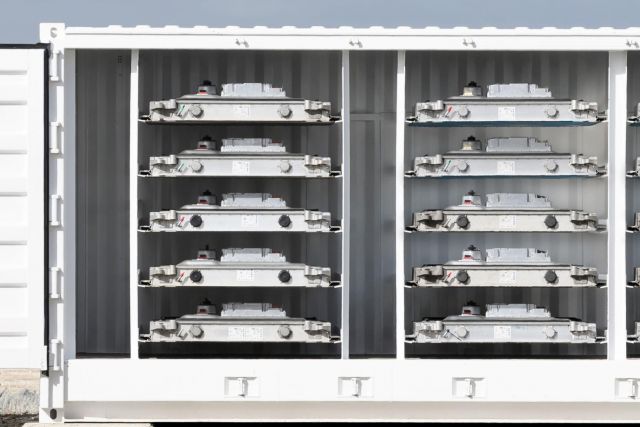
Battery Energy Storage System (BESS)
A single Wykes Engineering Battery Energy Storage System (BESS) utilises 30 second-life I-PACE batteries and can store up to 2.5MWh of energy at full capacity.
The batteries supplied have been taken from prototype and engineering test vehicles, and JLR aims to supply enough batteries to store a total of 7.5MWh of energy – enough to power 750 homes for a day – by the end of 2023. After this point, more containers can be created to house additional second-life batteries removed from used production vehicles in the future.
Each BESS, which is linked to an advanced inverter to maximise efficiency and manage energy, is capable of supplying power directly to the National Grid during peak hours as well as drawing power from the grid during off-peak hours to store for future use.
Battery storage systems like this are critical to decarbonising the grid, as they can deal with rapid peaks in demand and maximise solar and wind energy capture during sunny or windy conditions for use when needed.
As part of the technical collaboration, Wykes Engineering and JLR have achieved seamless integration, with no need for additional manufacturing steps or the removal of battery modules. The batteries are simply removed from the Jaguar I-PACE and slotted into racks in the containers on-site, helping to maximise the sustainability of the project.
The partnership represents an important step in JLR’s adoption of circular economy principles, part of the business’s strategy to achieve carbon net zero by 2039.
Second-life battery supply for stationary applications, like renewable energy storage, could exceed 200 gigawatt-hours per annum by 2030, creating a global value of over $30 billion. JLR’s batteries can be deployed in low-energy situations once their health falls below the stringent requirements of an electric vehicle, which typically leaves a 70%-80% residual capacity.
Reusing vehicle batteries will create new circular economy business models for JLR in energy storage and beyond. Once the battery health falls below the required level for these second-life use cases, JLR will recycle the batteries so that raw materials can be recovered for re-use as part of a true circular economy.
David Wykes, Managing Director of Wykes Engineering, said: “One of the major benefits of the system we’ve developed is that the containers are connected to the grid in such a way that they can absorb solar energy that could otherwise be lost when the grid reaches capacity. This excess energy can now be stored in the second life I-PACE batteries and discharged later. This allows us to ‘overplant’ the solar park and maximise the amount of power we generate for the area of land we are using.”
*Based on 2019 average annual household electricity consumption 3,772kWh = 72.3kWh a week Energy Consumption in the UK 1970 to 2019.
Two leading Springbok rugby players, Aphelele Fassi and Jordan Hendrikse, have taken delivery of their new Nissan Navara Pro4X bakkies in Durban.
Dealership service departments know the pattern: the moment warranties and service plans expire; a portion of owners quietly migrate to the independent aftermarket.

Mercedes-Benz Vans South Africa announced its top-performing Agents and Dealers for 2025, recognising their exceptional dedication, customer service and commitment to the brand.
 Advertisement
 Advertisement
You can't buy happiness but you can buy cars and that's kind of the same thing.
Unknown
Opel has unveiled a key project under development in its model strategy: a completely new, all-electric SUV in the important and highly competitive C-segment that would extend the current line-up.
Nissan’s decision to drop a planned $500 million investment in electric vehicle (EV) production at its Canton, Mississippi plant is the latest indication that established manufacturers are reassessing how quickly the market will shift to battery power.

Zero Carbon Charge (CHARGE) welcomes the government’s extension of short term fuel levy relief measures aimed at cushioning consumers from rising fuel prices, but cautions that these interventions do not address the underlying structural challenge facing South Africa’s transport economy.