How dealership workshops can win back post warranty customers
Dealership service departments know the pattern: the moment warranties and service plans expire; a portion of owners quietly migrate to the independent aftermarket.
Share with friends
Tendani Nevhudogwa, Regional Aftersales Manager of BYD South Africa, argues that this “post‑warranty cliff” is not inevitable.
In his view, OEM networks can reclaim relevance by offering a carefully designed, multi-brand maintenance proposition, priced competitively, delivered professionally, and positioned as a gateway to long-term loyalty. When aftersales is treated as a relationship business rather than a back-office function, it becomes a powerful way to meet future buyers before they ever set foot in a showroom.
He frames the challenge in two parts: keep workshop capacity productive and keep customers connected to the dealer network beyond the first ownership cycle. OEMs, he notes, naturally “own” the early years through structured plans, yet that advantage fades once motorists start paying out of pocket. The result is more than lost job cards; it is a broken touchpoint at precisely the stage when trust, convenience, and perceived value begin to shape where customers spend, and what brand they consider next.
Tendani Nevhudogwa (Regional Aftersales Manager of BYD SA).
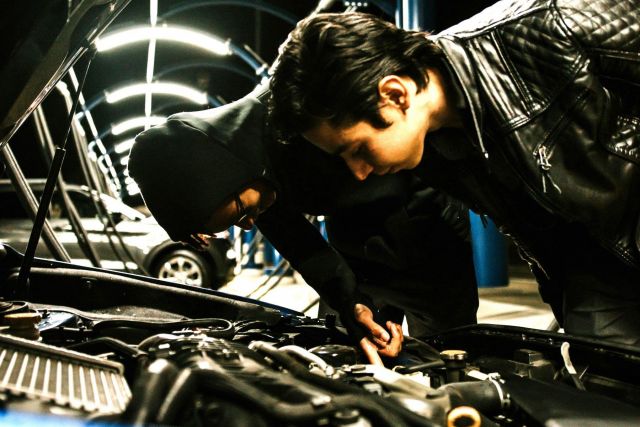
A practical starting point is everyday high-volume work: inspections and diagnostics, brakes, suspension checks, batteries, tyres, fluids, and minor repairs, services that can be standardised without deep brand-specific tooling.
To spark trial, he suggests an introductory incentive in the region of 30–50% for first-time visitors, then more modest offers, say 10–29%, to encourage repeat visits or fill quieter diary slots. The ambition is not to undercut the market indefinitely, but to earn confidence through transparent quotes, predictable turnaround times, and a consistent customer experience that aligns with BYD’s service values.
Just as important is protecting the core BYD customer promise. He recommends ring-fencing capacity, dedicated bays, disciplined booking rules, and technician rosters that keep OEM work first in the queue.
Multi-brand jobs should be channelled into surplus capacity and off-peak periods, with service-level targets for BYD customers held firm. Where additional throughput is needed, he points to apprenticeships and structured training as a cost-effective way to build bench strength, growing capability while safeguarding profitability.
Operationally, the model depends on disciplined basics: strong diagnostic processes, access to technical information, competent technicians, and reliable parts and supplier networks. He is optimistic about the talent pool locally.
South Africa’s independent aftermarket has long demanded multi-brand versatility, which means many technicians already have broad exposure across makes and models. The sensible approach, he says, is to begin with low-complexity maintenance and diagnostic work, then expand the menu as quality systems mature and demand becomes measurable.
If there is a sales upside, it should be a by-product—not the agenda. Tendani warns that customers can sense when a service visit becomes a pitch. Instead, he advocates for a customer-led journey: professional reception, clean facilities, clear communication, digital booking and updates, and a genuinely helpful handover.
When motorists leave feeling looked after, interest in the dealership’s brand and products can emerge naturally, creating a credible pathway from workshop visitor to future buyer.
The trade-offs are real. Broadening a workshop’s remit introduces quality and liability considerations, potential misalignment with OEM priorities, and the risk of distracting teams from core customers.
His mitigation is a controlled pilot with strict boundaries: define what work is in scope, match jobs to proven competencies, document approvals and customer disclosures, and defer high-risk repairs until processes are robust. In short, the initiative must strengthen the OEM operation, not dilute it.
Over a 90-day test period, he would measure whether the concept moves the needle on utilisation and incremental labour revenue, while protecting customer satisfaction (CSI) and turnaround time for BYD owners.
Repeat-visit rates among multi-brand customers would be a key proof point, supported by secondary signals such as service-generated enquiries, qualified leads, or test drives. Importantly, he would treat “no harm” as a success criterion: if OEM satisfaction drops, bottlenecks increase, or margins deteriorate, the pilot should be paused and redesigned.
Mercedes-Benz Vans South Africa announced its top-performing Agents and Dealers for 2025, recognising their exceptional dedication, customer service and commitment to the brand.
Opel has unveiled a key project under development in its model strategy: a completely new, all-electric SUV in the important and highly competitive C-segment that would extend the current line-up.
Mercedes-Benz Vans South Africa announced its top-performing Agents and Dealers for 2025, recognising their exceptional dedication, customer service and commitment to the brand.
In today’s automotive retail environment, where new vehicle prices keep climbing beyond the reach of many consumers, used vehicles have become the backbone of dealership profitability.
At the recent international GWM Awards, Hatfield Motor Group proudly stood alongside some of the world’s top-performing GWM representatives, earning prestigious honours that placed South African talent firmly on the global stage.