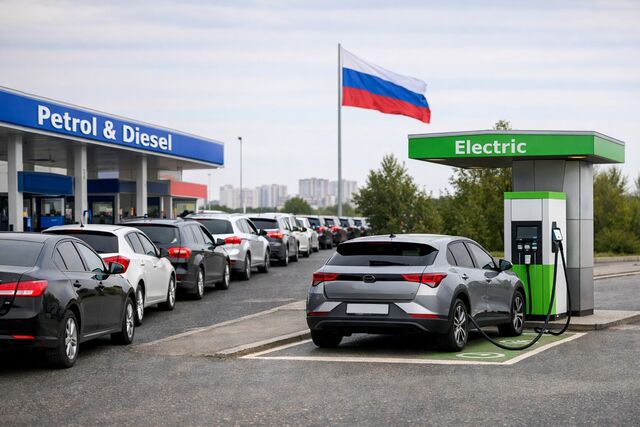
Escalating Ukrainian strikes on Russian energy infrastructure have squeezed petrol and diesel supplies in recent weeks, prompting restrictions in most regions. Retail petrol prices in some areas have climbed to among the highest levels in Europe, according to Reuters calculations.
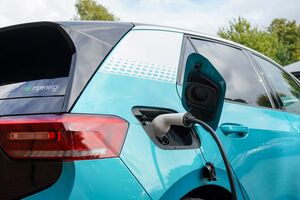
Russia's vast distances, harsh climate and limited charging network have curbed the growth of its EV market. But the mounting fuel challenges are pushing some motorists to make the switch.
As an example, EN Cars which specialises in Chinese brands, is selling two to three EVs a day, compared with two to three a month just a few weeks ago, founder Yevgeniy Zabelin told Reuters.
"Since the fuel situation became complicated, demand has grown many times over," he says, adding that interest was rising in both budget and premium models.
Sales volumes of EVs and plug-in-hybrids are growing but remain low, because manufacturers and importers were not ready for the petrol crisis and do not have sufficient inventories, according to Sergei Udalov, executive director of the analytical agency Autostat, speaking to Reuters. He said that if the crisis persists, sales will see significant growth in the near future, and China will be the main beneficiary.
According to Autostat, the best-selling EV and hybrid brands in Russia are those of Chinese manufacturers Geely, Dongfeng, GAC and Chery. The top Russian produced EV model is Evolute, which is manufactured from assembly kits supplied by Dongfeng.
About 24 600 new plug-in-hybrids were sold in the first five months of the year, up 125% year on year, while sales of new fully electric cars rose 19% to 4 460, according to Autostat and Russia's Ministry of Industry and Trade.
Mechanics in Russia are busy refitting cars to run on liquefied petroleum gas, after Ukrainian attacks on refineries caused nationwide fuel shortages and increased petrol prices. Sales accelerated further in June as fuel shortages hit.
Last week, 1 754 new plug in hybrids were registered, up nearly a third on the previous week and nearly 50% above the average weekly pace this year, according to Autostat chief Sergei Tselikov. The number of charging stations in Russia increased 20% in the year to July 2026, according to the digital map service 2GIS.
EVs and plug in hybrids accounted for just 4.3% of Russia's total car sales last year, according to Autostat.
Russians are also increasingly fitting their cars with special equipment to switch to more available and cheaper liquefied natural gas from petrol and diesel. Izvestia newspaper quoted the national gas fuel association as saying the use of such equipment had jumped by 35% since March to April last year.
The wider vehicle fleet, by official figures:
Autostat's sales figures capture the current surge, but they describe a small slice of a very large fleet. Russia's State Traffic Inspectorate (GIBDD), the government body responsible for vehicle registration, records that as of January this year 68 million vehicles were registered in Russia. Of that automotive fleet, about 86% are passenger cars, amounting to 47.45 million units, alongside 4.04 million light commercial vehicles and 3.57 million trucks.
Set against that fleet, the electric car parc remains tiny. Autostat's own vehicle census puts the number of registered electric cars in Russia at only 80 000 units, which works out at roughly 0.17% of the passenger car fleet, underlining how far the recent sales surge would need to run before EVs move from a fringe segment to a mainstream one.
Public charging infrastructure is expanding from a similarly low base: Autostat records almost 8 000 public charging stations for electric vehicles and hybrids in the country as of April 2026, and separately notes that Russia averages 331 passenger cars per 1 000 inhabitants as of January 1, 2026.
- Sources: Reuters; Autostat; Russia's Ministry of Industry and Trade; 2GIS; Izvestia; Russia's State Traffic Inspectorate (GIBDD), via the Unified Interdepartmental Information and Statistical System.
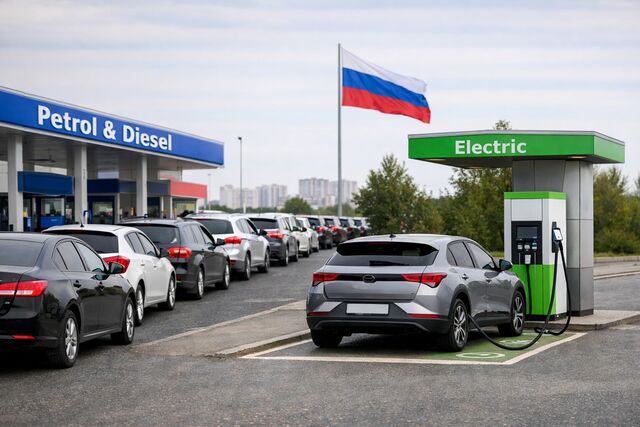
(Image AI Generated)