The term “range anxiety” has been affixed to electric vehicles (EVs) as if it had never before been an issue.
Share with friends
It is a very real current issue for every internal combustion engine (ICE) owner. Yet the very noose around EV’s neck may, in fact, be one of its biggest advantages, says Derrick Dearlove, Customer Experience Manager, JLR South Africa.
“In the case of EVs, range anxiety can be described as the nervousness of running out of battery power before reaching your destination or a suitable charging point. It is no different to the concept of running out of fuel. But the issue has perhaps been exacerbated by the relatively short range EVs can travel on a single charge, especially early in their development,” he says.
Derrick Dearlove, Customer Experience Manager, JLR South Africa.
“Range anxiety is not a new concept. Anyone who has had their low fuel warning light come on while driving a traditional ICE car knows this feeling all too well. To help alleviate this, many automakers now offer technology in their vehicles that allow the driver to check the fuel level using an app on their mobile phone before departure. But this still requires drivers to remember to fill up with fuel at the nearest forecourt to avoid the dreaded range anxiety.
“EVs, similarly, allow drivers to check their battery charge level by either using the battery level gauge, usually located in the instrument cluster, or remotely through a mobile app. The biggest advantage of EVs, however, is their convenience of being able to be “filled up” at home overnight. Treat your EV the same way you treat any of your mobile devices – by putting them on charge overnight – so that EVs start every day with a full battery, significantly reducing any chance of range anxiety,” Derrick says.
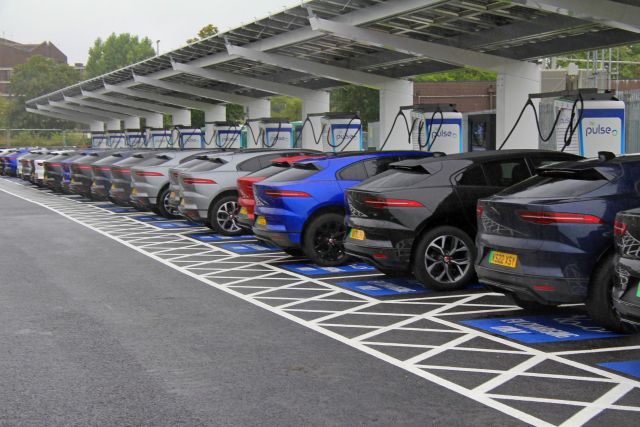
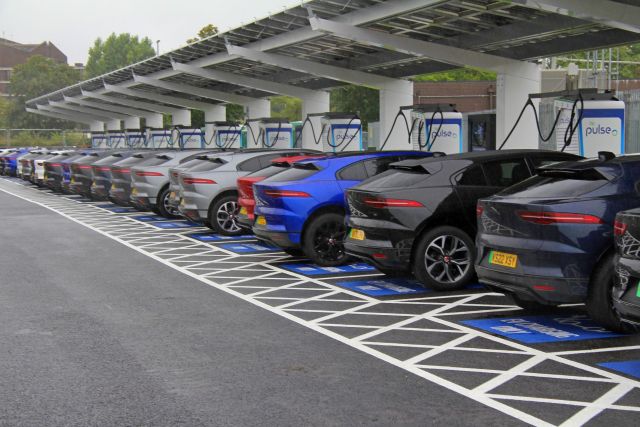
“Where home charging is not an option, there is a growing network of public charging stations across the country offering high-speed DC (Direct Current) charging that can charge an EV from zero to 80% in approximately one hour, and up to 100% in about an hour and a half. Considering the average commute in South Africa is in the region of 50 km a day, a more traditional range anxiety ‘fix’ is not arduous.
“With the average EV range now in the region of 300 km on a single charge, those early apprehensions about range are no longer valid. Extended-range models such as Jaquar’s I-Pace can achieve up to 470 km on a single charge, comfortably allowing a full work week of urban driving without any intermittent charging.
“Range is further extended by technologies such as regenerative braking, which extract the energy generated from braking and stores it for reuse. But just like fuel economy in an ICE vehicle, range in an EV relies on the driving style.
“Road trips in an EV do require a bit more planning to identify public charging facilities along your planned route. EVs have integrated navigation, which can be regularly updated through over-the-air software updates, meaning the nearest public charging stations are always visible and accessible. Independent EV-charging station providers, like GridCars, also provide a list of all their charging stations across the country. One can even see specific stations with backup power supply, offering more peace of mind during load-shedding.
“It is highly unlikely that you’ll find a queue of EVs waiting at a charging station, however. The rate of infrastructure roll-out is currently ahead of actual EVs sold in South Africa, a trend that looks set to continue.
“As battery and EV technology continue to advance rapidly, range should be expected to increase. Affordability will also improve as sales volumes of electric vehicles increase. So, if anything is going to eradicate range anxiety for the South African driver, it is the adoption of EVs, not the fear thereof,” he concludes.
As fuel prices continue to climb across South Africa, many motorists are beginning to question whether owning a car still makes financial sense. With in-land petrol prices now at R26.63 a litre and diesel costs rising sharply in May, transport expenses are placing growing pressure on household budgets.
Pinewood.AI has added two new embedded modules to its Business Intelligence Solution, giving dealers and OEMs greater insight into financial performance and the customer journey, it says.
House lawmakers in the United States (US) have proposed bipartisan legislation that would require electric vehicles (EVs) to pay a R2 227 ($130) fee annually for road repairs, and R578 ($35) for some plug-in hybrid models, according to Reuters.
BYD is exploring the possibility of taking over underused car plants in Europe as it looks to expand its manufacturing base and strengthen its foothold in the region’s electric vehicle (EV) market.