

From Wuhu to Rosslyn: how the Omoda X and C4 share a design direction
In Wuhu, China, Omoda gave the Omoda X its global debut at Omoda X Night, held as part of the 2026 Omoda & Jaecoo International User Summit.
- Industry News
- 25 October 2026
Ahead of the 2026 State of the Nation Address (SONA), Zero Carbon Charge (CHARGE) has once again called on the President and national government to act decisively on South Africa’s electric vehicle transition.
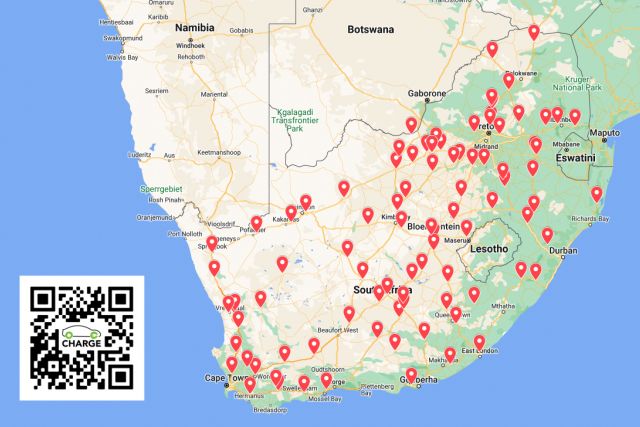

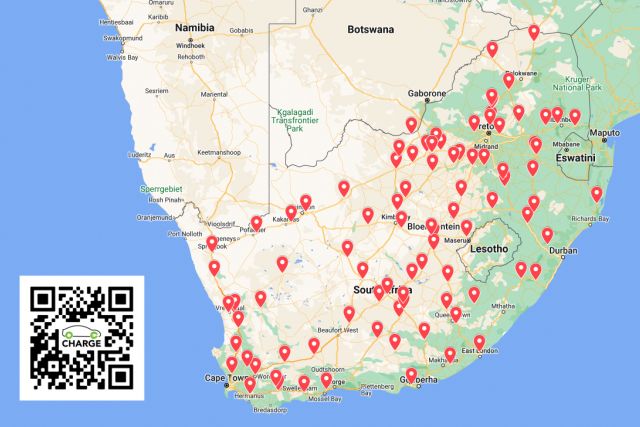
CHARGE warns that continued inaction is actively undermining investment, energy security, and economic growth.
Despite more than three years of direct engagement ahead of successive SONAs, government has failed to articulate a credible plan for renewable powered electric vehicle charging infrastructure. It has also not provided practical steps towards an electric vehicle future. The result is a widening policy vacuum that threatens South Africa’s competitiveness in a rapidly electrifying global automotive market, CHARGE states.
Industry has already sounded the alarm. Volkswagen South Africa and BMW South Africa have publicly warned that the country lacks clear policy direction and long-term planning for New Energy Vehicles. These warnings have gone unheeded.
CHARGE has repeatedly written to the President and the Minister of Trade and Industry seeking leadership, coordination, and support. The silence has been telling. It reflects a broader failure to treat the electric vehicle and energy transition as a national priority, rather than a future talking point.
South Africa cannot claim to support electric vehicle adoption while ignoring the infrastructure required to sustain it. Grid connected chargers are not a long-term solution in a country facing chronic electricity shortages.
As electric vehicle uptake grows, grid-tied charging simply transfers additional pressure onto an already failing system. A credible transition requires charging infrastructure that generates and stores its own power. It must be renewable, resilient, and independent of the grid.
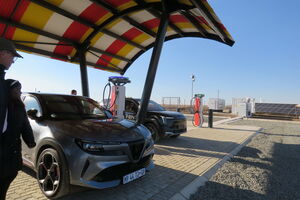
CHARGE is developing 120 fully off grid, solar powered electric vehicle charging stations across South Africa. This will be the first national network of its kind in the country and on the African continent. Beyond infrastructure, the project delivers direct socio economic benefits, including income streams for landowners, education support, and job creation in rural and peri-urban areas.
Yet instead of enabling private investment, the project has faced persistent obstruction.
The South African National Roads Agency (SANRAL) has delayed regulatory feedback for more than 1 000 days. It has also attempted to apply fuel station tariffs to renewable energy microgrids under the guise of “sweating assets”. This approach fundamentally misclassifies clean energy infrastructure and sends a chilling signal to investors. The Minister of Transport has been formally notified multiple times and has failed to intervene.
The lack of leadership extends beyond transport. There has been no meaningful engagement from the Ministers responsible for Public Works and Infrastructure, Electricity, Agriculture, or Environmental Affairs.
This is despite each portfolio standing to benefit directly from renewable electric vehicle infrastructure through improved energy security, rural development, emissions reduction, and climate resilience. To date, the only Cabinet level support has come from Deputy Minister of Electricity Samantha Graham Mare.
Commenting on the situation, CHARGE co-founder Joubert Roux says the organisation is calling for immediate, practical action. This includes lower electric vehicle import tariffs to stimulate market adoption. “It also requires the removal of red tape blocking electric vehicle and renewable infrastructure, the reintroduction and extension of the Section 12BA tax incentive to include electric vehicle charging equipment, targeted funding for electric vehicle and energy skills development, and accountability for state entities that quietly obstruct the transition,” he says.
Despite the absence of national government support, CHARGE’s first off grid electric vehicle charging station is already operational on the N12. Two additional stations are set to unlock the N3 corridor in May 2026. These developments have been made possible through investment from the Development Bank of Southern Africa.
“South Africa cannot continue to invite private investment while simultaneously obstructing the infrastructure required to grow the economy. If government is serious about industrialisation, energy security, and climate commitments, the electric vehicle transition cannot remain an afterthought in another SONA speech,” Joubert concludes.
In Wuhu, China, Omoda gave the Omoda X its global debut at Omoda X Night, held as part of the 2026 Omoda & Jaecoo International User Summit.
Charging time remains a worry for many South Africans considering an electric vehicle, who still see it as a disruption rather than a quick stop at a filling station. That view is starting to shift.

The winners of the 2026 Automotive Business Council | naamsa Accelerator Awards were announced at the recently held Auto Week 2026, which took place in eThekwini, KZN.
 Advertisement
 Advertisement
Cars are the ultimate symbol of freedom, independence and individualism. They offer the freedom to ‘go anywhere,’ whenever it suits and with whom one chooses.
Sarah Redshaw
Charging time remains a worry for many South Africans considering an electric vehicle, who still see it as a disruption rather than a quick stop at a filling station. That view is starting to shift.
South Africa has taken important steps to position itself within the global electric vehicle (EV) industry, but industry stakeholders argue that further policy adjustments are needed if the country is to accelerate adoption and support long-term investment in clean transport infrastructure.
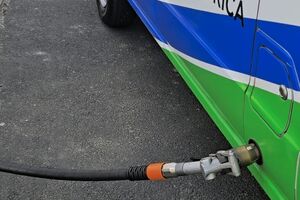
As fuel prices and operating expenses continue to challenge South African businesses, alternative energy solutions are receiving greater attention.