

Springboks score tries in Nissan Navara Pro4X
Two leading Springbok rugby players, Aphelele Fassi and Jordan Hendrikse, have taken delivery of their new Nissan Navara Pro4X bakkies in Durban.
- Industry News
- 12 May 2026
Reuters reported that Ford Motor Co said it expected its electric vehicle business unit to lose $3 billion this year.

On a better note, the company did say though that it remained on track to achieve a pre-tax margin of 8% by late 2026.
The projected loss was revealed ahead of a briefing for investors and analysts on 23 March to discuss details of the automaker’s new financial reporting format.
Starting with first-quarter results, which will be announced on 2 May, Ford will begin reporting by business unit for Model e (electric vehicles), Blue (combustion vehicles) and Pro (commercial vehicles and services).
Ford projects Model e’s cumulative three-year loss from 2021-2023 at $6 billion, including a pro-forma loss last year of $2.1 billion, but expected the unit to be profitable on a pre-tax basis before the end of 2026.
Chief Financial Officer John Lawler said Ford would no longer break out financial results by region, only by business unit, because “that’s how we’re running the company now”.
He said Ford would provide quarterly and annual sales and market share for the company’s top five global markets but would no longer report by region.
Last year, Ford had a pre-tax loss of $600 million in China, broke even in Europe and posted a modest $400 million profit in South America, with most of its earnings before interest and taxes - $9.2 billion - coming from North America.
The company expected its Ford Pro commercial vehicle business to nearly double pre-tax profit this year to $6 billion, while the traditional Ford Blue business should see a modest increase to $7 billion.
Lawler reaffirmed the company’s target of a 10% adjusted EBIT margin by late 2026.
He said the automaker would have the global capacity to build 600,000 electric vehicles by the end of 2023 and 2 million by late 2026 - “and we intend to fully use that capacity”.

Two leading Springbok rugby players, Aphelele Fassi and Jordan Hendrikse, have taken delivery of their new Nissan Navara Pro4X bakkies in Durban.

Dealership service departments know the pattern: the moment warranties and service plans expire; a portion of owners quietly migrate to the independent aftermarket.

Mercedes-Benz Vans South Africa announced its top-performing Agents and Dealers for 2025, recognising their exceptional dedication, customer service and commitment to the brand.
 Advertisement
 Advertisement
I have bad reflexes. I was once run over by a car being pushed by two guys
Woody Allen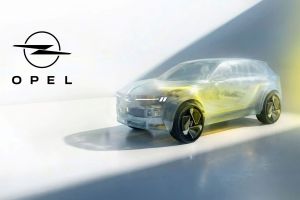
Opel has unveiled a key project under development in its model strategy: a completely new, all-electric SUV in the important and highly competitive C-segment that would extend the current line-up.
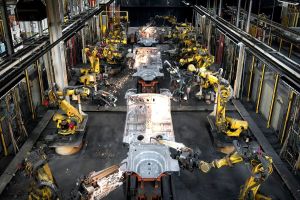
Nissan’s decision to drop a planned $500 million investment in electric vehicle (EV) production at its Canton, Mississippi plant is the latest indication that established manufacturers are reassessing how quickly the market will shift to battery power.
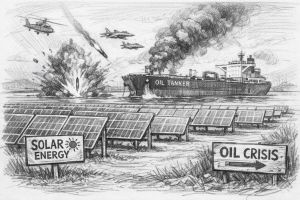
Zero Carbon Charge (CHARGE) welcomes the government’s extension of short term fuel levy relief measures aimed at cushioning consumers from rising fuel prices, but cautions that these interventions do not address the underlying structural challenge facing South Africa’s transport economy.