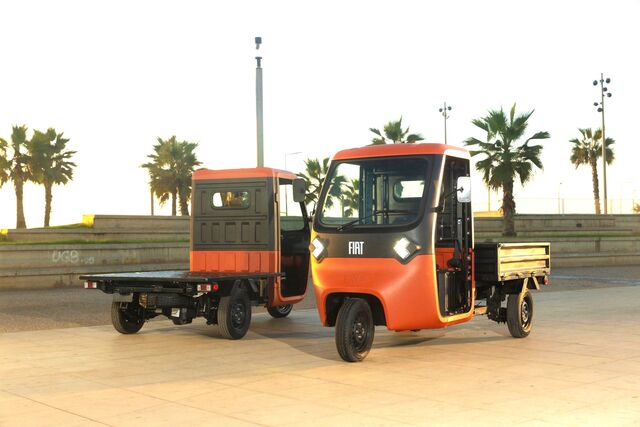
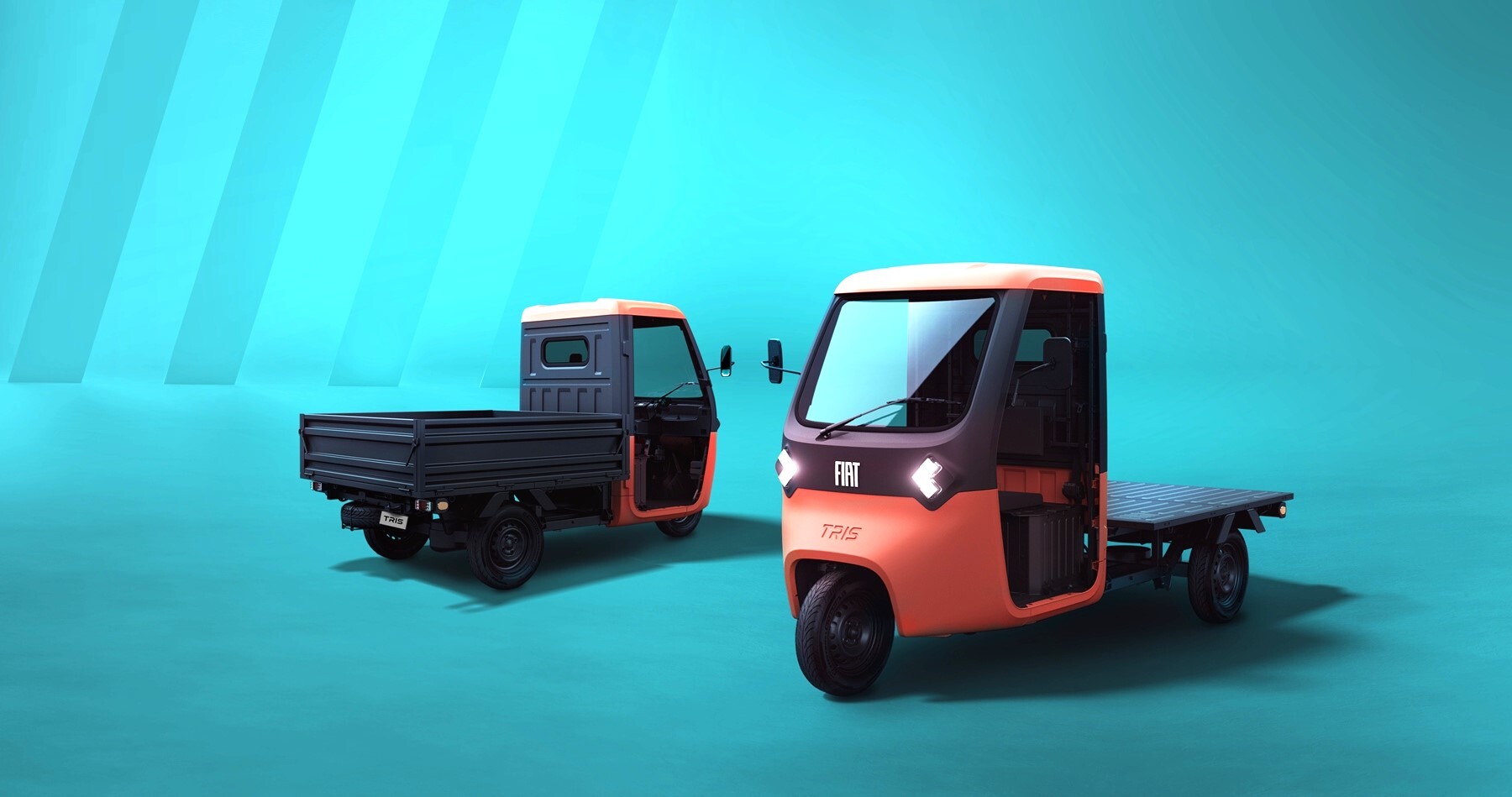
Fiat South Africa has revealed the first micromobility vehicle, Fiat TRIS, for South Africa and selected Sub-Saharan African markets during the Transport Evolution Summit 2026.
Share with friends
Fiat continues to reinforce its leadership in micromobility by positioning itself as a necessary answer to urban congestion, affordability, and accessibility challenges in modern cities, the manufacturer claims. And now, Africa is among the markets where the brand’s micromobility approach is expanding.
“The micromobility category is far bigger than any one format,” says Kabelo Rabotho, Director of Micromobility at Stellantis South Africa “at its simplest, micromobility is about matching the journey to the most efficient tool for that journey. Not every trip needs a large car. Not every delivery needs a van. We are not replacing other forms of transport, rather we are filling a ‘gap’ that, in the context of Africa, is becoming increasingly apparent as the continent grows.”
The new 100% electric pick-up three-wheeled electric vehicle is designed to meet the fast-growing demand for last-mile delivery solutions. With a 90 km range, ultra-lightweight design, and low running costs, TRIS can carry over 500kg of payload and offers a spacious cargo area.
Its design prioritizes ease of use, making it simple to drive with no clutch or gearbox, while its integrated charging capability allows seamless recharging with a built-in 220V plug, eliminating the need for an external charger.
One of the key strengths of TRIS is its outstanding versatility. Its compact size, just 3.17 meters in length, combined with a tight 3.05-meter turning radius, allows it to navigate narrow city streets with ease. Power accessibility is also a priority, with a USB-C port and a 12V socket ensuring that devices can be charged on the go.
The lithium-battery, with a capacity of 6.9kWh, provides a homologated range of 90km (WMTC), ensuring sufficient autonomy for daily professional use. Thanks to its integrated smart charging system, TRIS can be charged from 0 to 80% in just 3.5 hours, reaching the complete recharge in 4 hours and 40 minutes, using a standard domestic plug.
Regenerative breaking as standard content completes the efficiency package, helping to maximize range and reduce energy consumption during everyday use. Finally, TRIS is powered by a 48-volt electric motor delivering 9kW (peak power) and a maximum torque of 45Nm, capable of reaching a top speed of 45km/h, along with a modern digital cluster that enhances driver information and usability.
The Fiat TRIS will be available in South Africa and selected Sub-Saharan African markets at the end of 2026.
Few can claim a bond with Mazda as deep as the Plitt family's. For more than 60 years, Mazda has been part of the family's story through Mazda Vereeniging, the oldest Mazda dealership in South Africa and a longstanding standalone representative of the brand.
Peugeot has expanded its Landtrek line-up with the addition of a new turbodiesel-powered model aimed at buyers looking for increased performance, greater towing capability and updated technology. The latest derivatives join the range from October 2026 and introduce a significant powertrain upgrade for the bakkie.
SMSA Africa Logistics Group has added five Hino 300 diesel electric hybrid trucks with van bodies to its fleet, following a two-year trial of three such trucks in its delivery operation.
South Africa's new energy vehicle market is becoming increasingly diverse, with plug in hybrid electric vehicles (PHEVs) and fully electric vehicles gaining ground while traditional hybrids remain the largest category.
As South Africans celebrate their rich heritage, it is also worth reflecting on a lesser-known chapter of the country's history: its long connection with electric vehicles (EVs).