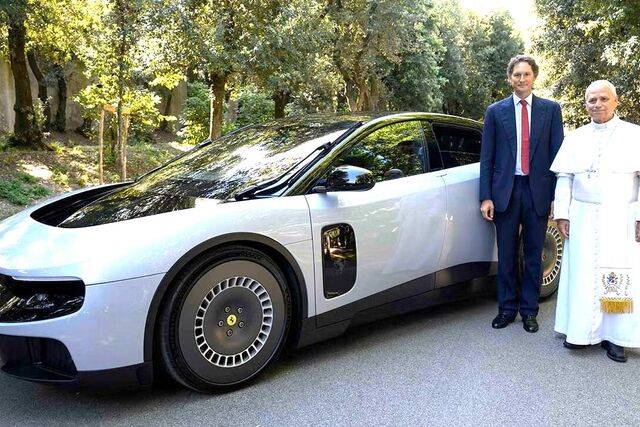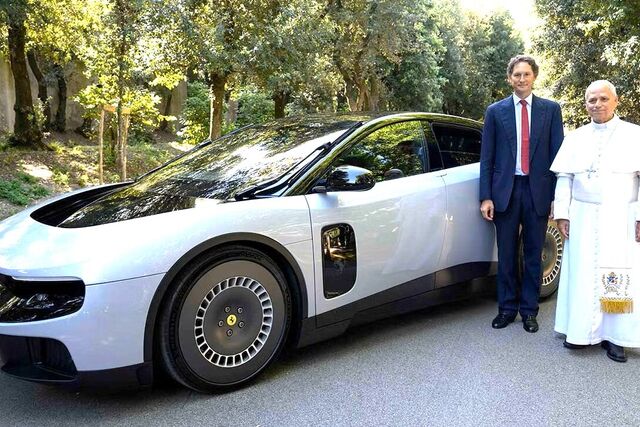
The delegation, led by chairman John Elkann and chief executive Benedetto Vigna, was received by the pontiff on Tuesday morning. Ferrari described the occasion as one of extraordinary human and symbolic value, with Elkann presenting the Pope with the car’s steering wheel as a tribute. Reports noted that the pontiff inspected the vehicle closely and even sat inside while Ferrari test driver Raffaele De Simone explained its controls.
The Luce represents a significant departure from the marque’s traditional supercars. It is not only Ferrari’s first fully electric model but also its first five‑seater, designed to broaden the line‑up rather than replace petrol or hybrid offerings. With four electric motors delivering around 700kW, the car accelerates from 0 to 100 km/h in about 2.5 seconds and offers a claimed range exceeding 530km. Pricing has been reported at approximately R10.5 million, positioning it firmly as a halo product.
The choice of Castel Gandolfo heightened the symbolism. Used by popes as a summer retreat since the seventeenth century, the residence embodies continuity and reflection, making it a striking setting for a car built around reinvention.
Yet Ferrari’s bold step comes at a challenging time. Investor and critic reactions have been mixed, with questions raised about the appetite for ultra‑luxury electric cars amid signs of cooling in parts of the EV market. Even so, Ferrari’s presentation suggested confidence that the Luce is more than a new model. It is an attempt to redefine what a Ferrari can be in the electric age.