Electric vehicles are older than many people realise. In the late nineteenth century, battery electric cars were common in cities because they were quiet, clean and easy to drive compared to petrol cars that needed hand cranking.
Share with friends
London even ran a fleet of electric taxicabs in 1897, designed by Walter Bersey, with exchangeable batteries at a central depot. They were innovative but short lived, hampered by heavy vehicles, fragile tyres and the limits of contemporary batteries.
Ferdinand Porsche, later the founder of the company that bears his name, was fascinated by electricity even as a teenager. The first vehicles he designed also had electric drives, so the history of Porsche begins with the electric drive.
By the early twentieth century, petrol cars surged ahead. Several factors combined to push electric cars to the margins. The electric starter appeared on Cadillacs in 1912, removing the awkward and sometimes dangerous hand crank that had been a comparative advantage for electric cars.
As this picture shows, electric vehicles are not a new concept as this early Porsche shows.
Mass production techniques, most famously at Ford, cut the price of petrol cars. Cheaper fuel from new oilfields and a growing network of longer roads favoured vehicles that could travel far and refuel quickly.
Battery technology of the day remained heavy and offered modest range. Together, these practical and economic forces explain why electric vehicles were not pursued as the main path even though the idea is much older.
The modern revival began in policy and research laboratories rather than showrooms. In 1990 California created a Zero Emission Vehicle requirement that nudged carmakers to build battery electric models.
The early wave included experimental and compliance cars in the 1990s, but the breakthrough came once lithium-ion chemistry matured. Tesla put a modern lithium-ion sports car on the road in 2008, demonstrating performance and making the format aspirational.
China’s BYD EV Yangwang U9 Track Edition recently set a new speed record of 472km/h.
Two years later, Nissan launched the Leaf as a mass market family hatchback, proving that an everyday electric car could be built at scale. Since then, falling battery costs, better energy density and national policies on air quality and climate have broadened the appeal.
Popularity has accelerated dramatically in the last decade. In 2014, the global stock of electric cars was roughly 650 000, barely a fraction of one percent of the world’s passenger car fleet.
By the end of 2024, it had reached almost 58m cars, about four percent of the total passenger car fleet worldwide. That is a ninetyfold increase in stock over ten years. In sales terms, the step change is equally clear.
More than 17m electric cars were sold in 2024 alone, giving electric models a share of over 20% of new car sales. The extra 3.5m electric cars sold in 2024 compared to 2023 were itself more than the entire number sold worldwide in 2020. Put simply, what took a decade to build has recently been added in a single year.
So what proportion of vehicles on the road today are electric, and how fast is that changing?
Measured across passenger cars, about four percent of the world’s car fleet at the end of 2024 was electric. Looking at growth speed, moving from under one million electric cars in 2014 to almost 58m in 2024 implies compound growth of roughly 57% a year in the global car stock over that decade.
This pace has been supported by policy, rapid improvements in batteries and power electronics, a far wider model choice, and the spread of charging networks. It also reflects the different nature of the two measures.
The share of new sales is already above one in five, while the share of the fleet moves more slowly because cars stay on the road for many years. On current trends, the fleet share should continue to climb each year as today’s strong sales flow through into the global stock.
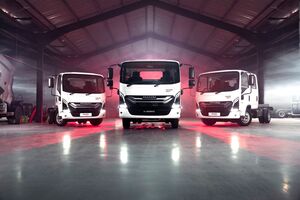
Imperial Motors Zambia, part of Motus Africa, has added UD Trucks to its dealership offering following an official launch in Lusaka on 1 October. The brand will be represented at three operational locations in Lusaka, Kitwe and Solwezi.
Isuzu Motors South Africa has introduced its all-new seventh-generation N-Series truck range, representing the most comprehensive update to the company's light and medium-duty commercial vehicle line-up in years.
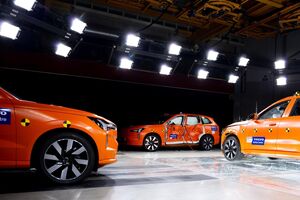
Euro NCAP has changed the way it tests cars. The 2026 protocols, the biggest revision in three years, restructure the assessment around four stages: safe driving, crash avoidance, crash protection and post-crash care.
Cars are the ultimate symbol of freedom, independence and individualism. They offer the freedom to ‘go anywhere,’ whenever it suits and with whom one chooses.
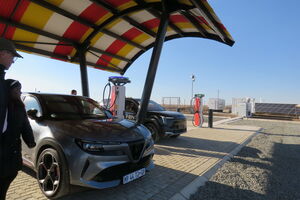
Charging time remains a worry for many South Africans considering an electric vehicle, who still see it as a disruption rather than a quick stop at a filling station. That view is starting to shift.
South Africa has taken important steps to position itself within the global electric vehicle (EV) industry, but industry stakeholders argue that further policy adjustments are needed if the country is to accelerate adoption and support long-term investment in clean transport infrastructure.