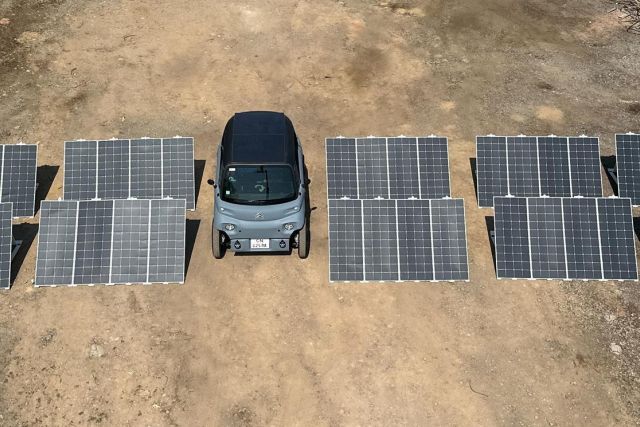
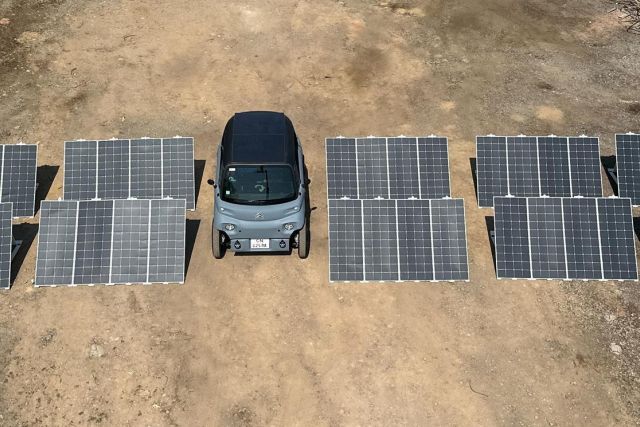
After a 4-month journey covering more than 16 000km from Morocco to South Africa, the four fully-electric Citroën Amis, La Croisière Verte (Green cruise), have successfully completed their expedition, proving the feasibility of micro-mobility and electrification across diverse terrains.
Share with friends
Powered solely by renewable energy, this expedition has not only demonstrated the strength of electric vehicles but has also reinforced Stellantis MEA's vision for a more sustainable and accessible mobility future.
A century after André Citroën’s legendary expedition, La Croisière Verte has redefined long-distance travel by relying exclusively on green energy. Departing from Ouarzazate in Morocco, on 28 October 2024, the convoy of four specially modified Citroën Amis crossed 16 countries before reaching their final destination in Cape Town on 28 February 2025. With no carbon emissions, this journey stands as a world first, highlighting the potential of electric mobility even in the most challenging environments.
Samir Cherfan, Chief Operating Officer of Stellantis Middle East & Africa, stated: "This expedition embodies the core values of Stellantis MEA—innovation, sustainability and accessibility. By proving that electric mobility is viable even in the most challenging conditions, we reinforce our commitment to a cleaner, more sustainable future for mobility across Africa. With Eric and his team’s success, La Croisiére Verte is a milestone that will inspire further advancements in electric transport across the region."
The Citroën Ami's success in covering this vast distance demonstrates the reliability and efficiency of electric technology. Travelling through Morocco, Mauritania, Senegal, Guinea, Ivory Coast, Ghana, Togo, Benin, Nigeria, Cameroon, Gabon, Congo, the Democratic Republic of Congo, Angola, Namibia and South Africa, the expedition demonstrated that electric mobility is not just a concept for urban environments but a practical solution for global transport needs.
Key milestones of the adventure include:
123 days of travel with 123 stops in villages, cities and remote areas.
32 impactful meetings with local initiatives, universities and renewable energy experts.
A proof of accessibility: If a small electric vehicle like the Citroën Ami can cover this distance, electric mobility can adapt to anyone’s needs.
By successfully crossing Africa in a compact, fully electric vehicle, Citroën Ami has challenged perceptions of what is possible with sustainable mobility.
When Cobus Coetzee (photo) accepted the opportunity to join the Morgan Group in Upington, he had to weigh up more than a new position. The move meant exchanging the West Coast’s cooler climate and seaside lifestyle for the Northern Cape’s desert heat, while taking responsibility for a multi-franchise operation spread across several premises.
With the steep rise in fuel prices since March this year leading to historic record highs following massive increases in October, the government intervention annouched this week, is widely welcomed.
The iCAUR V-Series family has grown with the arrival of the new V25, unveiled at the 2026 iCAUR International User Summit in Wuhu, China. As the brand continues its international expansion, the V25 is expected to play a key role in attracting buyers seeking a rugged-looking SUV with modern electric technology.
South Africa has taken important steps to position itself within the global electric vehicle (EV) industry, but industry stakeholders argue that further policy adjustments are needed if the country is to accelerate adoption and support long-term investment in clean transport infrastructure.
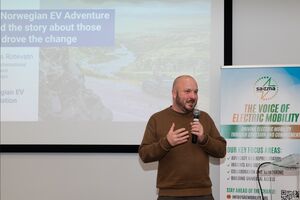
The South African Electric Mobility Association (SAEMA) has officially launched as the country’s collective body for electric mobility, marking South Africa’s entry into a global movement of nations with dedicated representation.