
VW Group on a cost-cutting drive
The Volkswagen Group (VW) plans to cut costs by 20 percent across all its brands by the end of 2028, a German business paper reported.
- Industry News
- 17 February 2026
Global automotive manufacturers are recalibrating their ambitions after a costly miscalculation of global demand for electric vehicles.
This is according to an original report on the topic in Automotive News.
Across the industry, write‑downs have now reached an estimated R1.03 trillion (±$55 billion) as firms reverse or scale back electrification plans that once seemed unavoidable. This unprecedented financial fallout reflects how far expectations drifted from consumer realities, particularly in markets where infrastructure gaps, high vehicle prices and inconsistent policy signals have stunted adoption.
Stellantis, the world’s fourth‑largest carmaker, has suffered the heaviest blow, posting impairments totalling R490 billion (±$26.2 billion) linked to cancelled electric vehicles (EV) models, factory write‑downs and a sweeping reorganisation of its electrification roadmap.
Investors responded sharply, sending the company’s share price plunging as the extent of over‑investment became clear. The group admits it overestimated both the pace of the energy transition and everyday motorists’ willingness to switch from petrol and diesel vehicles.
Ford’s retreat has been similarly dramatic. After aggressively expanding its EV division, the company has now confirmed losses of about R365 billion (±$19.5 billion), including the scrapping of high‑profile vehicles such as the F‑150 Lightning.
Like its rivals, Ford is pulling resources back towards hybrid and internal‑combustion technologies, hoping these will prove more aligned with consumer budgets in the medium term. General Motors (GM) has also joined the correction, recording R112 billion (±$6 billion) in charges associated with reduced EV output and supplier agreements.
Central to these financial shocks is a slower‑than‑expected shift in buyer behaviour. In the United States, EV market share dipped to 7.8 percent in 2025, down from 8 percent the previous year, undermining industry assumptions that the tipping point for mass adoption was imminent. American policy changes have further complicated matters, with the rollback of EV tax credits and emissions penalties disrupting pricing models and discouraging consumers.
European manufacturers are facing parallel challenges, contending with stringent emissions rules on one hand and softening demand on the other, compounded by pressure from cheaper Chinese competitors.
Honda is another casualty, having written off around R32 billion (±$1.7 billion) in the first nine months of its financial year after early EV ventures failed to gain traction. The company is now undergoing a fundamental review of its EV plans, with senior executives acknowledging they severely misjudged global readiness for fully electric mobility.
Yet despite the upheaval, electrification is not being abandoned. Instead, automakers are entering a more restrained and pragmatic phase, emphasising affordability, flexible powertrain line‑ups and cost‑efficient development.
Toyota’s multi‑path approach, balancing hybrid, electric and petrol models, has gained new relevance, highlighting how diversified strategies may provide the resilience the sector now urgently needs.
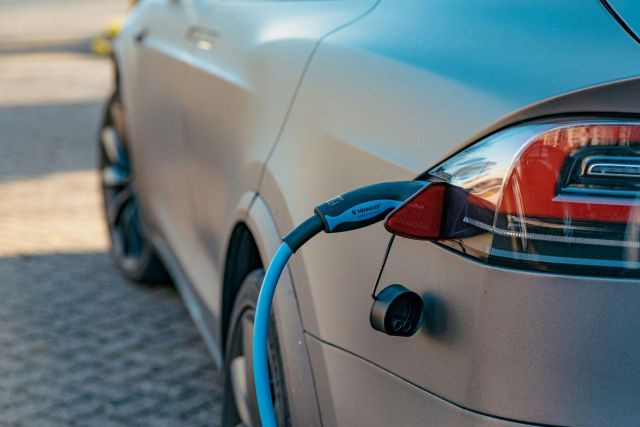
Photo: Ernest Ojeh -Unsplash
The Volkswagen Group (VW) plans to cut costs by 20 percent across all its brands by the end of 2028, a German business paper reported.

A fundamental realignment in the global automotive ecosystem is shifting the aftermarket’s centre of gravity towards the east, as rapid growth in vehicles manufactured in India and China transforms demand for parts across multiple regions.
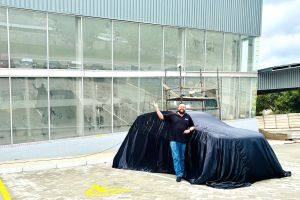
Kelston is ready to take the Eastern Cape by storm in the luxury segment, having opened two Lepas dealerships.
 Advertisement
 Advertisement
Have you ever noticed that anybody driving slower than you is an idiot, and anyone going faster than you is a maniac?
George Carlin
BMW Group’s Cell Recycling Competence Centre in Salching is rapidly becoming a cornerstone of Europe’s transition toward a resilient circular battery economy.

The European Commission charts a zero-emission vehicle future for vehicles exported to Europe, while holding the commitment to reducing CO2 emissions from all new vehicle sales.
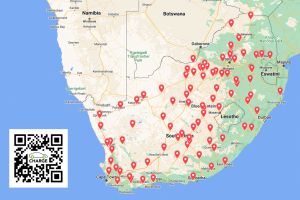
Ahead of the 2026 State of the Nation Address (SONA), Zero Carbon Charge (CHARGE) has once again called on the President and national government to act decisively on South Africa’s electric vehicle transition.