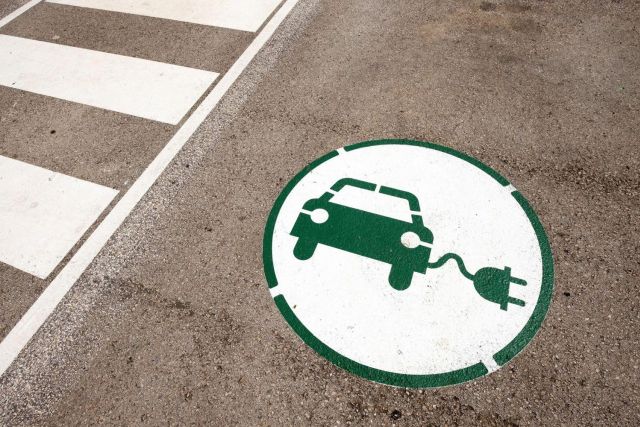
At SA Auto Week last October, President Ramaphosa shared his experiences of driving EVs in China and New York, highlighting their potential to grow South Africa’s automotive industry rather than threaten it. He emphasised embracing EVs and alternative fuels such as charging and hydrogen.
He noted that the government was considering new incentives, including tax rebates for consumers, to accelerate EV adoption. However, apart from the 150% tax deduction for manufacturers, progress has been too slow. Without urgent and sustained action, South Africa risks falling behind in the global EV transition and missing its climate mitigation targets.
“The President’s signing of the 150% tax incentive for EV manufacturers from 2026 is a step forward, but it is not enough. We need a comprehensive strategy to build a thriving EV ecosystem—one that includes meaningful financial incentives, reduced import barriers and significant investment in green charging infrastructure,” says Joubert Roux, Executive Chairperson of CHARGE.
The current import duties for EVs stand at 25% (ad valorem tax on luxury vehicles), compared to 18% for internal combustion engine (ICE) vehicles. These duties on EVs inflate prices, suppress demand and hinder market growth. CHARGE therefore calls for EV import taxes to be lowered to match those of ICE vehicles or a temporary tax holiday on EV imports. This would make EVs more affordable for South Africans and boost consumer adoption.
Most people are unaware that EVs charged from South Africa’s predominantly coal-fired grid produce more emissions than petrol vehicles. In fact, an EV charged from Eskom’s grid emits 5.8 tonnes of CO2 annually, compared to 4.4 tonnes for a petrol car. It is therefore essential that President Ramaphosa outlines a clear plan to support the development of a renewable energy-powered charging network to ensure that EV adoption really delivers on its environmental benefits.
In November 2024, CHARGE launched South Africa’s first off-grid, solar-powered EV-charging station in Wolmaransstad, North West—a groundbreaking milestone for green transport solutions. Now, we are set to roll out the next phase of stations across the country, following agreements with provincial governments in Limpopo, KwaZulu-Natal, Free State, Northern Cape and Eastern Cape.
Despite this strong momentum, slow approval processes and a lack of prioritisation at all government levels continue to hinder EV-charging infrastructure development.
CHARGE calls for urgent policy reforms to streamline approvals, reduce red tape and establish a clear national framework for renewable-powered charging stations.
It is crucial to highlight to the President and government the challenges investors face in developing off-grid charging stations along South Africa’s national roads. Progress has been hindered by red tape, including SANRAL delays and conflicting regulations like the Western Cape’s rural development guidelines, making the process costly and time-consuming. We urge the President to consider less restrictive land use and environmental application processes, along with incentives such as rebates for drivers using renewable energy charging facilities.
- For more info, visit www.charge.co.za