
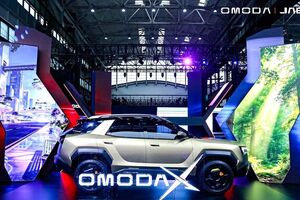
From Wuhu to Rosslyn: how the Omoda X and C4 share a design direction
In Wuhu, China, Omoda gave the Omoda X its global debut at Omoda X Night, held as part of the 2026 Omoda & Jaecoo International User Summit.
- Industry News
- 25 October 2026
“We welcome the announcement by the National Treasury to allocate funds to support the local production of new-energy vehicles and batteries, as well as related manufacturing projects,” says Joubert Roux, Founder of CHARGE.
“We hope that the government will also support the development of our off-grid, solar-powered EV-charging stations, which will foster the need for new-energy vehicle sales,” Joubert tells Dealerfloor.
The National Treasury says the country is the largest automotive manufacturing hub in sub-Saharan Africa, hosting brands such as Toyota, Ford, Isuzu, Volkswagen, Mercedes and BMW, among others.
Reuters reports that government incentives and policy interventions will encourage original equipment manufacturers to invest more in the production of electric vehicles in the country.
South Africa released its Electric Vehicles White Paper in 2023, outlining the country's strategy to transition the automotive industry from primarily producing internal combustion engine vehicles to a mix that includes electric vehicles by 2035.
In its annual budget review, the Treasury says the department of trade and industry, in partnership with the department of mineral resources, plans to approve and implement a regional critical minerals strategy, without giving a timeline.
Critical minerals such as copper, cobalt and lithium are needed for the production of products like electric vehicle batteries and solar panels and are key to the world's energy transition.
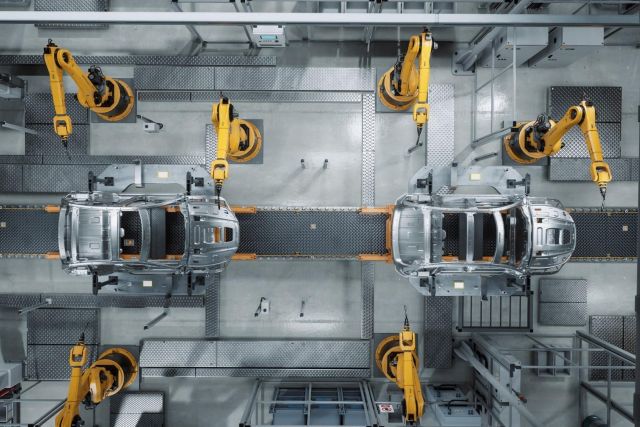
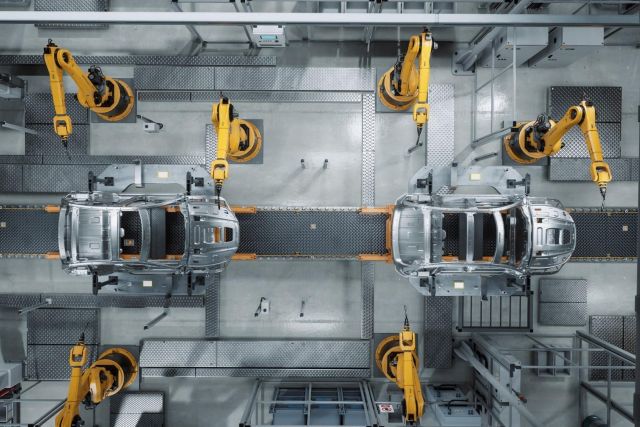
The Treasury says R1 billion was being set aside over the medium term for the industrial development support programme, an incentive scheme that aims to increase participation and investment in infrastructure by firms in selected manufacturing sectors such as automotive.
The purpose of the incentive is to enhance the local production and assembly of new-energy vehicles, batteries and projects focused on operational efficiency and competitiveness in new manufacturing projects. The incentive is expected to attract 30 billion rand in investment from the private sector, the Treasury adds.
In Wuhu, China, Omoda gave the Omoda X its global debut at Omoda X Night, held as part of the 2026 Omoda & Jaecoo International User Summit.
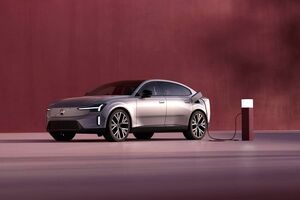
Charging time remains a worry for many South Africans considering an electric vehicle, who still see it as a disruption rather than a quick stop at a filling station. That view is starting to shift.

The winners of the 2026 Automotive Business Council | naamsa Accelerator Awards were announced at the recently held Auto Week 2026, which took place in eThekwini, KZN.
 Advertisement
Advertisement
Advertisement
You can't buy happiness but you can buy cars and that's kind of the same thing.
Unknown
Charging time remains a worry for many South Africans considering an electric vehicle, who still see it as a disruption rather than a quick stop at a filling station. That view is starting to shift.
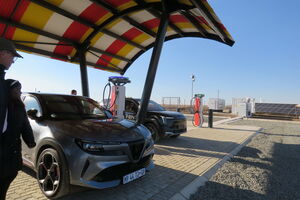
South Africa has taken important steps to position itself within the global electric vehicle (EV) industry, but industry stakeholders argue that further policy adjustments are needed if the country is to accelerate adoption and support long-term investment in clean transport infrastructure.
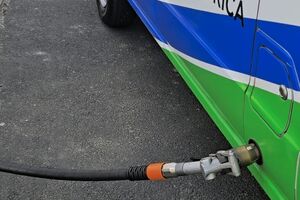
As fuel prices and operating expenses continue to challenge South African businesses, alternative energy solutions are receiving greater attention.