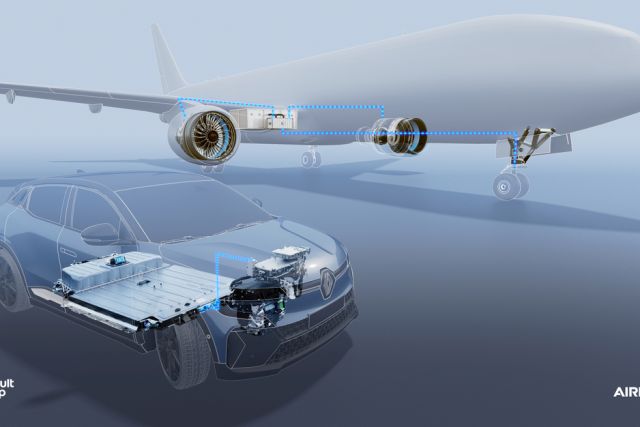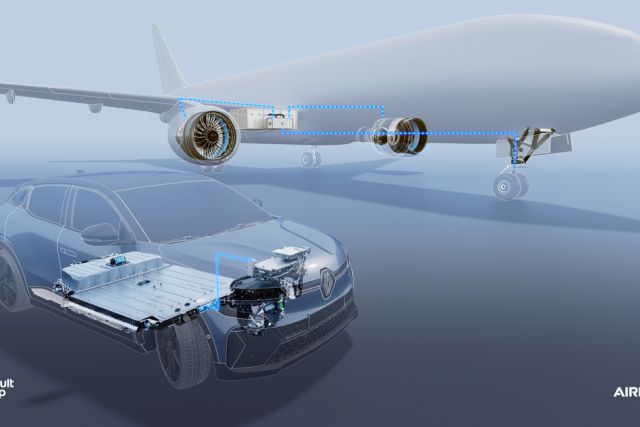
The announcement of the agreement was made on 30 November.
As part of this partnership, engineering teams from Airbus and Renault Group will join forces to mature technologies related to energy storage, which remains one of the main roadblocks for the development of long-range electric vehicles.
The cooperation agreement will especially focus on energy-management optimisation and battery weight improvement. It will also look for the best ways to move from current cell chemistries (advanced lithium-ion) to all solid-state designs, which could double the energy density of batteries in the 2030 timeframe, when Europe will move to all-electric vehicles.
The joint work will also study the full life cycle of future batteries, from production to recyclability, in order to prepare the industrialisation of these future battery designs while assessing their carbon footprint across their entire life cycle.
“For the first time, two European leaders from different industries, are sharing engineering know-how to shape the future of hybrid-electric aircraft.
“Aviation is an extremely demanding field in terms of both safety and energy consumption, and so is the car industry. At Renault Group, our 10 years of experience in the electric vehicle value chain give us some of the strongest feedback from the field and expertise in the performance of battery management systems,” said Gilles Le Borgne, EVP, Engineering, Renault Group.