
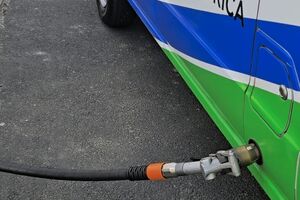
DFSK marks World LPG Autogas Day with focus on running costs
As fuel prices and operating expenses continue to challenge South African businesses, alternative energy solutions are receiving greater attention.
- New Energy Vehicles
- 15 October 2026
Buying a new vehicle today involves more than comparing price, specification and warranty. Service and maintenance plans have become central to ownership packages, with manufacturers offering varying levels of cover either as standard or optional extras.
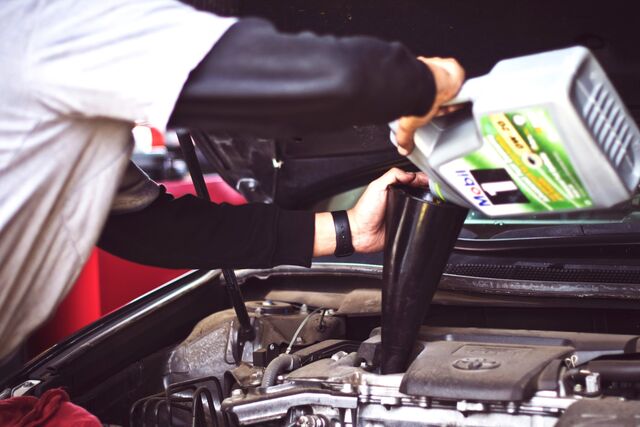
Although the terms are sometimes used interchangeably, they are not the same, and understanding the distinction is important for motorists.
Service plans explained:
A service plan is designed to cover the scheduled servicing required by the manufacturer. It normally includes labour and parts for those services, together with oils, lubricants and filters.
BMW Service Inclusive covers engine oil servicing, vehicle checks, filters, spark plugs and brake fluid, carried out when the vehicle’s system indicates. Volkswagen EasyDrive Service Plan similarly covers all manufacturer‑specified scheduled service requirements, including parts and labour.
The purpose is to make the cost of scheduled servicing predictable. It does not mean every component that eventually wears out will be replaced without cost. A service plan is essentially about ensuring that the basic servicing of the vehicle is taken care of, without unexpected bills for routine checks and replacements.
Maintenance plans explained:
A maintenance plan goes further, covering scheduled servicing plus specified maintenance and wear‑and‑tear items.
Volkswagen EasyDrive Maintenance Plan includes wiper blades, bulbs, brake pads and discs, though tyres, wheel alignment and balancing are excluded. Mercedes‑Benz PremiumDrive distinguishes between Classic Care (basic service plan), Comfort Care (adds maintenance and fair wear) and Exclusive Care (longer cover).
Maintenance does not mean everything that can go wrong is covered. Tyres, accident damage and misuse are common exclusions. The manufacturer’s terms determine exactly which items are included and which remain the owner’s responsibility. This is why motorists should never assume that one brand’s maintenance plan is equivalent to another’s.
Subaru raises the bar:
From 1 August 2026, Subaru South Africa introduced a five‑year or 105 000 km maintenance plan as standard on all new vehicles, replacing its previous three‑year or 75 000 km cover. The plan includes servicing and wear items such as brake pads, wiper blades, key batteries and vehicle batteries. Customers can extend cover to seven years or 150 000 km.
This illustrates the difference clearly. Subaru has not simply extended servicing, but broadened maintenance cover. The inclusion of wear items such as brake pads and batteries means that owners are protected against costs that would otherwise arise during normal use. It is a significant shift in the market, showing how manufacturers are competing not only on vehicle specification but also on ownership packages.
Other manufacturer variations:
Mercedes‑Benz offers PremiumDrive Comfort Care (five years or 100 000 km) and Exclusive Care (seven years or 140 000 km). Some vehicles are advertised with five‑year service and maintenance plans included. This demonstrates how flexible manufacturers can be in tailoring packages to different models and customer expectations.
At the other end of the market, Omoda separates its O Extender Service Plan (scheduled servicing) from its Maintenance Plan (servicing plus periodic maintenance). Prices vary: a five‑year/five‑service C5 service plan costs R32 973, while maintenance plan pricing ranges from R39 838 to R63 308 depending on mileage.
These products are not directly equivalent, as the maintenance plan is designed to operate alongside or after a service plan. This shows how complicated comparisons can become, and why buyers must look closely at what is actually included.
Costs and value:
There is no single average percentage difference between service and maintenance plans in South Africa. Manufacturers calculate differently, with varying periods, kilometre limits and components. Where comparable prices are published, maintenance plans are usually more expensive because they cover additional wear and maintenance costs.
That does not automatically mean better value. The benefit depends on what is covered, how long it lasts and how much the owner would otherwise spend. BMW states its Service Inclusive package can save up to 20% depending on mileage compared with paying individually. For some motorists, this saving could be significant, while for others it may not justify the upfront cost.
Making the right comparison:
The sensible comparison is not simply price but the cost of the plan versus the cost of the servicing and maintenance it covers. For motorists keeping a vehicle for several years and driving high mileage, cover for brake components and other wear items may be valuable. For those travelling fewer kilometres, a service plan may suffice.
With more manufacturers including plans in new vehicle packages, buyers should check what is already included before paying extra. The key question is not whether a service or maintenance plan is better, but what the manufacturer offers for the price, for how long, up to what mileage, and which costs remain the owner’s responsibility.
That is where the real difference lies, and it is where buyers should focus their attention before deciding.
Example of service plan versus maintenance plan:
What is covered |
Typical service plan |
Typical maintenance plan |
Scheduled services |
Yes |
Yes |
Labour for scheduled services |
Yes |
Yes |
Engine oil and specified lubricants |
Yes |
Yes |
Oil, air, fuel and other scheduled filters |
Yes |
Yes |
Spark plugs, where specified |
Yes |
Yes |
Coolant and brake fluid where specified |
Yes |
Yes |
Other parts specifically listed in manufacturer's service schedule |
Yes |
Yes |
Brake pads |
Generally no |
Usually yes |
Brake discs |
Generally no |
Often yes, subject to the plan |
Wiper blades |
Generally no |
Often yes |
Shock absorbers |
Generally no |
Often yes |
Clutch components |
Generally no |
Sometimes, depending on the plan |
Belts and hoses due for scheduled replacement |
Yes, if specified by service schedule |
Yes |
Tyres |
Generally no |
Generally no |
Wheel alignment and balancing |
Generally no |
Generally no |
Image: Unsplash
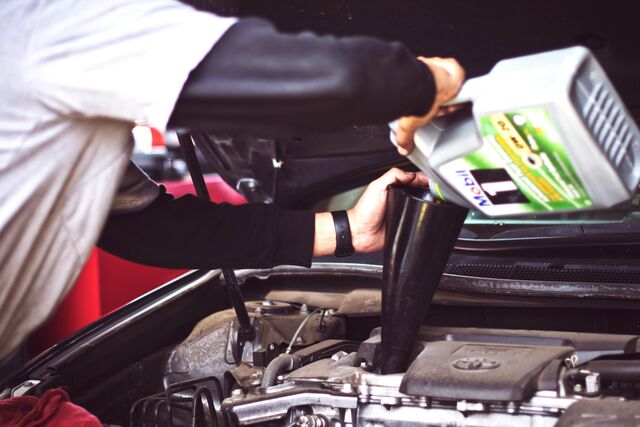
As fuel prices and operating expenses continue to challenge South African businesses, alternative energy solutions are receiving greater attention.
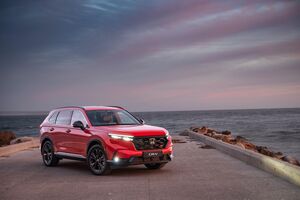
Honda has expanded its local SUV line-up with the introduction of the CR-V RS e:HEV AWD. The newcomer brings hybrid power to the CR-V range while adding updated styling, additional technology and a revised cabin layout.

South African Auto Week 2026 opened in Durban on Tuesday, 13 October, with transformation and skills development among the key issues for the automotive industry, highlighted by an Absa Group investment of R13.5 million in the Automotive Business Council | naamsa’s Dreams Academy.
 Advertisement
 Advertisement
Have you ever noticed that anybody driving slower than you is an idiot, and anyone going faster than you is a maniac?
George Carlin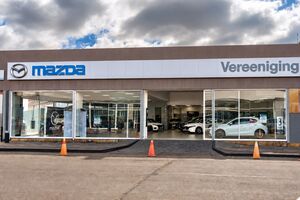
Few can claim a bond with Mazda as deep as the Plitt family's. For more than 60 years, Mazda has been part of the family's story through Mazda Vereeniging, the oldest Mazda dealership in South Africa and a longstanding standalone representative of the brand.

UD Trucks Southern Africa has strengthened its presence in the Eastern Cape with the opening of UD Trucks Komani, a new dealership that joins the manufacturer's growing South African dealer network.

Algoa Nissan is Nissan South Africa’s dealer of the year. It is the third time that the dealership won the overall title and now for the sixth time also the top spot in die small category.