#SaferCarsForAfrica campaign tests Haval, GWM and Renault
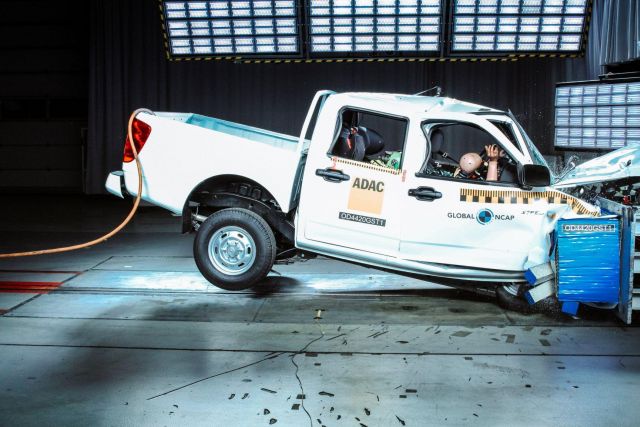
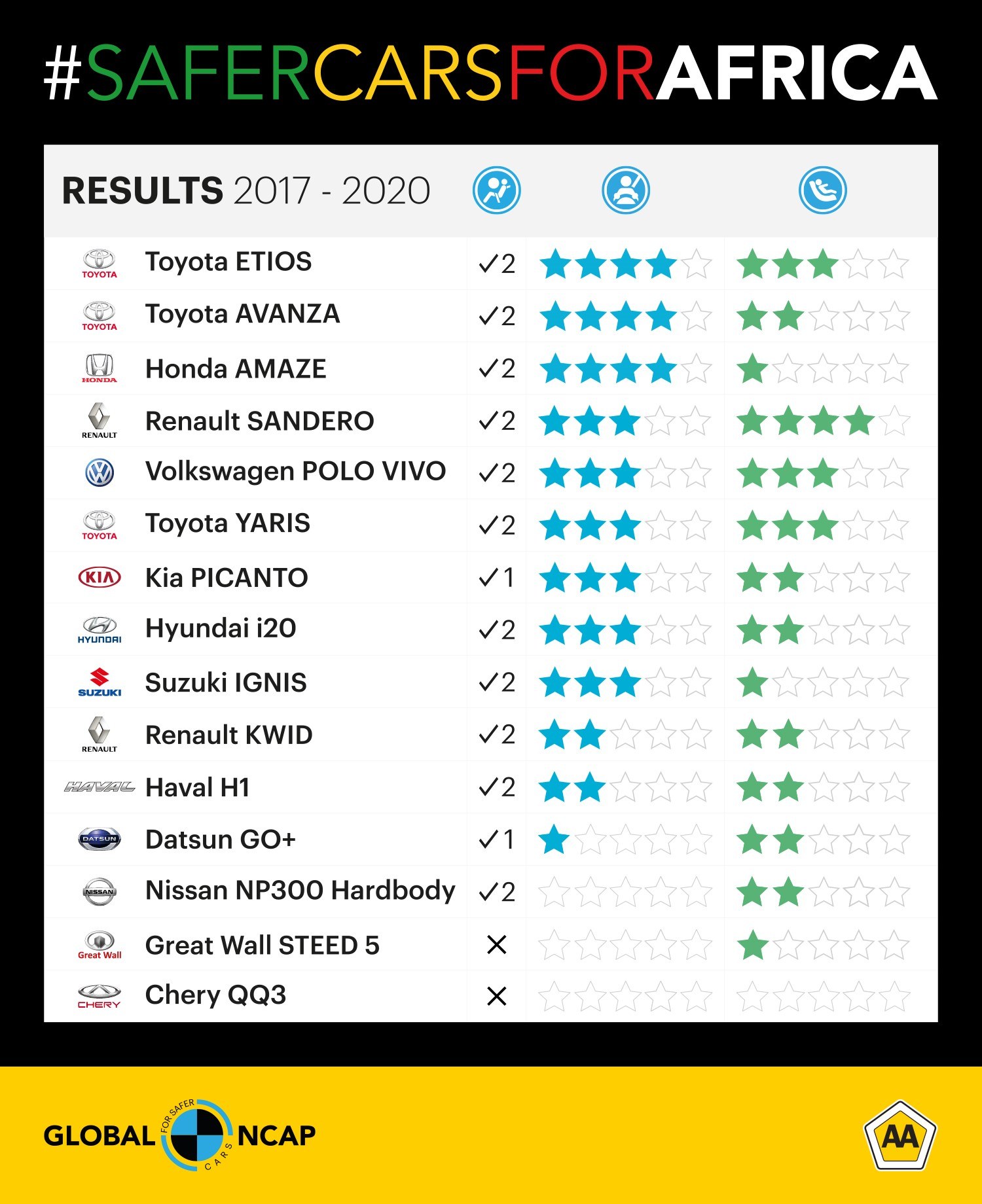
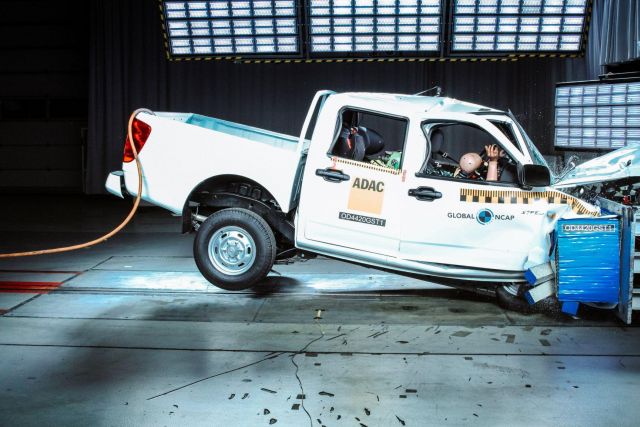
The latest #SaferCarsForAfrica crash test results have raised serious concerns about the poor levels of adult and child protection for the Great Wall Motors (GWM) Steed 5 pick-up, the Haval H1 five door sport utility vehicle (SUV) and the Renault Kwid five-door.
Share with friends
The GWM Steed 5 was “zero star rated” while both the Haval H1 and Renault Kwid achieved a two-star rating for adults and two stars for child occupants, said the Global New Car Assessment Programme (NCAP) and the AA at a virtual launch of the crash test results on Thursday.
The latest results are the fourth round of #SaferCarsForAfrica campaign, which was launched by Global NCAP in 2017 with the objective of promoting safer vehicles across the continent of Africa.
David Ward, president of the Towards Zero Foundation, a platform for co-operation between organisations committed to road injury prevention, said on Thursday that the latest set of crash test results is worrying for the safety of both adult and child occupants in these popular African cars.
Alejandro Furas, Global NCAP Secretary General said the potential for life threatening injury in the GWM Steed 5 follows the zero-star performance of the Nissan Hardbody pick up.
The Nissan NP300 was previously tested by Global NCAP in 2018 as part of the #SaferCarsForAfrica campaign and received a zero-star safety rating. Nissan South Africa said at the time that the locally produced NP300 Hardbody met all safety regulations within Africa.
Furas confirmed on Thursday that the Global NCAP test exceeds the standards required to be met for the regulatory test, adding that all the manufacturers are meeting the regulatory requirements in South Africa “otherwise they won’t be legal to be sold”.
But Furas said there may be certain cases where manufacturers “are probably unintentionally not meeting those regulatory standards” because the South African government, from a safety standard perspective, is not properly monitoring the regulations.
Ward said the Global NCAP frontal crash test is done at 64 km/h while the speed for the regulatory test is lower at 56 km/h.
All the vehicles that have been tested under the #SaferCarsForAfrica campaign with the Global New Car Assessment Programme (GNCAP) and the Automobile Association.
He said the regulatory test is “just a minimum pass or fail test” while the Global NCAP test is trying to measure the different performances and compare the performances of the various manufacturers.
“Of the tests we have just done, the Renault Kwid and Haval H1 most certainly passed the basic crash test. It's more questionable about the Great Wall Steed 5, because we tested it at a higher speed,” he said.
Automobile Association of South Africa (AA) CEO Willem Groenewald said the association’s drive is to raise public awareness about vehicle safety standards. If the safety standard could be fixed on vehicles from a regulatory perspective, the awareness of the public could be raised and consumer behaviour, by default, would alter commercial behaviour, he said.
Groenewald said the AA has been calling for an improvement in the vehicle safety standards set by government since the #SaferCarsforAfrica programme’s first results were launched in 2017.
“We have spoken to the National Regulator for Compulsory Standards about standards and although the evidence is clear, we are eager to see movement in this regard,” he said.
National Automobile Dealers’ Association (NADA) national chairperson Mark Dommisse said every consumer should look at the safety rating of the vehicle they are buying. Dommisse added that there is merit in looking at vehicle safety-rating labelling on vehicles.
Motus Retail has officially opened its first dedicated Mahindra dealership in the Western Cape, located in Tygervalley. Martin Smit will lead the team as Dealer Principal.
We Buy Cars has continued its involvement in youth skills development, with a recent group of learners completing sponsored programmes in partnership with SA Business School.
We Buy Cars has continued its involvement in youth skills development, with a recent group of learners completing sponsored programmes in partnership with SA Business School.
One of South Africa’s most popular motorsport events is just days away, with the Simola Hillclimb once again set to draw fans, competitors and manufacturers to the Garden Route.