
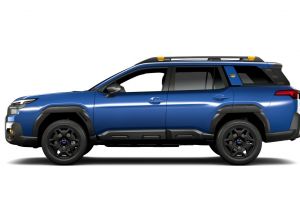
Subaru’s all-new Outback is getting ready for its local launch
Subaru’s all-new seventh-generation Outback has already begun building strong international momentum ahead of its arrival in the local market later this year.
- Product News
- 22 April 2026
Renai Moothilal says South Africa can benefit from the global shift to making electric drivetrains, despite electric drive trains having far fewer parts than fossil fuel engines.

The Executive Director of the National Association of Automotive Component and Allied Manufacturers (Naacam) made this point during a public webinar in which he discussed the findings of KPMG’s 2020 Automotive Survey with other heavyweights in the auto trade.
One of the findings in KPMG’s survey is that the availability of raw materials will play a decisive role in powertrain developments and technology agendas in the future.
Moothilal said the value chain to make and export electric vehicle components already exists in South Africa. He pointed out a lot of components for fossil fuel cars are also used in electric cars.
“We don't need to lose production; we have the breadth and depth — from Original Equipment to Tier One component manufacturers — the components makers will follow the market. We got to treasure this production environment, irrespective of the powertrains,” he said.
He said considering that sales in South Africa’s automotive sector were down 30% before lockdown and 60% year-on-year, local manufacturers now have to think of wider vehicle production and expand their export product mix to get traction in old and new markets.
Moothilal said SA’s access to raw materials placed it in a good position to become a global exporting hub of component production, from sound-deadening parts to coil springs.
He said that new market development was key, especially in Africa. “We have, for a long time, had an insulated market, outside our traditional export markets, we have not done the hard yards in developing regional markets to absorb the SA products.”
Moothilal said for new market developers, opportunities awaited not only in new vehicle sales, but also in after-market sales. But he stressed that local industry players and policy makers must prevent this nascent market from becoming a dumping ground. In this battle, he said the biggest competitor “is our sister factories overseas”.
“Where are all the ICE vehicles in Europe right now going to end up if we don't drive industrial policies?” he asked rhetorically.

Subaru’s all-new seventh-generation Outback has already begun building strong international momentum ahead of its arrival in the local market later this year.
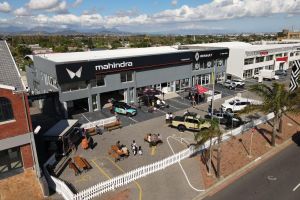
Motus Retail has officially opened its first dedicated Mahindra dealership in the Western Cape, located in Tygervalley. Martin Smit will lead the team as Dealer Principal.
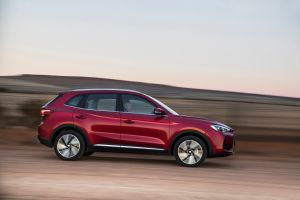
MG Motor South Africa has added two new models to its local range with the introduction of the MG3 hatchback and MG ZS Pro compact SUV or crossover.
 Advertisement
 Advertisement
I have bad reflexes. I was once run over by a car being pushed by two guys
Woody Allen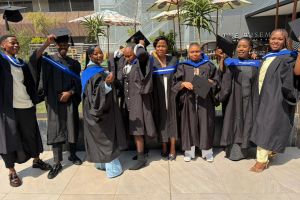
We Buy Cars has continued its involvement in youth skills development, with a recent group of learners completing sponsored programmes in partnership with SA Business School.
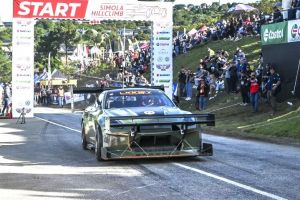
One of South Africa’s most popular motorsport events is just days away, with the Simola Hillclimb once again set to draw fans, competitors and manufacturers to the Garden Route.
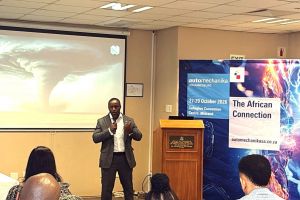
Durban played host to a gathering that placed KwaZulu-Natal (KZN) firmly in the spotlight of South Africa’s automotive story.