
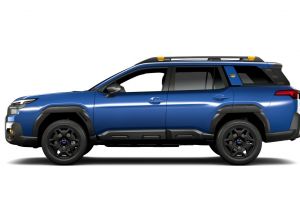
Subaru’s all-new Outback is getting ready for its local launch
Subaru’s all-new seventh-generation Outback has already begun building strong international momentum ahead of its arrival in the local market later this year.
- Product News
- 22 April 2026
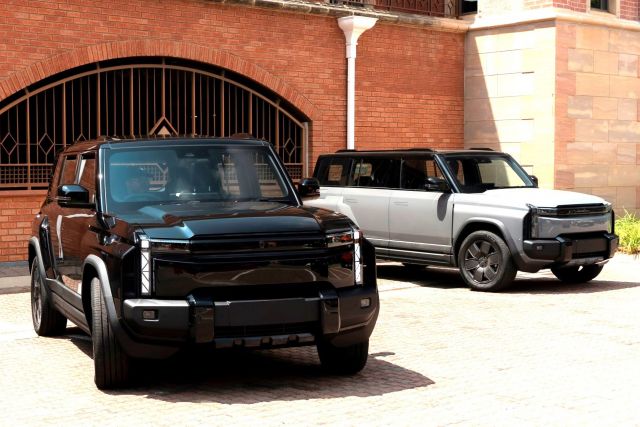
Ahead of the brand’s official introduction in 2026, iCAUR, the new-energy brand from the Chery Group, has outlined the engineering, testing, and manufacturing processes used in developing the new iCAUR 03T.
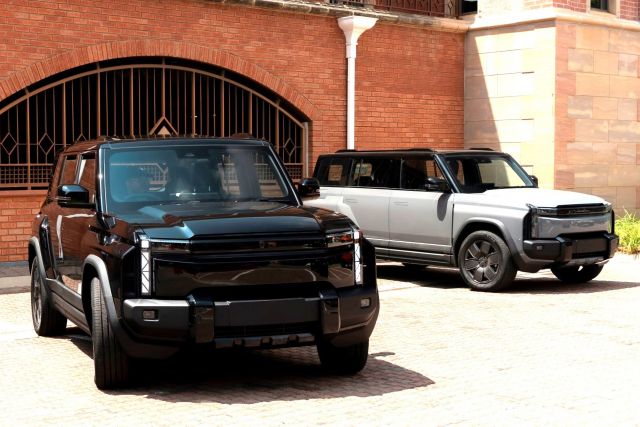
The 03T, due to arrive in South Africa soon, undergoes an extensive quality and durability testing programme designed to simulate a range of challenging conditions, from extreme cold and heat to humidity, dust, and uneven terrain. These tests are designed to evaluate corrosion resistance, power system performance, sealing integrity, body rigidity, and long-term material stability, among other things.
Central to the 03T’s construction is a full aluminium body structure, produced using a combination of MIG arch welding, self-piercing riveting (SPR), flow-drill screw (FDS) fastening and laser deep fusion welding. The aluminium structure uses 6-series, aviation-grade aluminium, selected for its high strength-to-weight ratio and corrosion resistance.
All 237 critical structural connection points utilise SPR technology, a non-thermal joining process that allows aluminium and high-strength steel components to be bonded without heat distortion. This improves long-term durability and resistance to corrosion compared with conventional spot welding.
Precision assembly is achieved through FDS fastening in key body areas, including the roof structure, with assembly tolerances of up to 0.2 millimetres. Laser deep fusion welding is applied at multiple automated stations to bond aluminium profiles with sheet metal components, a process commonly used in the manufacturing of premium vehicles.
The production of the iCAUR 03T takes place at Chery’s South Smart Factory, one of a limited number of facilities in China capable of full aluminium body manufacturing. The facility operates with 100% automation in key processes and uses AI-based visual inspection systems to inspect 105 critical welding points and a further 436 dimensional measurement points on every vehicle body.
“We monitor quality in real time through our own IoT platform, which tracks more than 100,000 data points across the production line, says Shannon Gahagan, National Brand and Marketing Manager for iCAUR South Africa. “That gives us full visibility, from raw materials right through to final assembly. During chassis assembly, we also use smart torque tools to record the angle and torque applied to 26 critical fasteners on every vehicle. Nothing is left to assumption with iCAUR.”
The factory incorporates a reduced-energy manufacturing approach. The aluminium body structure eliminates the need for a conventional paint shop, reducing energy consumption by 82.9% compared with traditional facilities. A photovoltaic power system enables 100% daytime operation using renewable electricity.
These tests and manufacturing standards form part of the brand’s approach to delivering consistent build quality and durability across global operating conditions.
Subaru’s all-new seventh-generation Outback has already begun building strong international momentum ahead of its arrival in the local market later this year.
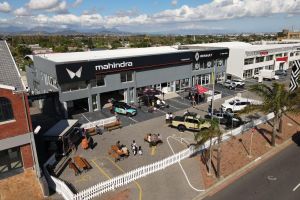
Motus Retail has officially opened its first dedicated Mahindra dealership in the Western Cape, located in Tygervalley. Martin Smit will lead the team as Dealer Principal.
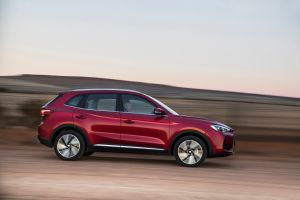
MG Motor South Africa has added two new models to its local range with the introduction of the MG3 hatchback and MG ZS Pro compact SUV or crossover.
 Advertisement
 Advertisement
You can't buy happiness but you can buy cars and that's kind of the same thing.
Unknown
Subaru’s all-new seventh-generation Outback has already begun building strong international momentum ahead of its arrival in the local market later this year.
MG Motor South Africa has added two new models to its local range with the introduction of the MG3 hatchback and MG ZS Pro compact SUV or crossover.
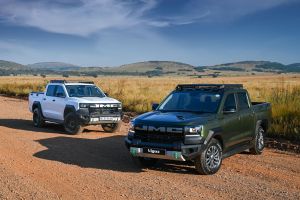
Following the official brand re-launch by the Salvador Caetano Group, JMC South Africa announce the arrival of the All-New JMC Vigus.