More online searches for pre-owned vehicles, says Inspectacar
Consumers are increasingly focusing on low-mileage, pre-owned vehicles with InspectaCar Finance reporting a 160 per cent increase in applications from May 2020 when lockdown levels were first eased compared to August 2020.
Share with friends
Applications have stabilised to normal levels with a -0.98% decrease, and the ratio of financing used vehicles to new ones currently stands at 2:1 according to TransUnion.
According to Jason White, Joint Venture Head of InspectaCar Finance, the pandemic has accelerated search by consumers for pre-owned vehicles.
“Despite the disruption, we see a large number of online users still intending to purchase their next vehicle within the next three or four months. This can be attributed to the fact that interest rates are working in favour of the buyer, with prime currently at 7%,” says White.
“Consumers are also taking advantage of a fixed rate option on their application rates. Although slightly higher than linked rates, a fixed rate option provides peace of mind motoring in the event interest rates should increase. There has never been a better time to fix your vehicle instalment rate.”
According to White, certain ranges are getting a lot of attention, with LCVs attracting a higher than normal activity rate.
Jason White Joint Venture Head of Inspectacar Finance.
Currently, the top passenger brands for searches are VW in first position, followed by Toyota, while in the LCV market, Toyota leads the way followed by Ford and then Nissan. Data from InspectaCar also suggests that there’s still a market for pre-owned premium vehicles, based on searches from their customers’ online engagement.
In response to the strength of the pre-owned market, InspectaCar has added to their website the capability for privately listed cars to be uploaded by consumers and evaluated by InspectaCar dealers, under the “sell my car” functionality, a tool that provides a fair market value of the seller’s vehicle, provided that the quality of the vehicle is satisfactory. This tool has already been used for more than 34 assessments in the past month, and while the functionality is still new, it is yet to be put through its full capability.
“It is undoubtedly a good time to buy a car, particularly if customers have reached their breakeven point. This is where the settlement is almost equal to the trade price of their vehicle. What with the current favourable low interest rates, low fuel costs and some excellent offers available, perhaps a more affordable, lower mileage and more economical vehicle is the way to go,” concludes White.
InspectaCar is the only second-hand vehicle franchise certified by WesBank.
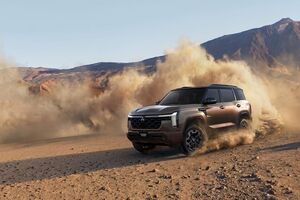
Mitsubishi Motors has revived the Pajero name with the launch of the fifth generation Pajero Cross Country. The new model does not simply replace the previous Pajero that disappeared from the market in 2021. Its relationship with the Pajero Sport is equally important, particularly for markets such as South Africa.
Range Rover, long regarded as the original luxury SUV, has introduced its first electric model. The vehicle is built at the Solihull plant in the UK, where Range Rover production has taken place since 1970.
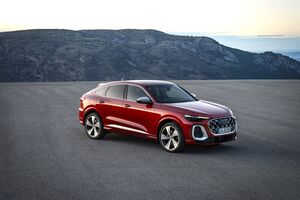
Audi South Africa has introduced the new Q5 range, comprising the third-generation Q5 SUV, second-generation Q5 Sportback, and the performance-focused SQ5 SUV and SQ5 Sportback. The range is built on Audi's Premium Platform Combustion and brings a new generation of petrol and diesel engines to the nameplate.
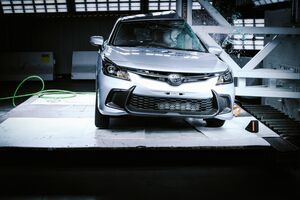
The Toyota Starlet has improved from zero to a four-star rating for adult occupant protection in Global NCAP's latest #SaferCarsForAfrica crash test results. This follows a safety upgrade to make six airbags a standard fit.
Ford Motor Company of Southern Africa has released a new corporate manifesto that sets out its commitment to the country, its customers and its dealer network, alongside a renewed push to champion industrialisation as central to South Africa's future.
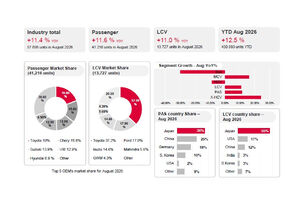
South Africa's new vehicle market sustained strong momentum in August 2026, with aggregate sales increasing by 11,4% year-on-year to 57 898 units, says the Automotive Business Councill | naamsa.