
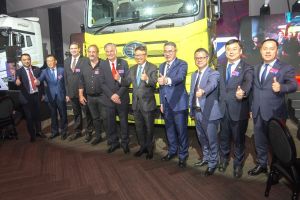
FAW Trucks introduces J7 in South Africa
FAW Trucks Southern Africa has unveiled the J7, a new heavy-duty truck tractor designed for long-haul transport across the region.
- Product News
- 7 April 2026
The automotive industry has contributed to a much faster than expected recovery in manufacturing output in South Africa.

Manufacturing output grew by 32.2% seasonally adjusted in the third quarter of 2020 compared to the previous quarter and by 211.5% on an annualised basis. Absa economic research said this meant total output fell just 2.6% on a year-on-year basis in September 2020 compared to a decline of 11.1% in August 2020. The bank had projected a year-on-year decline of 6.6%.
Output rose in nine of the 10 reported sub-sectors, with only the output of “petroleum, chemical and rubber” declining by 1.5% month-on-month.
Across the major sub-sectors, the increase was led by “vehicles and parts” where seasonally adjusted output rose by 7.2% month-on-month in September 2020, “food and beverages” by 4.9% and “basic iron and steel” by 3.7%.
The quarterly review of business conditions in the new motor vehicle manufacturing industry/automotive sector released by the National Association of Automobile Manufacturers of South Africa (Naamsa) in October 2020 revealed that capacity utilisation levels for cars increased sharply to 71.6% in the third quarter of 2020 from 37.6% in the second quarter. Capacity utilisation for light commercial vehicles improved to 50.5% from 41.1% in the same period.
Naamsa CEO Mikel Mabasa said capacity utilisation levels during the third quarter of 2020 reflected the remaining COVID-19 lockdown restrictions, prevailing weak demand, a volatile rand exchange rate and negative sentiment in the various industry segments in terms of domestic sales.
Absa senior economist, Miyelani Maluleke, said that manufacturing output on an aggregate level is getting close to where it was before the lockdown restrictions kicked in.
But Maluleke believed it will be wrong to emphasise some of these growth rates because the base from which the sector is coming from is extremely low. He says the September 2020 total manufacturing output index level was only 3.7% below the January and February 2020 average and it is important to stress that the sector is definitely not quite back to where it was before the COVID-19 shock hit the country.
But Maluleke said the key thing is that there were huge concerns early in the year when this sector was already under a lot of pressure that “a shock like this would take a lot of firms down with it and we wouldn’t see a very fast recovery”.
“The significance of this recovery is that this sector is proving to be a little more resilient than many of us thought was the case in January, which is very encouraging,” he said.
Maluleke believes this recovery can be sustainable provided South Africa did not experience additional shocks to economic activity.
He said some of the downside risks Absa is concerned about have since started to materialise, such as the big second wave of COVID-19 infections across Europe, including some of South Africa’s key trading partners, such the UK and Germany, which are important destination markets for domestically produced cars.
Maluleke said a large proportion of SA’s automotive production is exported, and the second wave of COVID-19 lockdowns in Europe has the potential to negatively impact on manufacturing output in South Africa.
He stressed the sustainability of the manufacturing output recovery depends a lot on the nature of the recovery in the global economy and the recovery in domestic demand.
“It is an environment that still has a huge amount of risk out there. The external environment has been absolutely critical [to the recovery] and if the second wave of lockdowns is prolonged and starts to do real damage in those markets, there will be a significant negative impact [on South Africa],” he said.

FAW Trucks Southern Africa has unveiled the J7, a new heavy-duty truck tractor designed for long-haul transport across the region.
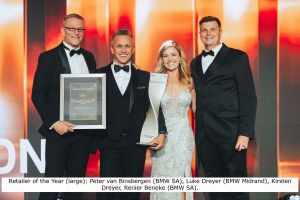
BMW Group South Africa hosted its annual Retailer of the Year Awards celebrating the achievements of its national retail network and recognising the retailers who continue to deliver exceptional customer experiences across the country.
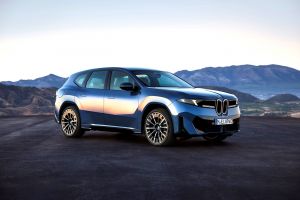
The BMW iX3 has been named World Car of the Year 2026, with the announcement made at the New York International Auto Show on 1 April.
 Advertisement
 Advertisement
Have you ever noticed that anybody driving slower than you is an idiot, and anyone going faster than you is a maniac?
George Carlin
The BMW iX3 has been named World Car of the Year 2026, with the announcement made at the New York International Auto Show on 1 April.
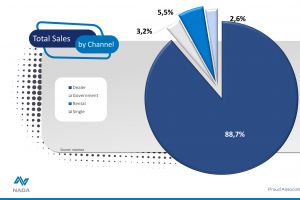
Retail new vehicle sales continue to surge in South Africa despite global and regional conflicts, local floods and droughts.
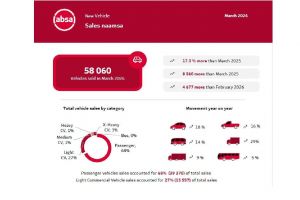
South Africa’s new vehicle market delivered a standout performance in March 2026, extending its domestic growth trajectory to the strongest level seen in nearly two decades.