Working together for skills development, supplier growth
Skills development and the promotion of local supplier growth are at the centre of a Memorandum Of Agreement (MOU) just signed.
Share with friends
The National Association of Automotive Component and Allied Manufacturers (NAACAM) and the Tshwane Automotive Special Economic Zone (TASEZ) says the intention is to drive skills development through training programmes, promote local supplier growth, with a particular focus on small and medium-sized enterprises (SMEs), and foster economic opportunities within the automotive value chain.
Speaking at the signing of the MOA, Dr Bheka Zulu, Chief Executive Officer of TASEZ, explains that the agreement underpins the shared commitment of both organisations to developing local skills, supporting black-owned businesses and driving innovation across the automotive industry.
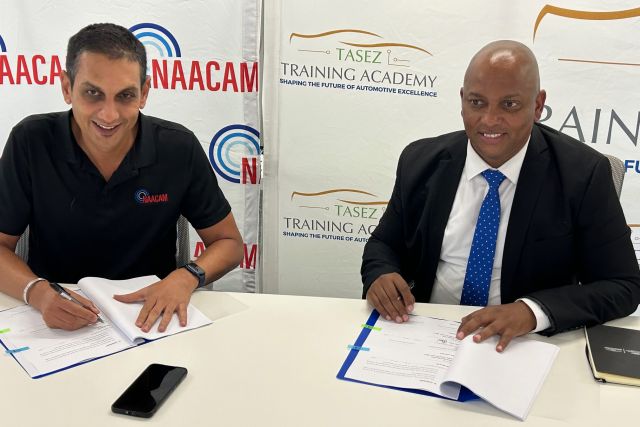
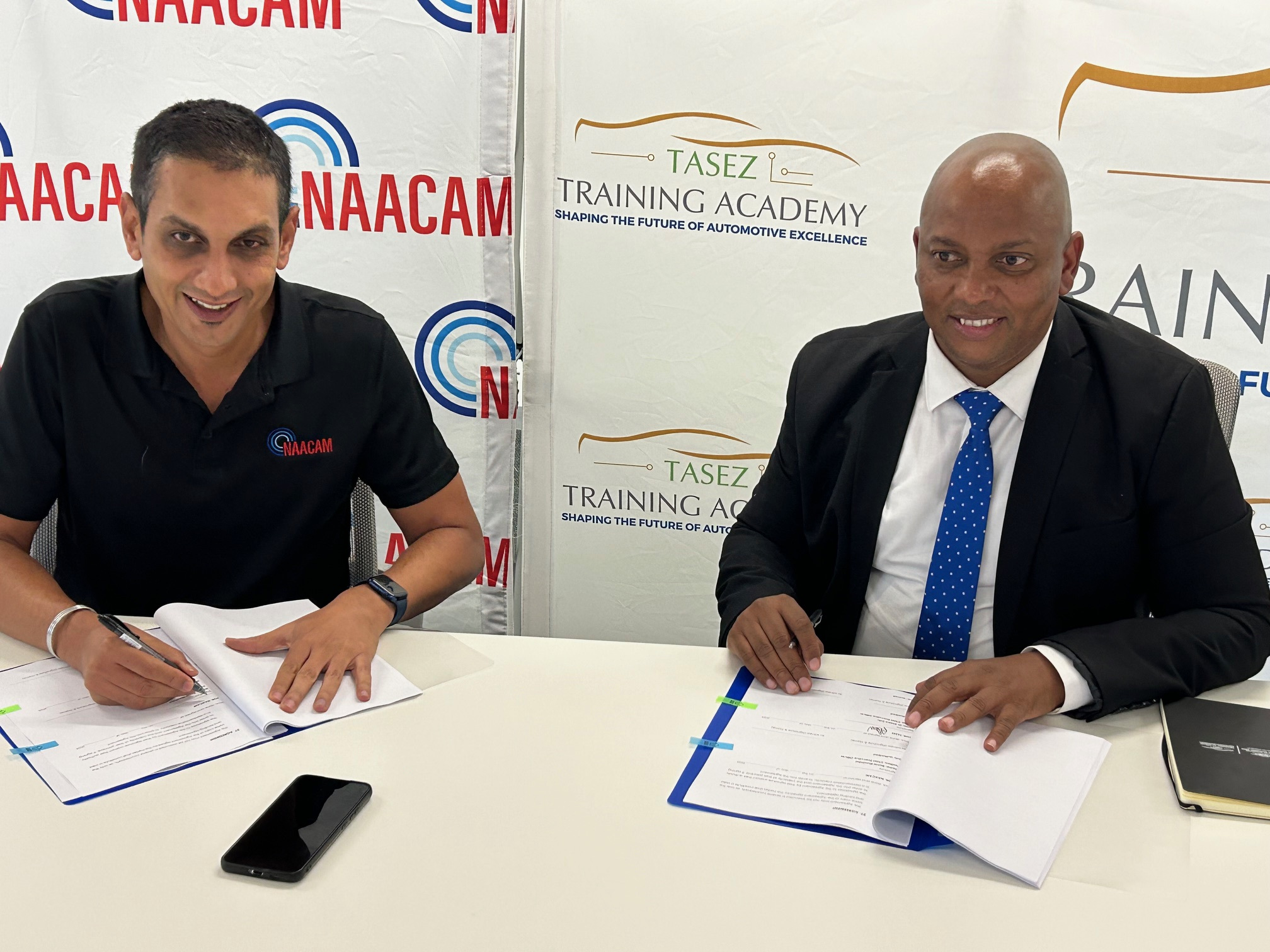
Seen here are Renai Moothilal (left) and Dr Bheka Zulu.
“The partnership provides small businesses and emerging suppliers with direct access to new markets and large manufacturers, creating a sustainable ecosystem that benefits the broader South African economy. This three-year agreement formalises collaboration between TASEZ and NAACAM and is a significant step toward advancing South Africa’s automotive sector,” he says.
The TASEZ-NAACAM partnership will focus on several strategic areas:
Skills Development & Training: Offering programmes for artisan development, retrenched worker reintegration and aligning curricula with industry needs through Technical and Vocational Education and Training (TVET) colleges.
Supplier and SMME Support: Empowering black-owned suppliers by providing access to Tier 1 manufacturers through the NAACAM LOOP platform and supporting business incubation and coaching.
Localisation and Innovation: Driving research to improve local raw material sources and exploring innovations across sectors like rail, maritime and aviation.
Export Market Development: Assisting automotive component manufacturers in accessing international markets and boosting South Africa’s global trade footprint.
Township Economy Revitalisation: Supporting small businesses and fostering entrepreneurship in township communities through hands-on training and mentoring.
Events and Industry Engagement: Collaborating on automotive events and programmes aimed at advancing technical knowledge in vehicle design and innovation.
NAACAM CEO Renai Moothilal says the agreement reflects a holistic approach to advancing the automotive sector by aligning industry needs with government-supported initiatives.
“The partnership represents a transformative opportunity for the South African automotive sector, creating a stronger, more inclusive industry while promoting economic resilience and global competitiveness,” Renai says.
The MOA will remain in effect for three years, with the possibility of renewal and expansion based on mutual agreement.
Toyota South Africa Motors (TSAM) has reaffirmed the enduring popularity of its iconic Hilux, celebrating the largest recorded gathering of Hilux vehicles at the 2026 Nampo Harvest Day.
The Automobile Association of South Africa and Global NCAP have raised serious concerns following the crash test results of the previous generation Toyota Starlet, which received a zero-star rating for adult occupant protection in the latest #SaferCarsForAfrica campaign.
With the launch of what is believed to be the first South African app in ChatGPT, Naked is signalling how AI assistants could reshape financial services.
Toyota South Africa Motors (TSAM) has reaffirmed the enduring popularity of its iconic Hilux, celebrating the largest recorded gathering of Hilux vehicles at the 2026 Nampo Harvest Day.
The Automobile Association of South Africa and Global NCAP have raised serious concerns following the crash test results of the previous generation Toyota Starlet, which received a zero-star rating for adult occupant protection in the latest #SaferCarsForAfrica campaign.
With the launch of what is believed to be the first South African app in ChatGPT, Naked is signalling how AI assistants could reshape financial services.