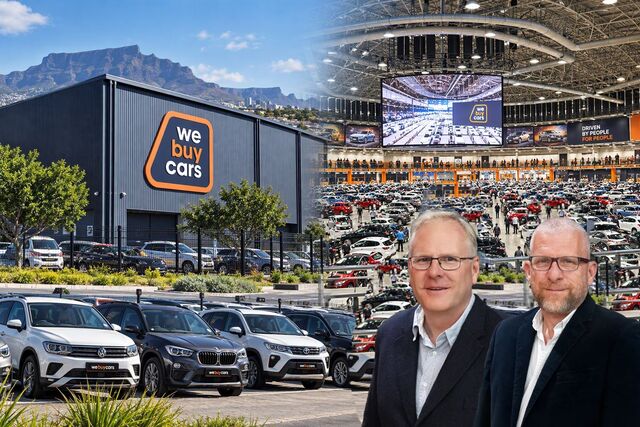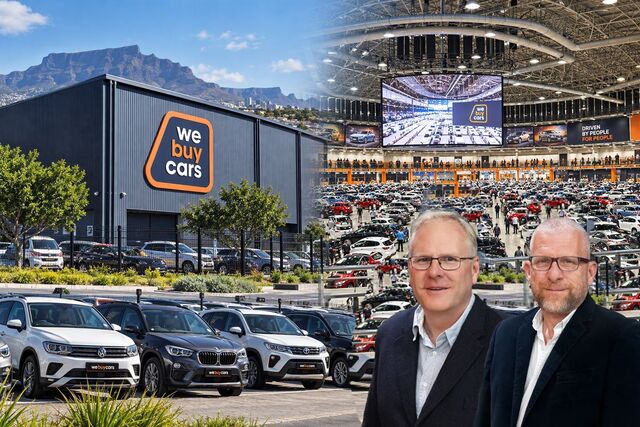
South Africa's largest used-vehicle retailer, WeBuyCars Holdings Limited, is facing a changing automotive landscape in which increasingly affordable new vehicles are challenging the traditional relationship between new and used-car prices. The impact is reflected in its latest annual financial results, with the company reporting higher revenue and sales volumes but a substantial decline in profitability.
According to its audited consolidated results for the year ended 30 September 2026, published through the Johannesburg Stock Exchange's Stock Exchange News Service (SENS) on 23 November, group revenue increased by 7.2% to R28.27 billion, compared with R26.38 billion in the previous financial year.
However, headline earnings fell by 18.5%, from R937.6 million to R764.2 million. Core headline earnings recorded the same decline, while headline earnings per share decreased by 18.6%, from 224.6 cents to 182.8 cents.
The difference between revenue growth and declining earnings highlights the pressure on the group's gross margins. WeBuyCars attributes the lower profitability primarily to deflation in the used-vehicle market and the need to adjust selling prices to remain competitive.
According to the results announcement, the company reduced prices on vehicles competing with Asian brands and competitively priced new vehicles. Management described this as a proactive and necessary response to maintain liquidity and ensure healthy inventory turnover, although it placed additional pressure on margins.
Chinese brands changing the equation:
The growing presence of Chinese and other Asian vehicle manufacturers in South Africa is an important factor in the changing market.
WeBuyCars reports that these brands increased their share of new passenger vehicle sales from 9.2% in 2024 to 13.8% in 2025 and 20% in 2026. The wider availability of competitively priced new vehicles, attractive finance offerings and relatively low new-vehicle price inflation have made new cars increasingly accessible to consumers.
According to the company's report, the South African new-to-used vehicle sales ratio changed from 1:3.14 in 2024 to 1:2.51 in 2026, reflecting the growing appeal of new vehicles.
Used-vehicle prices experienced deflation during the 12 months to September 2026, placing pressure on both transaction volumes and margins. Consumers now have a wider choice of new vehicles, while used-car sellers and dealers have to take greater care when pricing their stock.
The second half of the financial year was particularly challenging, with management also identifying weaker consumer confidence and materially higher fuel prices since May 2026 as contributing factors.
Interestingly, WeBuyCars does not view the growth of Chinese and other Asian brands exclusively as a threat. Its management believes that, over the medium term, the increasing number of these vehicles entering the used-car market will expand its potential vehicle acquisition base and create additional opportunities.
Sales and market share continue to grow:
Despite the challenging trading environment, WeBuyCars continued to increase its buying and selling volumes. The group purchased 185 943 vehicles during the year, up 3% from 180 576, while sales increased by 4% to 186 220 vehicles, compared with 179 006 in the previous year.
The company achieved an all-time monthly sales record of 17 209 vehicles in March 2026, while monthly sales exceeded 15 500 units in six of the last 12 months. Its share of the South African used-vehicle market, measured as a percentage of used-vehicle registrations, also increased from 10.3% to 10.7%, despite the contracting market.
Another positive indicator was cash generated from operating activities, which increased by 48.2% to R1.004 billion, compared with R677.3 million in 2025. According to the results, this improvement was supported by more conservative vehicle purchasing in a deflationary market and the timely disposal of older inventory.
Expansion continues despite market pressure:
During the financial year, the group opened its Montana supermarket in Pretoria North in November 2025, followed by Lansdowne in Cape Town in January 2026, Witbank in February and Bloemfontein in August. It also relocated its commercial vehicle operation from the Dome in Randburg to a more prominent site along the R21 highway in Centurion.
According to the results announcement, these developments increased its national parking-bay capacity by 25.4%, adding 3 283 bays.
The additional capacity forms part of its strategy to increase buying and selling volumes to 23 000 vehicles per month by the 2028 financial year. The company also secured 2.7 hectares of land in Polokwane for a new, capital-light supermarket planned for 2027, which will centralise vehicle preparation and trading activities.
- WeBuyCars was established in 2001 by brothers Faan and Dirk van der Walt, who identified an opportunity to make selling a used vehicle quicker and more convenient in a fragmented market. The business grew into one of South Africa's largest used-vehicle buying and selling operations before listing separately on the JSE's Main Board on 11 April 2024, following its unbundling from Transaction Capital.
- The brothers remain shareholders and involve in the business. In a letter to shareholders published through SENS on 23 November 2026, they announced that current Deputy CEO Wynand Beukes would take over as CEO from 1 January 2027. Faan will remain on the board as a non-executive director and consultant, while both brothers intend to continue advising and supporting the management team. The same letter confirms that they remain substantial shareholders.
Image: Photo: Wikimedia Commons (CC BY-SA 4.0), WeBuyCars, AI Generated.