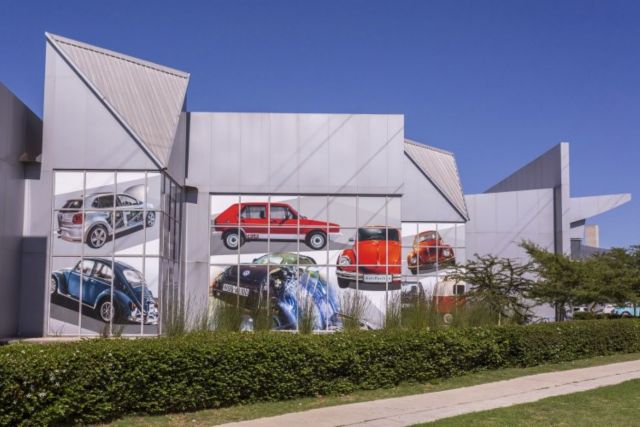
For more than 70 years Volkswagen vehicles have traversed the roads of South Africa and have become one of the most loved vehicle brands in the country.
Share with friends
Its heritage remains proudly preserved at the Volkswagen AutoPavilion in Kariega. This quaint town, formerly known as Uitenhage, is the second oldest town in the Eastern Cape and is home to Volkswagen Group South Africa’s (VWSA) manufacturing plant where the first Volkswagen Beetle rolled off the production line at the end of August 1951.
More than 40 classics are displayed inside the AutoPavilion museum, with the oldest being a 1938 DKW F5 Reichklasse.
The Volkswagen AutoPavilion is open to the public and offers plant tours where visitors have the opportunity to experience the production of two of South Africa’s most popular vehicles, the Polo and the Polo Vivo.
Captured amid some of the iconic classics are Siphokazi Wonci, VWSA plant tour guide (left) and Nelisa Winti, Volkswagen AutoPavilion administrator.
Open five days a week, the Volkswagen AutoPavilion has welcomed more than 14 000 visitors this year (as at the end of August).
Andile Dlamini, Head of VWSA Communications, said visitors come from across the country to view the museum and to experience the motoring entertainment on offer at the AutoPavilion.
“The museum is dedicated to preserving and showcasing an impressive array of our classic and iconic cars, which were assembled at our Kariega plant over the past seven decades. Many young children and school groups visit our facility to learn about the evolution of the automotive industry,” said Dlamini.
He added that visitors to the AutoPavilion also gain insight into the craftsmanship and engineering behind these remarkable vehicles and learn about the contribution of Volkswagen to the local automotive industry.
Zero Carbon Charge (CHARGE) welcomes the government’s extension of short term fuel levy relief measures aimed at cushioning consumers from rising fuel prices, but cautions that these interventions do not address the underlying structural challenge facing South Africa’s transport economy.
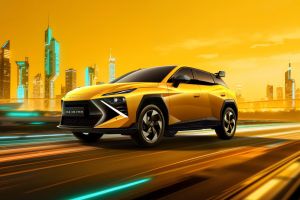
At Auto China 2026 this weekend, President of Jetour International, Ke Chuandeng, made the announcement that from 2027, Jetour will be producing some of their models locally in South Africa
At Auto China 2026 this weekend, President of Jetour International, Ke Chuandeng, made the announcement that from 2027, Jetour will be producing some of their models locally in South Africa
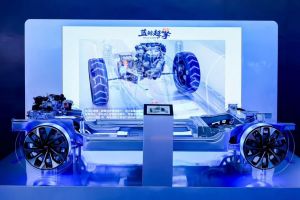
Changan has unveiled its ambitious “1+4+4+5” global strategy, signalling a determined push to become one of the world’s top ten automotive brands by 2030.