
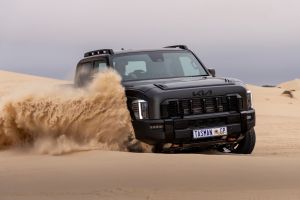
Kia’s Tasman bakkie arrives in South Africa
Kia has taken a bold step into one of South Africa’s most competitive automotive segments with the launch of the Tasman, its first-ever double cab bakkie.
- Product News
- 9 April 2026
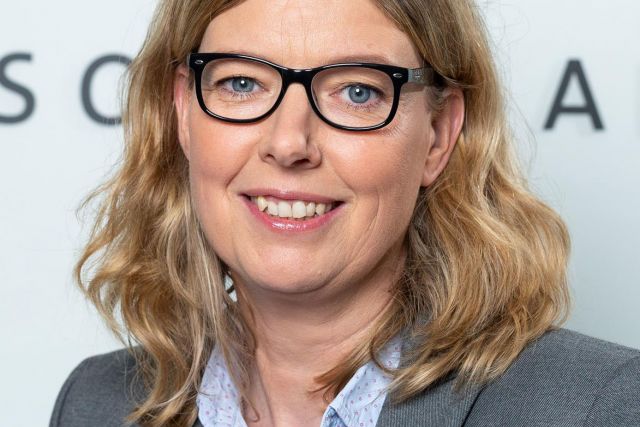
Over the past weekend, reports surfaced of a letter sent by Martina Biene, chairperson and managing director of Volkswagen Group Africa (VWGA), to President Cyril Ramaphosa warning of the increasingly precarious position of South Africa’s automotive sector.
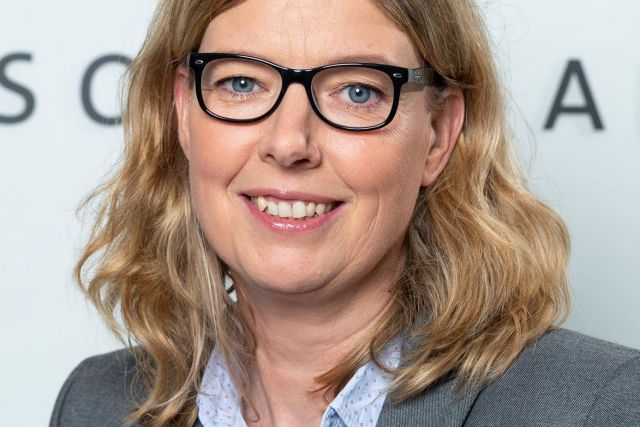
Although the letter was written late last year, its contents have gained renewed attention as industry commentators point to 2026 as a decisive moment for local vehicle manufacturing. According to Martina, Volkswagen’s global headquarters will soon decide where future production programmes are allocated, and South Africa’s ability to compete for that investment depends heavily on policy certainty and cost competitiveness.
In the letter, she is understood to have raised concerns about the weakening business case for producing vehicles locally. Rising operational costs, inconsistent electricity supply and an influx of cheaper imported vehicles have steadily eroded the advantages that once made South Africa a preferred manufacturing hub. Business analysts quoted by Business Tech note that locally built vehicles now account for roughly a third of domestic sales, a sharp decline from previous decades.
A major focus of the warning relates to delays in policy implementation, particularly around new-energy vehicles (NEVs). Volkswagen and other manufacturers have repeatedly stressed that without clear incentives and legislation to support electric and hybrid vehicles, South Africa risks falling behind global industry trends. Reports in Sowetan and News24 indicate that rival markets are already offering clearer frameworks, making them more attractive destinations for investment.
The implications extend far beyond Volkswagen alone. The automotive industry is one of South Africa’s largest manufacturing employers, directly and indirectly supporting hundreds of thousands of jobs. Moneyweb and The Citizen have both highlighted fears that reduced investment could accelerate job losses and deepen deindustrialisation at a time when economic growth remains fragile.
Martina’s intervention also reflects broader frustration within the sector about slow government response. While the Department of Trade, Industry and Competition has announced plans to support the transition to cleaner vehicles, including possible tax incentives, industry leaders argue that announcements have not yet translated into concrete, bankable policy.
Volkswagen has previously warned that persistent power disruptions continue to inflate production costs and disrupt export schedules, further undermining competitiveness against plants in Europe and Asia. Without decisive action, commentators suggest that multinational manufacturers may prioritise expansion elsewhere.
The letter to President Ramaphosa therefore serves as a stark signal: unless South Africa moves quickly to stabilise its policy environment and support automotive manufacturing, the country risks losing future investment in one of its most strategic industrial sectors.
Kia has taken a bold step into one of South Africa’s most competitive automotive segments with the launch of the Tasman, its first-ever double cab bakkie.
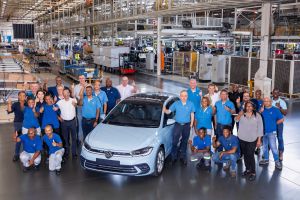
Volkswagen Group Africa (VWGA) has reached another major milestone with the production of the 500 000th unit of the current Polo for the export market.
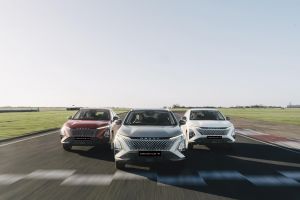
OMODA has expanded its South African lineup with the arrival of the C5 SHS hybrid, a new addition to the C5 range.
 Advertisement
 Advertisement
I have bad reflexes. I was once run over by a car being pushed by two guys
Woody Allen
Volkswagen Group Africa (VWGA) has reached another major milestone with the production of the 500 000th unit of the current Polo for the export market.
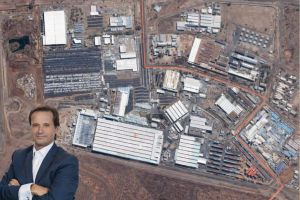
Nissan South Africa has agreed to sell its Rosslyn production facility after 60 years of operation. The plant, which produced models such as the 1400 ‘Champ’ bakkie, NP200 and Navara, was acquired by Chery SA. The Chinese automaker has sold over 80,000 vehicles locally since 2021 and is now strengthening its African presence.

Following an intense national selection process that pushed participants to the limit, South Africa’s representatives for the 2026 Defender Trophy global final have been decided.