VW announces R4 billion investment in Kariega plant
Volkswagen Group Africa announced a R4 billion investment in its manufacturing plant in Kariega.
Share with friends
The investment will be used to upgrade facilities in various areas in preparation for the addition of a third model to its production line-up from 2027.
Most of the R4 billion investment will be allocated to capital expenditure for production facilities, manufacturing tooling, local content tooling and quality assurance. Nearly R877 million will be spent to enhance automation in the Body Shop.
In the Press Shop, an estimated R418 million will be utilised to procure new press tooling. The first phase of the plant facility upgrade will begin at the end of 2024 during the plant shutdown.
Martina Biene, Chairperson and Managing Director of Volkswagen Group Africa, says the investment announcement reaffirms Volkswagen Group’s commitment to South Africa, where it has been manufacturing vehicles for nearly 73 years.
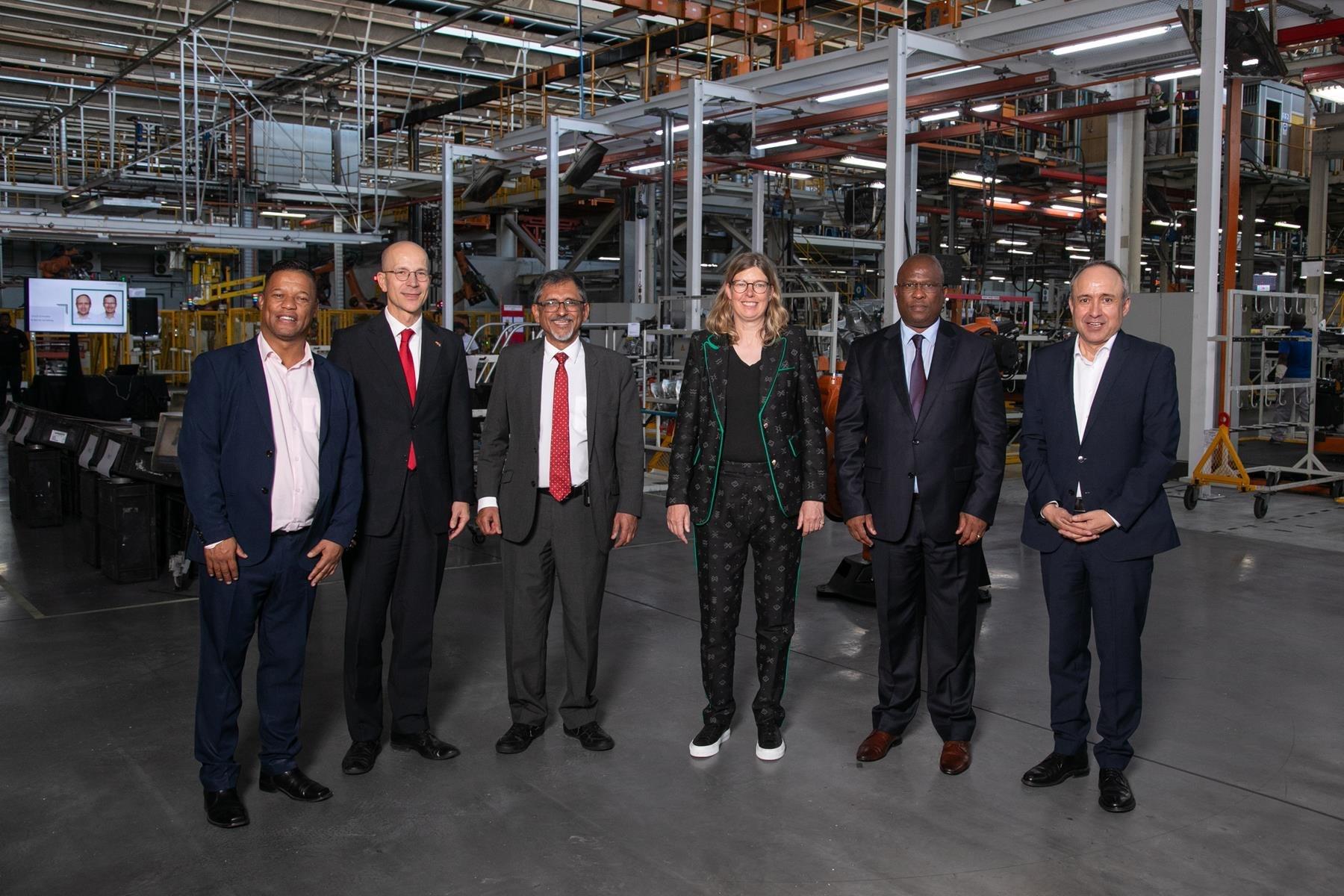
Seen here are Nelson Mandela Bay Mayor, Gary van Niekerk; the German Ambassador to South Africa, Andreas Peschke; the Minister of Trade, Industry and Competition, Ebrahim Patel; Volkswagen Group Africa Chairperson and Managing Director, Martina Biene; Eastern Cape Premier, Lubabalo Mabuyane and Volkswagen Group Africa Production Director, Ulrich Schwabe.
“Plant Kariega is an important manufacturing plant within the Volkswagen Group production network. Since 2011, Volkswagen has invested R10.28 billion in production facilities, manufacturing equipment, local content tooling and the training of people. The new investment is a vote of confidence in the future of the plant. It also future proofs jobs, not only for our people but also those employed in our supplier network,” she explains.
The third model, which will be an SUV, will be manufactured on the same production line as the Polo and Polo Vivo. The Polo and Vivo models are currently the top selling passenger models for the Volkswagen Passenger Cars Brand in South Africa.
The changes being made in preparation for the production of the new SUV also includes training and upskilling opportunities for Volkswagen Group Africa’s production employees.
Localisation remains a key priority for Volkswagen Group Africa. Polo and Vivo currently have 46% and 58% local content levels respectively. The trend is set to continue with the new model, which aims to achieve approximately 40% local content through a R1.2 billion investment.
Volkswagen Brazil is leading the design and development of the new SUV. Volkswagen Group Africa’s Engineering team has collaborated with Volkswagen Brazil for the adaptation of the new model to local and continental requirements which, for example, includes the development of a right-hand drive version.
She adds: “South Africa is an important market for the Volkswagen Group, particularly in terms of our long-term goal to establish our footprint on the African continent, which is seen as the last frontier for automotive development. As such, we have recently renamed our local company to Volkswagen Group Africa, to represent our steering responsibilities and ambitions to grow the Volkswagen brand on the continent. The new model has the potential to be sold in other African markets where Volkswagen has a presence.”
Martina says most global vehicle markets’ transition is to electric vehicles. “African markets, like South Africa, will continue manufacturing and selling vehicles with internal combustion engines (ICEs) for the foreseeable future, owing to customer demand for ICEs and the slow introduction of electric vehicles in these markets. However, for the Volkswagen Brand the electrification journey begins this year with the introduction of our ID.4 test fleet in South Africa and Rwanda.”
The Kia Carens nameplate makes its return to South Africa, this time as a seven‑seater designed with families in mind. It combines Sport Utility Vehicle (SUV) styling with Multi-Purpose Vehicle (MPV) practicality, offering space, comfort and efficiency, Kia says.
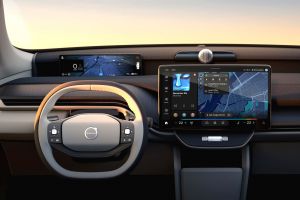
Volvo has confirmed that its vehicles will now integrate Google’s Gemini artificial intelligence system. This development builds on the company’s existing collaboration with Google, which already provides Android Automotive OS and Google services in Volvo models.
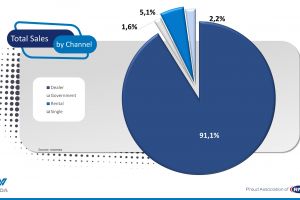
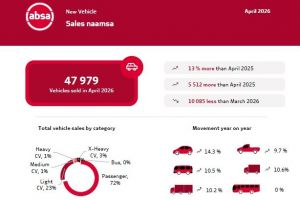
New vehicle sales in 2026 continued their positive trend in April, with the 47 979 units sold marking the best April figure since 2013. This represents a remarkable performance by local automotive retailers despite a host of economic headwinds and a challenging trading environment.
Volvo has confirmed that its vehicles will now integrate Google’s Gemini artificial intelligence system. This development builds on the company’s existing collaboration with Google, which already provides Android Automotive OS and Google services in Volvo models.
New vehicle sales in 2026 continued their positive trend in April, with the 47 979 units sold marking the best April figure since 2013. This represents a remarkable performance by local automotive retailers despite a host of economic headwinds and a challenging trading environment.
April 2026 marked a turning point in South Africa’s economic landscape, as global energy markets were jolted by escalating geopolitical tensions in the Middle East, according to naamsa | The Automotive Business Council.