Transformation remains firmly in the sights of Volkswagen Group South Africa (VWSA) as a priority despite the COVID-19 pandemic and the semi-conductor crisis impacting the automotive industry.
Share with friends
This extends to the company and its supply chain, with two new Black-owned suppliers joining the VWSA supplier base after completing a mentoring programme offered by the company.
KPL Die Casting and Thekwini Wire, both beneficiaries of VWSA’s Project Ntinga, began supplying parts for the Polo and Polo Vivo built in Kariega in 2021. Project Ntinga was launched in 2017 to develop Black-owned suppliers to the automotive industry through an intensive mentoring and coaching programme. Five winners were originally chosen to participate from a group of over 300 suppliers.
“We were fortunate to be trained by the VWSA team, and we also had an automotive expert appointed as our mentor, who guided us to become a more valuable supplier within the automotive sector’s supply chain,” said Bala Moodley, director of Thekwini Wire in Durban.
Thekwini Wire, which was opened in 2009, is currently a second-tier supplier, supplying parts to one of VWSA’s direct suppliers, which in turn supplies parts for the Polo. “The insight from VWSA production site visits helped us to implement newer ways of working and improved our ability to streamline our processes. We also gained the confidence to approach other automotive manufacturers and Tier 1 suppliers for new work.”
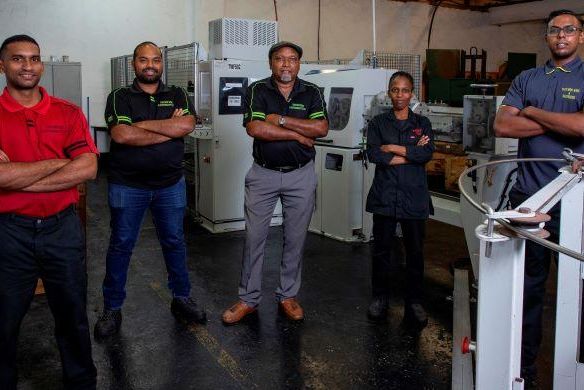
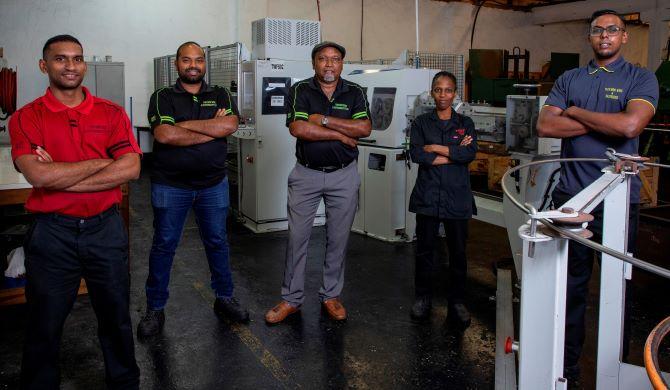
Brandon Naidoo (Quality Assurance), Patrick Moodley (Director), Bala Moodley (Director), Merrilyn Nxasana (Supervisor) and Yogesh Govender (Machine Setter) from Thekwini Wire.
Meanwhile, KPL Die Casting has been supplying a part to VWSA for the Polo Vivo. “Through Project Ntinga, KPL gained more capacity to respond to market demands and learned the importance of using globally recognised quality business processes,” said Sally Marengo, owner and managing director of KPL.
KPL was also assisted during the COVID-19 pandemic by the B-BBEE Initiatives Trust, which was established by VWSA in 2016 with the mandate of driving transformation in the South African automotive industry, by investing in Black-owned suppliers and offering post-investment support to these companies.
With transformation being one of the key priorities for VWSA’s corporate strategy, the company has continuously worked towards achieving a diverse, inclusive workforce and supply chain. These efforts are evident through the company’s recent achievement of a B-BBEE Level 3 status.
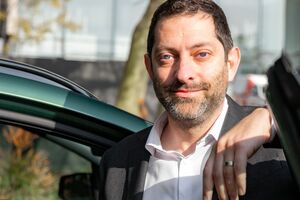
“Transformation remains a key priority for VWSA and within the wider automotive industry,” said Nonkqubela Maliza, Director of Corporate and Government Affairs at VWSA.
Charging time remains a worry for many South Africans considering an electric vehicle, who still see it as a disruption rather than a quick stop at a filling station. That view is starting to shift.
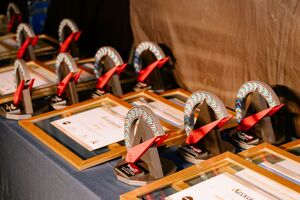
The winners of the 2026 Automotive Business Council | naamsa Accelerator Awards were announced at the recently held Auto Week 2026, which took place in eThekwini, KZN.
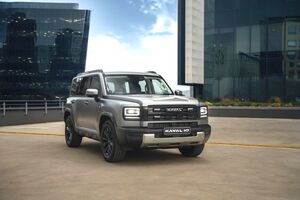
GWM has expanded its local SUV line-up with the introduction of the all-new Haval H7. Replacing the outgoing model, the newcomer blends boxy styling, advanced technology and a choice of petrol, hybrid and plug-in hybrid powertrains, giving buyers a versatile family SUV with genuine all-terrain credentials.
The winners of the 2026 Automotive Business Council | naamsa Accelerator Awards were announced at the recently held Auto Week 2026, which took place in eThekwini, KZN.
With the steep rise in fuel prices since March this year leading to historic record highs following massive increases in October, the government intervention annouched this week, is widely welcomed.
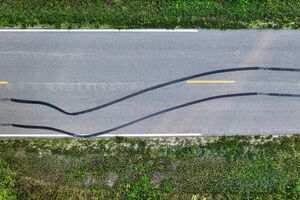
Most motorists will go their entire driving lives without deliberately pushing their vehicle to the limits of adhesion. Yet a sudden downpour, a patch of gravel, standing water or simply carrying too much speed into a bend can quickly expose the limits of a vehicle's grip.