
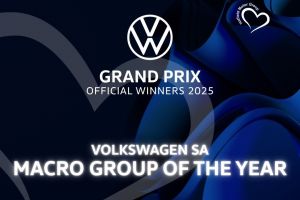
VW celebrated top dealers and top motoring groups
CFAO‘s Mc Duling Motors under the leadership Allan Stiles as Dealer Principal scooped the top award as Dealer of the Year at VW’s recently held Grand Prix Awards.
- Dealer News
- 5 May 2026
The Collaborative Safety Research Centre (CSRC) at Toyota has reached a significant benchmark, completing its 100th research project in partnership with the Massachusetts Institute of Technology in the USA.
This collaboration has fundamentally shaped the understanding of driver behaviour and automotive safety over the past decade.
At the heart of this achievement lies the Advanced Vehicle Technology (AVT) Consortium, an innovative research partnership housed within MIT's Centre for Transportation and Logistics. Toyota became a founding member when the consortium launched in 2011, helping to establish what Bryan Reimer, AVT's founder and co-director, describes as a ground-breaking model for academic-industry collaboration.
The consortium's approach centres on naturalistic data collection, observing how drivers actually interact with vehicles and technologies in everyday situations rather than controlled laboratory environments. This real-world focus has attracted more than 25 participating organisations spanning the automotive ecosystem, from manufacturers and suppliers to insurers and consumer advocacy groups.
"AVT was conceptualised over a decade ago as an academic-industry partnership to promote shared investment in naturalistic data collection, analysis and collaboration," Bryan explains. The ultimate aim has been to advance not just safety, but also convenience and comfort in modern mobility.
For Toyota, the partnership has delivered tangible benefits in product development. The research has provided crucial insights into how technologies such as adaptive cruise control and lane-centring assistance perform when used by real drivers in varied conditions. Josh Domeyer, principal scientist at CSRC, emphasised that AVT uniquely combines vehicle performance data with driver behaviour analysis, revealing how these systems function in practice rather than theory.
The collaboration between Toyota CSRC and MIT's Age Lab has produced particularly noteworthy advances in understanding human-machine interaction. Research into how pedestrians and drivers communicate during street encounters, through subtle movements and positioning, yielded insights that proved invaluable for Toyota's e-Palette autonomous shuttle deployment at the Tokyo Olympics. This work has since influenced international standards, being incorporated into ISO guidelines for automated driving system communication.
Jason Hallman, senior manager at Toyota CSRC, noted the programme's broader impact: "Since 2011, CSRC has collaborated with researchers such as AVT and MIT AgeLab on projects that help inform future products and policy, and to promote a future of a safe mobility society for all."
The datasets generated through AVT research continue informing behavioural safety strategies, examining everything from driver distraction patterns to multitasking behaviour. Domeyer suggested these insights could lead to various interventions such as subtle prompts within vehicles, refined feature designs, or educational partnerships, all aimed at encouraging safer driving habits while respecting driver preferences.
As research progresses, however, regulatory frameworks for autonomous vehicles remain fragmented. The newly established Safe Autonomous Vehicles Everywhere in the USA (SAVE-US)
advocacy group has emerged to address what it characterises as insufficient oversight of self-driving technology. The organisation seeks to establish unified safety standards across jurisdictions.
Currently, the regulatory environment varies considerably across America. Fourteen states have no autonomous vehicle legislation whatsoever, while others have adopted dramatically different approaches. California maintains stringent requirements, whereas Arizona and Texas have implemented more permissive frameworks. This inconsistency, SAVE-US argues, allows manufacturers excessive latitude in setting their own safety standards with minimal accountability.
Industry representatives, including those from the Autonomous Vehicle Industry Association, have increasingly supported calls for clearer regulatory guidance, recognising that consistent frameworks benefit both manufacturers and public safety.
CFAO‘s Mc Duling Motors under the leadership Allan Stiles as Dealer Principal scooped the top award as Dealer of the Year at VW’s recently held Grand Prix Awards.
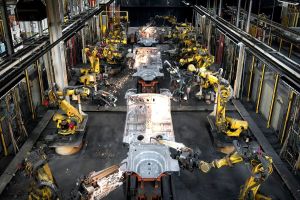
Nissan’s decision to drop a planned $500 million investment in electric vehicle (EV) production at its Canton, Mississippi plant is the latest indication that established manufacturers are reassessing how quickly the market will shift to battery power.
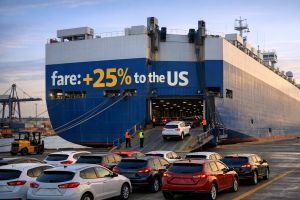
Donald Trump has threatened to increase United States (US) tariffs on cars and trucks imported from the European Union to 25% from next week, up from the 15% rate set under last year’s so-called Turnberry framework.
 Advertisement
 Advertisement
You can't buy happiness but you can buy cars and that's kind of the same thing.
Unknown
Donald Trump has threatened to increase United States (US) tariffs on cars and trucks imported from the European Union to 25% from next week, up from the 15% rate set under last year’s so-called Turnberry framework.
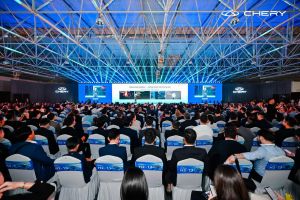
No, the Chinese are not coming to take over – they are already busy accomplishing it.

Motorists and households already under pressure will have to dig deeper into their pockets yet again from Wednesday, with sharp fuel and energy price hikes taking effect across South Africa.