
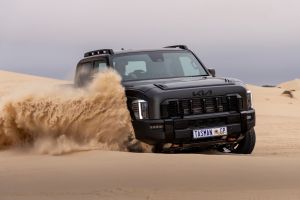
Kia’s Tasman bakkie arrives in South Africa
Kia has taken a bold step into one of South Africa’s most competitive automotive segments with the launch of the Tasman, its first-ever double cab bakkie.
- Product News
- 9 April 2026
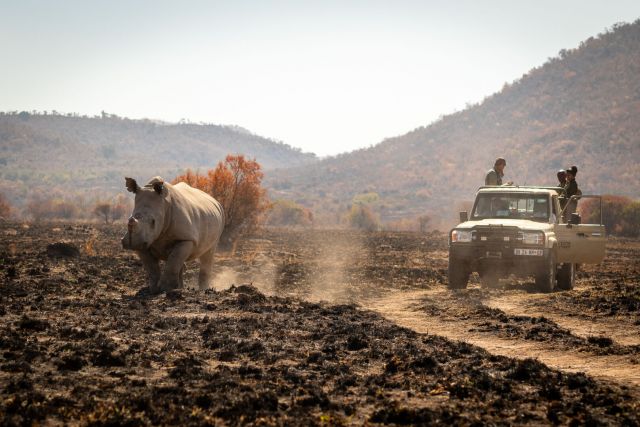
Toyota South Africa Motors (TSAM), in collaboration with the Pilanesberg Wildlife Trust, recently executed a large-scale dehorning initiative at the Pilanesberg National Park.
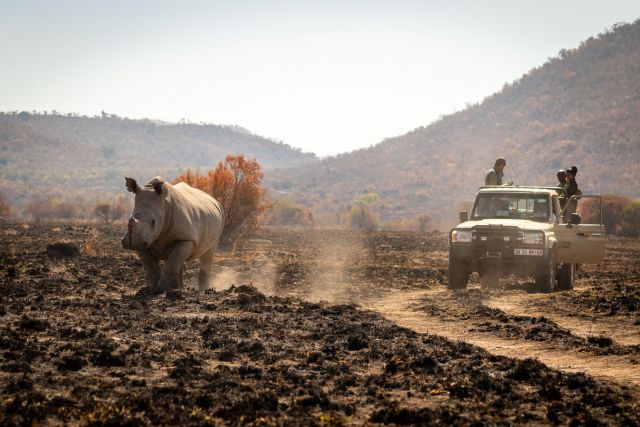
To safeguard the rhino population, anti-poaching units must be both visible and mobile. In recent years, TSAM has donated vehicles, covered all service costs, and partnered with Monitor dealers to refurbish additional vehicles.
“Toyota's global environmental policy is robust, and we are proud of our long-standing partnership with the Pilanesberg Wildlife Trust. Protecting our heritage and safeguarding these majestic animals are integral to our mission. We are committed to playing our role in ensuring the survival of this endangered species for future generations,” says John Thomson, Vice President of Future Toyota.
Black and white rhinos face extinction owing to rampant poaching for their horns. These horns are often exploited as a symbol of wealth, either as ornate dagger handles, decorative displays on mantelpieces or for medicinal reasons.
Claims are that rhino horns have mystical powers when consumed as a powder, purportedly acting as an aphrodisiac. In reality, rhino horns are composed primarily of keratin protein, the same substance found in human fingernails, and have no proven medicinal or aphrodisiacal properties. It also has no cancer-curing properties.
In 2016, Northwest Parks initiated a dehorning programme for all rhinos. The procedure itself does not harm the animal in any way and the horn regrows. For now, this process has proven effective in deterring poachers.
“The rhino horn is not connected to the animal’s skeletal structure but grows from a growth plate above the bone. Dehorning, while essential, is an expensive procedure, TSAM managed to cover 70% of the costs of the recent dehorning process in the Pilanesberg.
“This support, along with donor funding and the Pilanesberg Wildlife Trust, contributes to wildlife veterinarians and assistants, helicopters and pilots for darting, medication for sedation and stabilisation, ground teams, vehicles as well as volunteers. This collective commitment to protecting these magnificent animals and conserving wildlife make these efforts possible,” says John.
Kia has taken a bold step into one of South Africa’s most competitive automotive segments with the launch of the Tasman, its first-ever double cab bakkie.
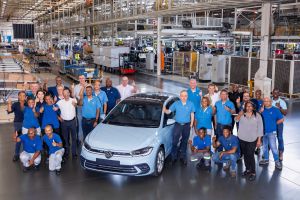
Volkswagen Group Africa (VWGA) has reached another major milestone with the production of the 500 000th unit of the current Polo for the export market.

OMODA has expanded its South African lineup with the arrival of the C5 SHS hybrid, a new addition to the C5 range.
 Advertisement
 Advertisement
You can't buy happiness but you can buy cars and that's kind of the same thing.
Unknown
Volkswagen Group Africa (VWGA) has reached another major milestone with the production of the 500 000th unit of the current Polo for the export market.
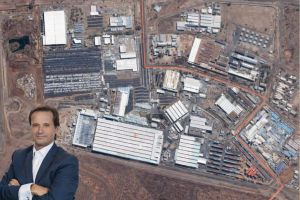
Nissan South Africa has agreed to sell its Rosslyn production facility after 60 years of operation. The plant, which produced models such as the 1400 ‘Champ’ bakkie, NP200 and Navara, was acquired by Chery SA. The Chinese automaker has sold over 80,000 vehicles locally since 2021 and is now strengthening its African presence.

Following an intense national selection process that pushed participants to the limit, South Africa’s representatives for the 2026 Defender Trophy global final have been decided.