
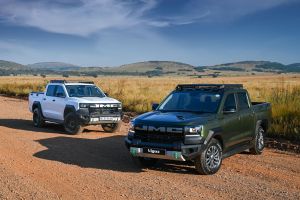
New JMC Vigus will make an impression
Following the official brand re-launch by the Salvador Caetano Group, JMC South Africa announce the arrival of the All-New JMC Vigus.
- Product News
- 17 April 2026
South Africa’s automotive landscape is shifting. While established brands remain strong, buyers are increasingly willing to explore alternatives that deliver better value, stronger features, and more contemporary engineering.
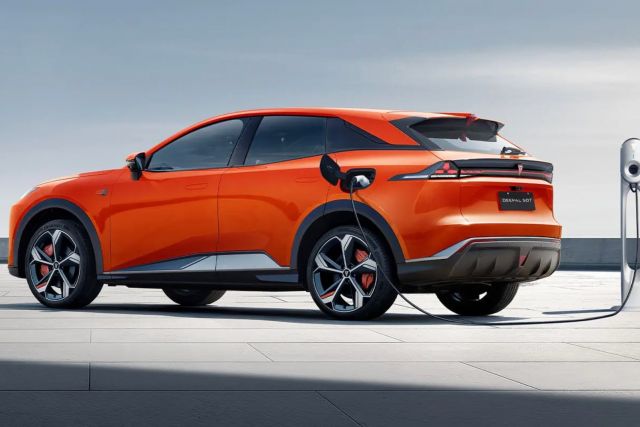
“We’re seeing a new kind of consumer confidence,” says Marinus Venter, Country General Manager for Jameel SA which imports Changan to South Africa. “People are no longer choosing brands based purely on heritage. They’re choosing based on what the product delivers today.”
This behavioural shift mirrors global patterns, where innovation-led manufacturers are gaining ground in markets once dominated by traditional badges.
As supply chains, manufacturing technologies, and international testing standards converge, quality is no longer the exclusive domain of long-standing brands. “Modern, global manufacturing has levelled the playing field,” Marinus explains. “Consumers now understand that excellence can come from anywhere, as long as the engineering is sound and the testing is thorough.”
New-era brands invest heavily in global R&D networks, cross-border engineering talent, and rigorous development cycles. Changan is a clear example, with multiple international design centres, joint ventures with top-tier global suppliers, and recognition as one of the world’s top automotive innovators. South Africans increasingly trust these credentials, especially when performance proves consistent on local roads.
Affordability alone is no longer enough. Consumers want value that blends technology, safety, design, and reliability into a single, attainable package. “The question customers are asking a lot less today, isn’t ‘Who made it?’” he says. “The question is ‘Does it give me more than I expected for the price I’m paying?’” This is where new-era brands excel. Their business models prioritise high specifications, cutting-edge safety systems, and advanced infotainment, not as costly add-ons, but as integral parts of the offering.
In an era of instant access to information, consumer trust forms quickly, and can shift just as fast. Real-world feedback, test-drive experiences, online reviews, and word-of-mouth now carry more weight than brand history. “South Africans trust what they can see and experience for themselves,” Venter notes. “If a brand delivers on quality, service, and everyday reliability, trust grows naturally.”
“This environment rewards brands that are transparent, customer-focused, and consistent in after-sales performance. Changan’s growing footprint in South Africa, supported by expanding dealer networks and strong parts availability, reinforces this trust-building model,” he explains.
The rise of new-era brands signals a powerful industry evolution: credibility must be demonstrated, not assumed. “As an industry, we’re moving into an era where trust is earned through action,” Marinus concludes. “Consumers want proof. They want value. They want modern engineering they can rely on. The brands that deliver on these expectations will define the future.”
Following the official brand re-launch by the Salvador Caetano Group, JMC South Africa announce the arrival of the All-New JMC Vigus.

Jetour South Africa hosted its inaugural Dealer of the Year Awards on Tuesday night, bringing together its national dealer network of nearly 60 dealerships.

South Africa’s motorists and automotive sector are facing a fresh layer of uncertainty as the Middle East conflict continues to disrupt global oil markets, but for now the country’s fuel supply remains stable even as costs rise.
 Advertisement
 Advertisement
You can't buy happiness but you can buy cars and that's kind of the same thing.
Unknown
South Africa’s motorists and automotive sector are facing a fresh layer of uncertainty as the Middle East conflict continues to disrupt global oil markets, but for now the country’s fuel supply remains stable even as costs rise.

Stellantis has struck a five year strategic partnership with Microsoft as it accelerates its shift towards software defined vehicles and digital services.
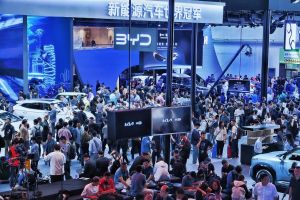
Auto China 2026 marks another milestone in the evolution of an event that has tracked China’s rise from emerging market to global automotive powerhouse.