A week of your life disappears into traffic jams every year. But what if artificial intelligence could give you that time back?
Share with friends
Nissan's latest innovation promises exactly that. The Japanese automaker has successfully tested a revolutionary traffic management system that reduced highway delays by 70% and virtually eliminated dangerous hard-braking incidents during real-world trials in California.
Traffic jams often seem mysterious; they appear from nowhere and persist long after their cause disappears. The culprit is human nature itself. We follow too closely, brake too hard and create cascading slowdowns that ripple through hundreds of cars.
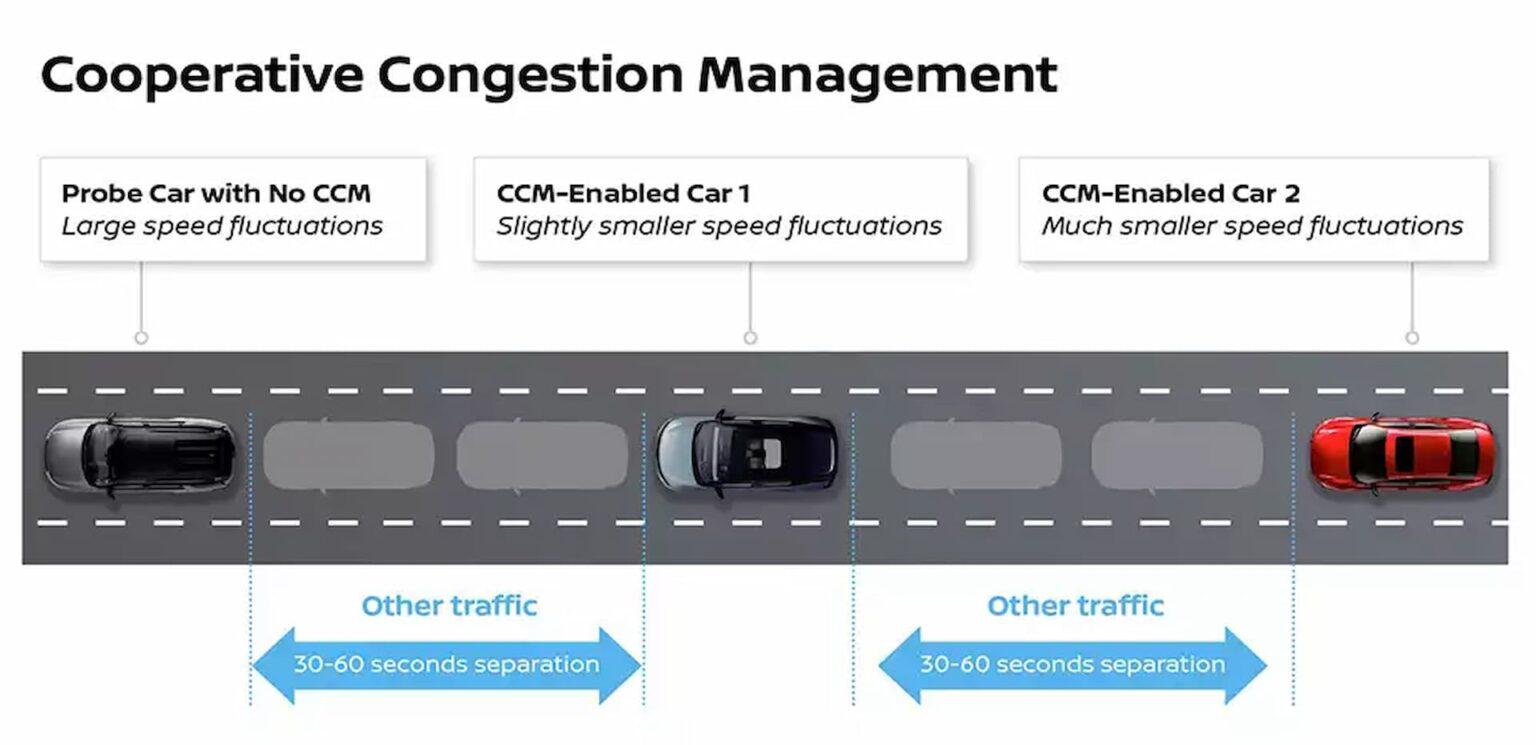
Cooperative Congestion Management (CCM) attacks this problem with machine intelligence. The system transforms regular vehicles into a coordinated network, sharing real-time traffic data to predict and prevent congestion before it forms.
Here's how it works: designated "probe" vehicles scan traffic conditions ahead and instantly transmit warnings to cars 30-60 seconds behind them. These trailing vehicles then make subtle speed adjustments, slowing gradually rather than slamming on brakes, creating a smooth buffer that absorbs traffic disruptions.
The technology builds on Nissan's existing ProPILOT Assist platform, using the same cameras and radar sensors already available in thousands of vehicles across America.
Interstate 680, one of the Bay Area's most congested corridors, became an unlikely laboratory for the future of driving. Nissan partnered with UC Berkeley researchers, transport officials and used federal funding to conduct the most comprehensive connected vehicle trial to date.
The numbers speak for themselves:
85% reduction in hard-braking events
70% less time stuck in stationary traffic
Dramatic decrease in dangerous tailgating
Projected 18% improvement in travel times at scale
Up to 42% better fuel efficiency system-wide
"The success of the trial, even with a small number of controlled vehicles, demonstrates how the system can begin to influence collective traffic behaviour," said Jerry Chou, senior researcher at Nissan's Silicon Valley lab.
The biggest obstacle wasn't technical; it was convincing drivers to trust the system. When CCM begins slowing a car in anticipation of distant congestion, many drivers fought back, manually accelerating to "close the gap".
This resistance highlights a fundamental challenge for semi-autonomous systems: they must work with human instincts, not against them. Nissan is developing smarter dashboard interfaces that explain the system's decisions in real-time, helping drivers understand why their cars are slowing down before trouble becomes visible.
"It requires cooperation. If drivers don't accept the solution, it will be difficult to implement," warned researcher Joy Carpio.
Unlike fully autonomous vehicles that remain perpetually "five years away", CCM could deploy tomorrow using existing technology. The system runs on standard 4G networks and integrates with current driver assistance features.
But widespread adoption faces hurdles beyond technology. Success requires critical mass, enough participating vehicles to meaningfully influence traffic patterns. Nissan hasn't announced commercial availability, though the promising trial results suggest the technology is moving from laboratory to production planning.
As fuel prices continue to climb across South Africa, many motorists are beginning to question whether owning a car still makes financial sense. With in-land petrol prices now at R26.63 a litre and diesel costs rising sharply in May, transport expenses are placing growing pressure on household budgets.
Pinewood.AI has added two new embedded modules to its Business Intelligence Solution, giving dealers and OEMs greater insight into financial performance and the customer journey, it says.
Pinewood.AI has added two new embedded modules to its Business Intelligence Solution, giving dealers and OEMs greater insight into financial performance and the customer journey, it says.
Margins are shrinking, customers are under financial strain, and competition is intensifying across South Africa’s motor retail sector. Against this backdrop, dealerships are being forced to rethink how they remain profitable while still building customer trust and long term sustainability.
Ford will launch seven new models in Europe by 2029, it announced recently, as it seeks to grow its flagging passenger car sales, fend off fierce competition from Chinese rivals and maintain an edge in the continent's commercial vehicle market.