Tesla to deliver first trucks in now-busy EV-truck market
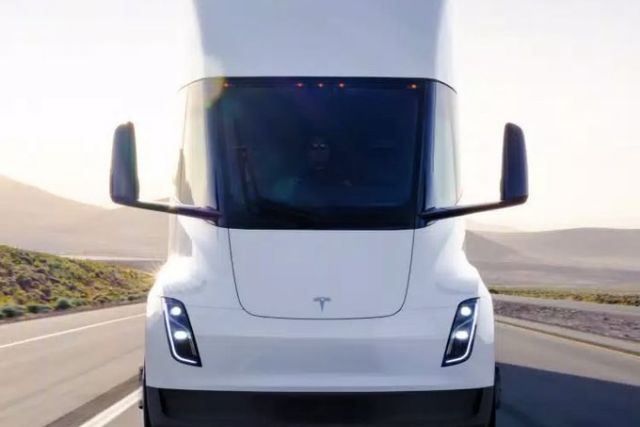
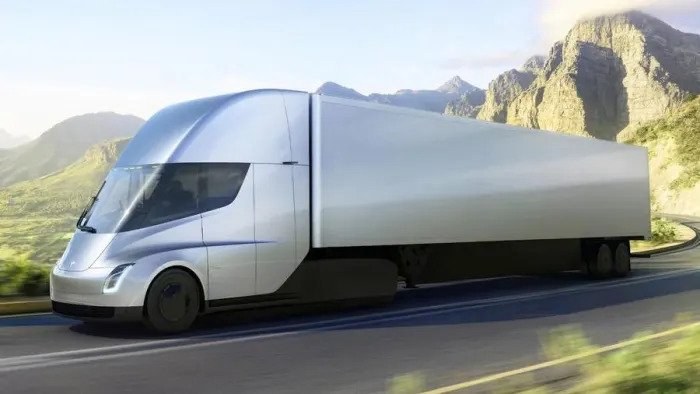
This past Thursday (6 October), Elon Musk tweeted that Tesla will be delivering their first electric trucks to food and beverage giant Pepsi on 1 December.
Share with friends
It came amidst the usual “oohs” and “aahs” that accompany any announcement by Musk, who seems to be revered as a demi-god by some. The only problem is that five years have elapsed since he initially announced that Tesla would be introducing electric trucks to the market and in this period other manufacturers seem to have been quietly getting on with introducing their own electric models in the same category.
Most notably was Amazon who started rolling out electric Rivian delivery vehicles as far back as June. Amazon’s aim is to have thousands of these vehicles in hundreds of US cities by the end of the year, which, when considered, casts considerable shade on Musk’s announcement last Thursday.
In Germany, Amazon is also in the forefront, in this case acquiring 20 Volvo FH Electric trucks that they hope will be fully operational by the end of the year. Again, this has been in the pipeline long before Musk’s recent Tweet.
Even South Africa is not lagging. KDG Logistics recently signed a Letter of Intent to purchase two Volvo FM 4x2 Electric Truck Tractors and these are expected to arrive during the second quarter of 2023.
The race for a share in this market is well advanced, and the South African-born innovator’s company does not have a runaway lead, despite what he might want his social media followers to believe.
The Kia Carens nameplate makes its return to South Africa, this time as a seven‑seater designed with families in mind. It combines Sport Utility Vehicle (SUV) styling with Multi-Purpose Vehicle (MPV) practicality, offering space, comfort and efficiency, Kia says.
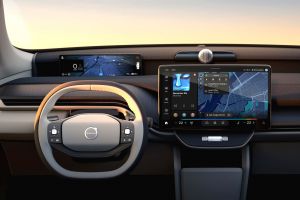
Volvo has confirmed that its vehicles will now integrate Google’s Gemini artificial intelligence system. This development builds on the company’s existing collaboration with Google, which already provides Android Automotive OS and Google services in Volvo models.
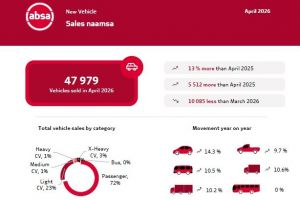
New vehicle sales in 2026 continued their positive trend in April, with the 47 979 units sold marking the best April figure since 2013. This represents a remarkable performance by local automotive retailers despite a host of economic headwinds and a challenging trading environment.
Volvo has confirmed that its vehicles will now integrate Google’s Gemini artificial intelligence system. This development builds on the company’s existing collaboration with Google, which already provides Android Automotive OS and Google services in Volvo models.
New vehicle sales in 2026 continued their positive trend in April, with the 47 979 units sold marking the best April figure since 2013. This represents a remarkable performance by local automotive retailers despite a host of economic headwinds and a challenging trading environment.
April 2026 marked a turning point in South Africa’s economic landscape, as global energy markets were jolted by escalating geopolitical tensions in the Middle East, according to naamsa | The Automotive Business Council.