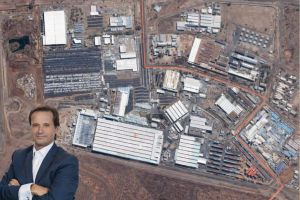
Andre Scholle, Vice President and Head of Region India, Turkey, MEA and CIS at ZF Aftermarket, argues that the disruption is not merely logistical but structural. “While this seems like a logistics problem on the surface, it is a strategic design flaw in global supply chain resilience and redundancy,” he explains.
For decades, Dubai has been the linchpin of trade between Europe, Africa and Asia. Its infrastructure and business-friendly environment made it a natural re-export hub, particularly for manufacturers and distributors seeking access to high-growth markets.
This centralisation was reinforced by the widespread adoption of Just-in-Time manufacturing, which reduces storage costs but depends on seamless logistics. He observes that “this focus on efficiency meant companies channelled vast amounts of trade through a few concentrated, highly efficient hubs, but this concentration created a single point of failure”.
The closure of the Strait of Hormuz has transformed this strategic gateway into a high-risk zone. Rising oil and gas prices, supply shocks to base materials and the rerouting of cargo have all added to costs. Customers in East Africa and Asia, once served reliably through Dubai, suddenly required alternatives.
Firms scrambled to reroute shipments around the Cape of Good Hope, switch to premium air freight or rely on trucking. These solutions are costly and unsustainable, underscoring the vulnerability of a system built on efficiency rather than resilience.
Andre insists that safeguarding staff must come before logistics. “No business strategy should override the obligation to keep staff safe,” he says. This may mean relocating regional offices temporarily or permanently, depending on how events unfold. Agility is essential, and scenario planning becomes a strategic tool. “Scenario planning is not about predicting outcomes, but about pre-authorising decisions before emotion and urgency take over,” he explains. Each scenario requires a decision tree so teams can act decisively in uncertain conditions.
Information discipline is another critical factor. Andre warns that “a critical error that business leaders can make is focusing on Western media for information on the path and trajectory of the conflict”. He argues that ground-level intelligence matters more than headlines when constructing resilient strategies. Relying on single-source reporting risks narrow assumptions that can undermine operational decisions.
Although Dubai’s logistics chains have not yet collapsed, Andre believes the time has come to diversify. “Whatever happens, the conflict in the Middle East and its impact on global supply chains have reaffirmed the value of a decentralised model and the importance of diversity in locations, with customer proximity creating more resilient logistics networks.” The lesson is clear: businesses that thrive in crises are those that prepare for every scenario and pivot quickly to seize opportunities in market dislocation.
Adaptability and flexibility are the hallmarks of resilience. As Andre concludes, “adaptability, flexibility and the ability to ramp up the business on demand offer businesses with a global footprint the competitive advantage they need when the regional hubs they have come to rely on go dark.”