

TVS powers South Africa’s growing delivery economy
South Africa’s rapidly expanding delivery sector is driving strong demand for affordable, dependable motorcycles that can withstand the demands of daily commercial use.
- Product News
- 20 November 2026
Dealers recorded another good month in June to end the second quarter strong.

New vehicle sales climbed in June to reach 47 294 units – up 7 444, or 18.7%, from the 39 850 units sold in June 2024. According to naamsa, the industry business council, this reflects a “sustained and broad-based recovery in consumer and fleet demand”.
Overall, out of the total reported industry sales of 47 294 vehicles, an estimated 40 621 units, or 85.9%, represented dealer sales; an estimated 8.2% were sales to the vehicle rental industry, 3.2% to industry corporate fleets, and 2.7% to government departments.
Passenger cars
The June 2025 new passenger car market, at 32 570 units, registered an increase of 5 807 cars, or 21.7%, compared to the 26 763 new cars sold in June 2024. Car rental sales accounted for 10.7% of new passenger vehicle sales during the month.
Light commercial vehicles
Domestic sales of new light commercial vehicles (bakkies and minibuses) reached 12 129 units during June 2025, an increase of 1 570 units, or 14.9%, compared to the 10 559 sold during June 2024.
Medium and heavy trucks
Sales in the medium and heavy truck segments of the industry showed a mixed performance in June 2025. Medium commercial vehicles totalled 652 units, an increase of 129 units, or 24.7%, from the 523 units sold in June 2024. Heavy trucks and buses recorded a decrease of 62 vehicles, or 3.1%, compared to the 2 005 units sold in the corresponding month last year.
Exports
Despite the growing toll of geopolitical and trade-related disruptions, vehicle exports increased by 2 647 units, or 7.9%, from 33 696 units in June 2024 to 36 343 units in June 2025.
For the first half of the year, new vehicle sales were 13.6% ahead of the corresponding period in 2024, supported largely by an influx of affordable imported models. Year to date (January to May 2025), new light vehicle imports by the OEMs increased by 25.6%, and by independent importers by 33.4%, compared to the same period in 2024. However, domestic sales by the OEMs of locally manufactured models decreased by 14.0% year to date compared to the same period last year.
“The first half of 2025 has shown just how resilient and responsive our domestic market truly is. Strong consumer demand, supported by positive economic fundamentals, has helped the automotive sector deliver impressive growth amid global turbulence,” says naamsa CEO Mikel Mabasa.
See more here.

South Africa’s rapidly expanding delivery sector is driving strong demand for affordable, dependable motorcycles that can withstand the demands of daily commercial use.
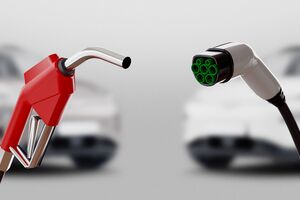
One of the main results of the 2026 Global EV Driver Survey, released by the Global EV Alliance (GEVA) this week, show that South African battery electric vehicle (EV) drivers are among the most satisfied in the world.
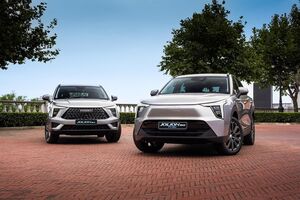
GWM South Africa has broadened its popular Jolion range with the introduction of the all-new Haval Jolion Max. Designed with modern families in mind, the newcomer combines increased interior space, new technology and a wider choice of powertrains, including petrol, hybrid and plug-in hybrid options.
 Advertisement
 Advertisement
Cars are the ultimate symbol of freedom, independence and individualism. They offer the freedom to ‘go anywhere,’ whenever it suits and with whom one chooses.
Sarah Redshaw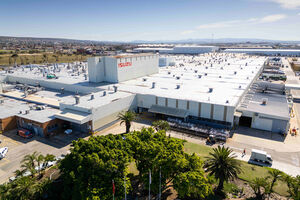
Isuzu Motors South Africa (IMSAf) has achieved a 38% reduction in Scope 1 and Scope 2 CO₂ emissions compared with its 2013 baseline while increasing vehicle production by 21% during the 2025/26 financial year at its Gqeberha manufacturing facility.

Diversifying oil supplies, investing in pipelines and rail infrastructure, improving port operations and expanding inland storage facilities are among the measures needed to reduce South Africa's vulnerability to international fuel supply disruptions.

Combined Motor Holdings (CMH) has appointed Charles Webber as the new Group CEO.