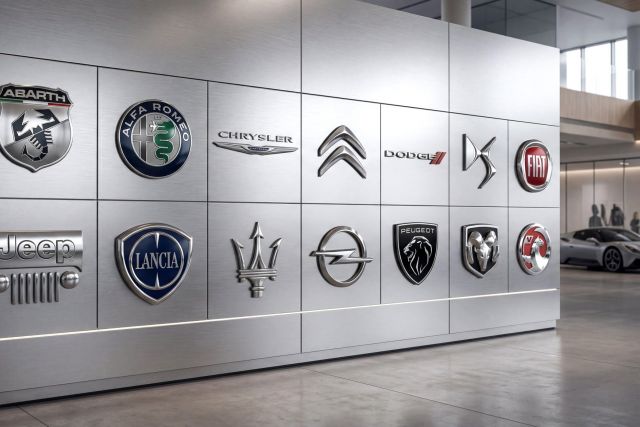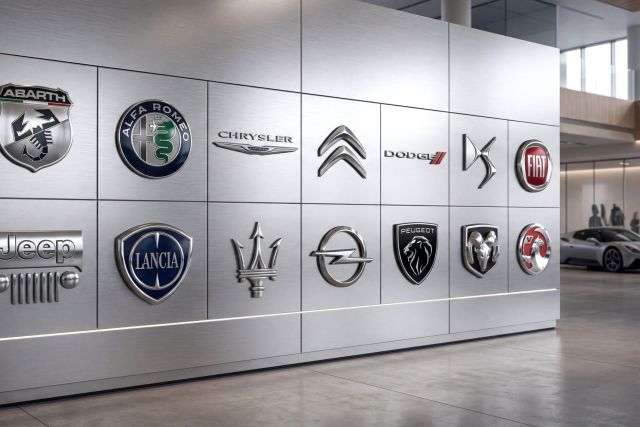
The world’s fourth largest automaker by sales is expected to unveil its long-term strategy in Detroit during May, with sources telling Reuters that the company plans a “material increase” in funding for the four core brands.
According to the report, other brands within the Stellantis stable, which includes Citroën, Opel, Alfa Romeo, DS and Lancia, are expected to continue receiving investment. However, their future role is likely to become more regional or market specific rather than global in focus.
Stellantis intends using lower volume brands tactically in countries or regions where they already have a strong following or growth potential. These brands could share platforms and technologies developed by the core marques while retaining unique styling, design features and driving characteristics.
The move marks a notable shift from the strategy pursued by former Stellantis chief executive Carlos Tavares, who reportedly preferred a more balanced distribution of investment across all 14 brands.
Antonio, who took over as chief executive last year, has reportedly been tasked with turning around the company’s fortunes after Stellantis lost ground in both the United States and Europe. The group is also under pressure from rapidly expanding Chinese automakers in Europe and emerging markets.
Reuters reported that Stellantis booked a 22.2-billion-euro charge in February as it scaled back some of its electric vehicle ambitions following weaker than expected EV demand.
The company, created in 2021 through the merger of Fiat Chrysler and France’s PSA Group, has also seen its market valuation tumble. Reuters noted that Stellantis is now valued at around 21 billion euros, only slightly above American EV startup Rivian and well below German giant Volkswagen.
Industry analysts and some investors have increasingly questioned whether Stellantis can continue supporting such a large portfolio of brands. Citroen, Opel, DS and Lancia have all reportedly been viewed as possible candidates for consolidation or closure according to the report in Reuters.
However, sources said Antonio does not currently favour shutting down brands, believing several still hold strategic value in specific markets.
"Some of those brands could prove useful to the group in the future, should market conditions evolve," says Marco Santino, a partner at consultancy Oliver Wyman.
He adds that once a brand had been closed it was "very hard to bring it back to life".
According to Reuters, Stellantis may increasingly rely on shared technology and platform strategies to reduce costs while maintaining brand diversity. One example already under discussion is an Opel branded electric SUV potentially being co-developed with Chinese partner Leapmotor.
A former Stellantis executive told Reuters that earlier strategies had been designed around a rapid transition to electric vehicles, something that ultimately “failed to materialise”.
Despite the renewed focus on its biggest brands, analysts believe Stellantis could still eventually reduce the size of its portfolio should market conditions worsen further.
“At some point Stellantis may have to sunset some brands. But they're going to have to make that decision based on the forward performance of the core brands,” says Larry Dominique, a consultant and former head of Alfa Romeo in North America.
Image: AI Generated.