
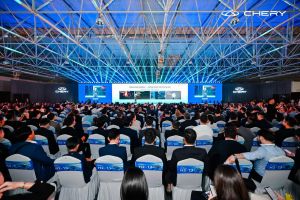
Funky wheels: China’s big drive in South Africa
No, the Chinese are not coming to take over – they are already busy accomplishing it.
- Industry News
- 4 May 2026
Stellantis has announced a new collaboration with NVIDIA, Uber Technologies Inc and Foxconn to explore the joint development and future deployment of *Level 4 (driverless) autonomous vehicles for robotaxi services worldwide.
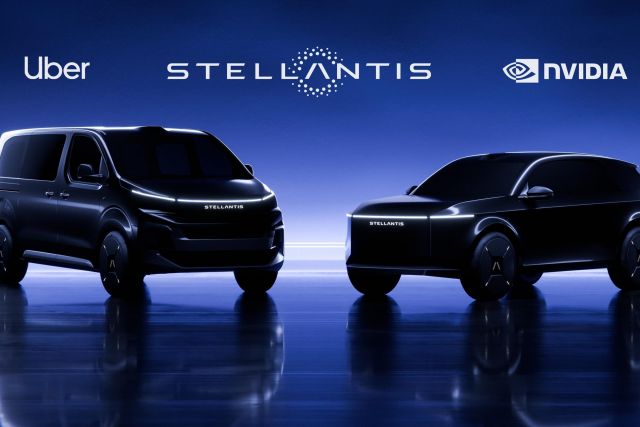
This initiative marks significant progress in Stellantis’s global robotaxi strategy, following its recently announced agreement with Pony.ai to test autonomous vehicles in Europe. Together, these efforts position Stellantis to play a significant role in the transition toward safe, efficient and sustainable autonomous transport.
Together, the companies intend to combine their strengths, namely Stellantis’s global vehicle engineering and manufacturing expertise, NVIDIA’s autonomous driving software and AI computing, Foxconn’s electronics and system integration capabilities, and Uber’s leadership in ride-hailing operations, to explore a new generation of Level 4 autonomous vehicles.
The collaboration will build on Stellantis’s AV-Ready Platforms, specifically the K0 Medium Size Van and STLA Small powered by the NVIDIA DRIVE AGX Hyperion 10 autonomous vehicle architecture, including the safety-certified NVIDIA DriveOS operating system and full-stack NVIDIA DRIVE AV software (NDAS) purpose-built for Level 4 autonomy.
Uber plans to deploy Stellantis autonomous vehicles in select cities worldwide, starting with 5 000 units, with initial operations beginning in the United States. Pilot programmes and testing are expected to ramp up over the coming years, with Start of Production (SOP) targeted for 2028.
Stellantis will design, engineer and manufacture autonomous vehicles based on its LCVs and STLA Small AV-Ready Platforms, integrating NVIDIA DRIVE AV software to enable Level 4 driverless capabilities.
NVIDIA will provide its NVIDIA DRIVE AV software, including L4 Parking and L4 Driving capabilities based on the NVIDIA DRIVE AGX Hyperion 10 architecture.
Foxconn will collaborate with Stellantis on hardware and systems integration.
Uber will operate the robotaxi services, expanding its fleet with Stellantis-built vehicles integrating NVIDIA DRIVE AV software.
This new initiative complements Stellantis’s recent partnership with Pony.ai, which was announced earlier this month, to co-develop and test Level 4 autonomous vehicles in Europe – a first step toward deploying robotaxi services on European roads.
*Level 4
This level is “mind off” automation. It is broadly similar to Level 3 in that the driver does not need to monitor the environment. In fact the driver could go to sleep as no driver intervention is needed even in emergency situations. However, this level of autonomy is only supported in limited areas or under certain circumstances such as traffic jams. Although some manufacturers have been working on Level 4 cars, in reality all their cars still require safety drivers. The one exception is Waymo, the self-driving car company founded by Google. Waymo’s fleet of ride-sharing vehicles are at Level 4 but the conditions in which they are allowed to drive are limited.
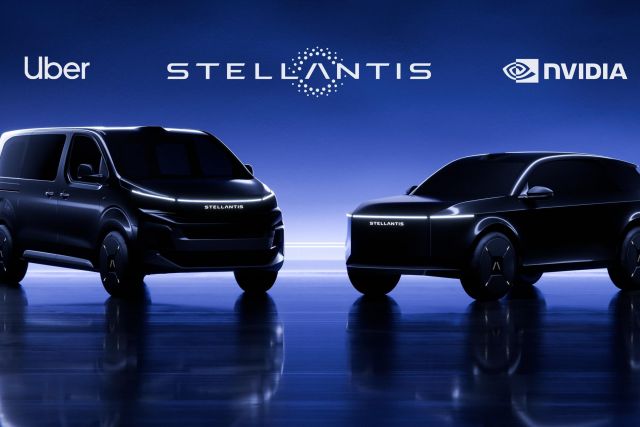
No, the Chinese are not coming to take over – they are already busy accomplishing it.

Motorists and households already under pressure will have to dig deeper into their pockets yet again from Wednesday, with sharp fuel and energy price hikes taking effect across South Africa.

Marcia Mayaba, Commercial Director at Dunlop Tyres South Africa, has been recognised as the top achiever at the recently held Woman of Stature Awards South Africa.
 Advertisement
Advertisement
Advertisement
I have bad reflexes. I was once run over by a car being pushed by two guys
Woody Allen
No, the Chinese are not coming to take over – they are already busy accomplishing it.
Motorists and households already under pressure will have to dig deeper into their pockets yet again from Wednesday, with sharp fuel and energy price hikes taking effect across South Africa.
Marcia Mayaba, Commercial Director at Dunlop Tyres South Africa, has been recognised as the top achiever at the recently held Woman of Stature Awards South Africa.