

Funky wheels: China’s big drive in South Africa
No, the Chinese are not coming to take over – they are already busy accomplishing it.
- Industry News
- 4 May 2026
Stellantis and Bolt have announced a partnership to jointly explore the development and deployment of Level 4 autonomous vehicles for commercial operations across Europe, marking a significant step to bring driverless mobility to the continent's streets.
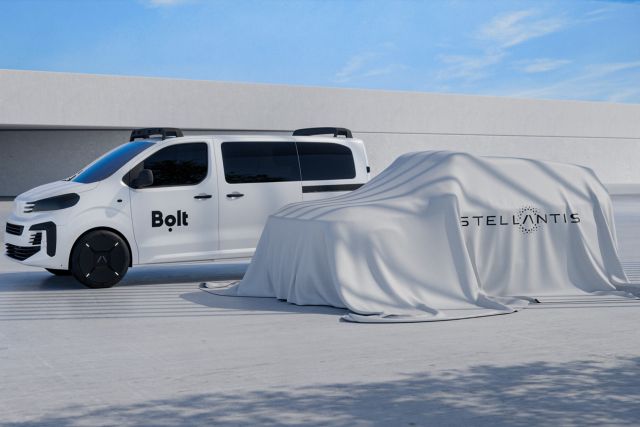
Bolt is an Estonian multinational mobility company headquartered in Tallinn that operates in over 600 cities across more than 50 countries in Europe, Africa, Western Asia and Latin America, offering ride-hailing, micromobility rental, food and grocery delivery, and car-sharing services. The company, founded in 2013 by Markus Villig, currently serves over 200 million customers worldwide.
The collaboration will combine Stellantis's AV-Ready Platforms, specifically the eK0 medium size van and STLA Small platforms, with Bolt's extensive mobility network. Bolt currently provides ride-hailing services in more than 50 countries, including 23 EU member states, and aims to integrate Stellantis's autonomous vehicles into its shared mobility platform to provide fully autonomous, driverless ride-hailing services.
Stellantis's AV-Ready Platforms are engineered for flexibility and scalability, integrating advanced sensor suites, high-performance computing and system redundancies to meet the highest safety and reliability standards whilst optimising total cost of ownership for service operators, making them one of the most competitive solutions in the industry.
The companies plan to begin deploying test vehicles for trials in European countries starting in 2026, with a strong focus on building a service that provides the highest safety and performance standards in Europe. Deployment will follow a phased approach, from prototypes and pilot fleets to progressive industrial scale-up, with an initial production target in 2029.
Both companies will work closely with European regulators to support a responsible approach to testing, certification and scalable deployment, in full alignment with applicable safety, data protection and cybersecurity standards.
For Stellantis, this collaboration expands its growing partner ecosystem in Europe and advances its global driverless mobility strategy. For Bolt, the partnership marks the next step in its ambition of having 100,000 autonomous vehicles available on its shared mobility platform by 2035.
Antonio Filosa, Stellantis CEO, said their AV-Ready Platforms are designed for maximum flexibility to deliver the best possible experience for European customers. He added that autonomous fleets can also contribute to a lower carbon footprint by enabling shared and optimised mobility, reducing congestion and emissions. Partnering with Bolt is intended to bring this vision closer to reality, combining engineering expertise with operational reach in the hope of making driverless mobility a trusted part of everyday life in Europe.
Markus Villig, Founder and CEO of Bolt, said the partnership brings together two companies that understand the specific dynamics of operating in Europe. He added that by combining Stellantis's AV-Ready Platforms and their operational expertise, they plan to create the best autonomous vehicle offering that is tailored for European needs, in line with European standards, that millions of people will be able to use.
No, the Chinese are not coming to take over – they are already busy accomplishing it.

Motorists and households already under pressure will have to dig deeper into their pockets yet again from Wednesday, with sharp fuel and energy price hikes taking effect across South Africa.

Marcia Mayaba, Commercial Director at Dunlop Tyres South Africa, has been recognised as the top achiever at the recently held Woman of Stature Awards South Africa.
 Advertisement
 Advertisement
I have bad reflexes. I was once run over by a car being pushed by two guys
Woody Allen
No, the Chinese are not coming to take over – they are already busy accomplishing it.
Motorists and households already under pressure will have to dig deeper into their pockets yet again from Wednesday, with sharp fuel and energy price hikes taking effect across South Africa.
Marcia Mayaba, Commercial Director at Dunlop Tyres South Africa, has been recognised as the top achiever at the recently held Woman of Stature Awards South Africa.