South Africa is grateful to be included in AGOA for now
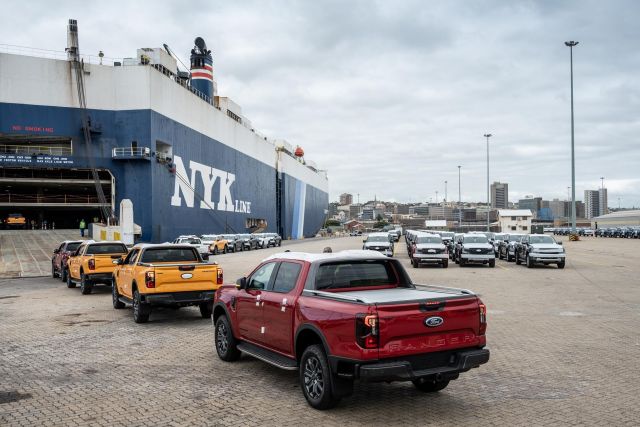
South Africa will remain as part of the African Growth and Opportunity Act (AGOA) for the time being, benefitting the country’s vehicle and automotive part exports.
Share with friends
Under AGOA, more than 1 800 South African products and goods were exported to the United States duty-free.
This decision was welcome by amongst others, the Motor Industry Staff Association (MISA), stating that the suspension of AGOA severely impacted South Africa's vehicle and part exports in 2025, plummeting by 55% to 80% year-on-year, falling from R26.5 billion (Jan-July 2024) to R9.8 billion in 2025.
Martlé Keyter, MISA’s Chief Executive Officer: Operations, says from the beginning of August 2025, South Africa was subjected to a 30% blanket tariff, which further increased the cost for US businesses importing vehicles from South Africa. This put South Africa at a significant disadvantage compared to other countries exporting vehicles to the United States, which only pay 25%.
Dawie Roodt, Founder and Chief Economist of the Efficient Group, told MISA that it is in the best interest of the South African automotive industry to be included in AGOA. “This means that Government should remain neutral on international issues where the US are involved instead of taking an opposing position in the best interest of the economy,” he says.
The South African Government is accused of pursuing a balancing act, trying to mend relations with the US while embracing its enemies. Dawie believes that nothing prevents President Donald Trump from revising South Africa’s position or excluding industries in the short extension period till December 2026.
Political analyst Professor Piet Croucamp disagrees. He believes that Trump is using trade to punish South Africa, using tariffs as a type of sanction for what he is led to believe about the country, the alleged white genocide being the driving factor.
“There is nothing wrong with South Africa’s foreign relationships. The country’s relationship with Iran for example, is insignificant when compared to other countries,” Piet says.
South Africa’s relationship with the US worsened after hosting Iran in long-planned naval exercises off its coast recently.
As fuel prices continue to climb across South Africa, many motorists are beginning to question whether owning a car still makes financial sense. With in-land petrol prices now at R26.63 a litre and diesel costs rising sharply in May, transport expenses are placing growing pressure on household budgets.
Pinewood.AI has added two new embedded modules to its Business Intelligence Solution, giving dealers and OEMs greater insight into financial performance and the customer journey, it says.
Pinewood.AI has added two new embedded modules to its Business Intelligence Solution, giving dealers and OEMs greater insight into financial performance and the customer journey, it says.
Margins are shrinking, customers are under financial strain, and competition is intensifying across South Africa’s motor retail sector. Against this backdrop, dealerships are being forced to rethink how they remain profitable while still building customer trust and long term sustainability.
Ford will launch seven new models in Europe by 2029, it announced recently, as it seeks to grow its flagging passenger car sales, fend off fierce competition from Chinese rivals and maintain an edge in the continent's commercial vehicle market.