Brandon Cohen, Chairperson of Nada, emphasises the industry's strategic initiatives to boost sales amidst evolving market dynamics.
TransUnion's Q3 market analysis reveals financially distressed consumers gravitating toward more affordable mobility options, reshaping the industry's landscape. According to the report, lower-income individuals now constitute a smaller portion of total vehicles financed, indicating economic constraints.
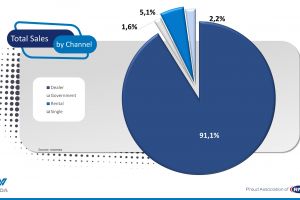
"The automotive industry is experiencing a notable shift, with dealers taking strategic steps to boost sales through innovative trade support initiatives. The collaboration with OEMs and Importers, coupled with flexible financing options, is creating a dynamic environment for dealers and consumers alike," notes Nada.
The support is predominantly facilitated by Original Equipment Manufacturers (OEMs) or Importers, aiming to stimulate sales amidst evolving market dynamics. Financial institutions are playing a key role by offering financing for up to 84 months, subject to internal criteria, with no balloon payment option at the end. Leasing and step-payment options are also being introduced by financiers to further support sales in the dealer environment.
Data from TransUnion indicates that new vehicle prices increased from 5.8% in Q3 2022 to 6.5% in Q3 2023. Despite the higher recommended retail pricing, dealers are adopting pragmatic strategies, responding to market forces that dictate the final sale price, often significantly divergent from the list price.
Delving into pricing dynamics, Q3 2023 witnessed an array of discounted vehicles, cash-backs and buying support across various vehicle brands.
"This underscores the depth of the pricing strategies adopted by dealers and their OEMs to stimulate new vehicle sales. The market is evolving, and consumers are benefiting from these unprecedented opportunities," comments Brandon Cohen.
Furthermore, the impact of these pricing strategies is evident in the used-to-new vehicle financing ratio, reflecting a shift in consumer preferences. The ratio decreased from 2.05 in Q3 2022 to 1.41 in Q3 2023, indicating a preference for financing new vehicles over used ones. This shift is attributed to the attractive opportunities presented by new vehicles, including support and discounts, as well as the introduction of new entry-level models from existing players and Chinese brands.
"The automotive landscape is evolving rapidly, with dealers adapting to changing consumer demands and market conditions. As pricing strategies continue to reshape the industry, both consumers and dealers stand to benefit from the dynamic and flexible nature of the current market," concludes Brandon.