SA car market shows resilience as Chinese brands accelerate rise
South Africa’s automotive market ended 2025 on a stronger footing than many expected, demonstrating notable resilience in the final quarter of the year, according to the Q4 2025 Mobility Insights Report from TransUnion.
Share with friends
Improved affordability, lower interest rates and strengthening consumer confidence helped drive a recovery in vehicle demand, while the rapid expansion of Chinese brands continued to reshape the competitive landscape.
A resilient end to 2025:
The South African new passenger vehicle market recorded its strongest performance in more than a decade during 2025. Total sales reached 422 103 units, representing year on year growth of 20.1 percent and marking the highest level since 2014.
The recovery was particularly visible in the final quarter of the year, when 114 246 vehicles were sold, the strongest quarterly result since the third quarter of 2014.
Although the pace of growth moderated slightly toward the end of the year, volumes remained robust. Sales in the fourth quarter rose by 15.3 percent year on year.
Several macroeconomic factors supported this improvement. South Africa’s broader economic environment began to stabilise during 2025, with modest growth, easing inflation and a stronger rand contributing to improved consumer confidence. GDP growth reached around 1.5 percent in the final quarter, while the full year expansion came in at roughly 1.1 percent, signalling a gradual recovery after several years of stagnation.
Lower borrowing costs also played a crucial role. Six interest rate cuts since late 2024 helped restore affordability and improved access to vehicle finance, allowing more consumers to re-enter the market. The strengthening rand, which moved from about R18.54 to the US dollar in early 2025 to around R17.00 by the fourth quarter, also helped ease import costs and reduce pricing pressure on new vehicles.
Demand returns to the new vehicle market.
The new vehicle market shines:
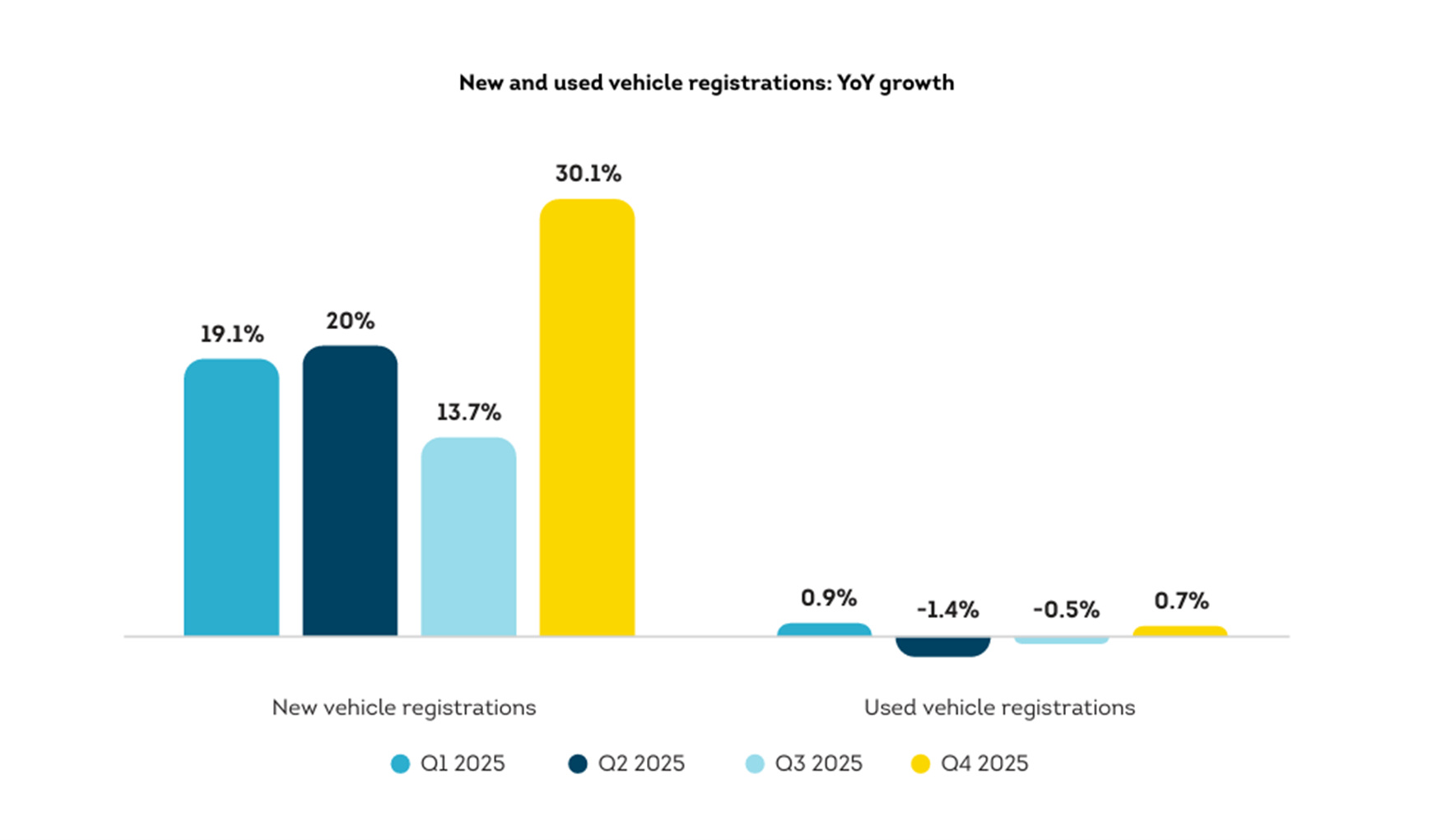
One of the most significant developments during the final quarter of 2025 was the shift in demand back toward new vehicles. Registrations of new vehicles increased by 30.1 percent year on year in the fourth quarter, while used vehicle registrations grew by only 0.7 percent.
This widening gap reflected improving affordability as well as narrowing price differences between the two segments.
As a result, the traditional used to new vehicle ratio declined significantly, falling to 2.9 in the fourth quarter from roughly 3.8 during much of 2024. More buyers therefore chose to purchase new vehicles rather than nearly new alternatives.
The popularity of the Chinese brands could clearly be seen here.
The rapid rise of Chinese brands:
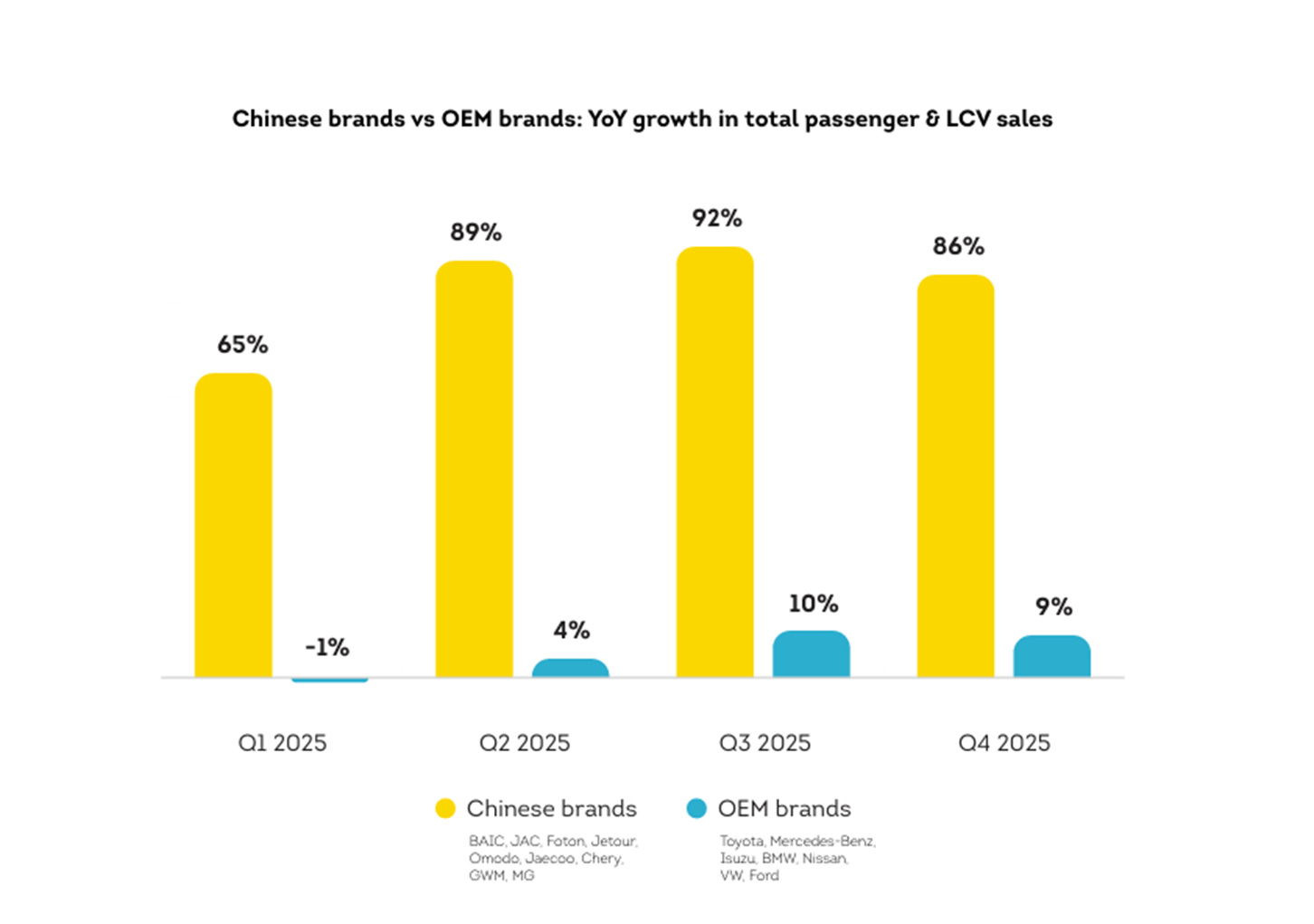
Perhaps the most striking structural shift in the South African automotive market is the rise of Chinese manufacturers. While established brands continued to dominate overall sales volumes, Chinese brands recorded significantly faster growth during 2025.
Collectively, Chinese manufacturers expanded at nearly nine times the pace of the broader market, with year-on-year growth of around 89 percent, 92 percent and 86 percent across successive quarters in 2025.
By the end of the year their combined market share had exceeded 17 percent, meaning that nearly one in five vehicles sold in South Africa originated from a Chinese manufacturer. This share has more than quadrupled since early 2021.
The growth has been driven by several factors. Competitive pricing remains central to the success of these brands, but it is increasingly supported by improved product quality, high levels of specification and aggressive warranty offerings. Some manufacturers now offer warranties of up to ten years or one million kilometres, reducing perceived risk for both buyers and lenders.
Chinese brands are also steadily moving beyond the entry level segment. New sub brands and premium offerings are targeting mid-range and higher end customers with well-equipped models at prices that often-undercut traditional competitors.
This strategy is reshaping the broader sales ecosystem. Competitive pricing from Chinese manufacturers is placing pressure on dealer margins and forcing established brands to respond with stronger incentives and discounts.
From importers to local manufacturers:
Another significant development is the shift from pure import operations to deeper industrial investment. The narrative around Chinese brands in South Africa are no longer limited to sales growth but increasingly includes localisation.
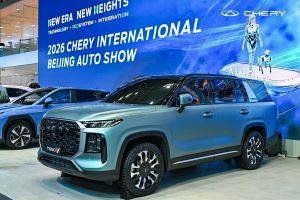
A major example is the agreement for Chery to acquire the former Nissan manufacturing plant in Rosslyn, with the transaction expected to be completed around mid-2026. The facility includes the factory, land and stamping operations and could become an important production hub.
At the same time, government is actively engaging with several global manufacturers about possible local production. Trade and Industry Minister Parks Tau confirmed discussions with companies including BYD, Suzuki and Proton regarding the establishment of manufacturing facilities in South Africa.
If realised, these investments could mark the beginning of a new phase for the industry, shifting Chinese brands from import disruptors to fully integrated participants in the local automotive ecosystem. Such developments would support employment, strengthen supply chains and reinforce South Africa’s role as an automotive manufacturing hub.
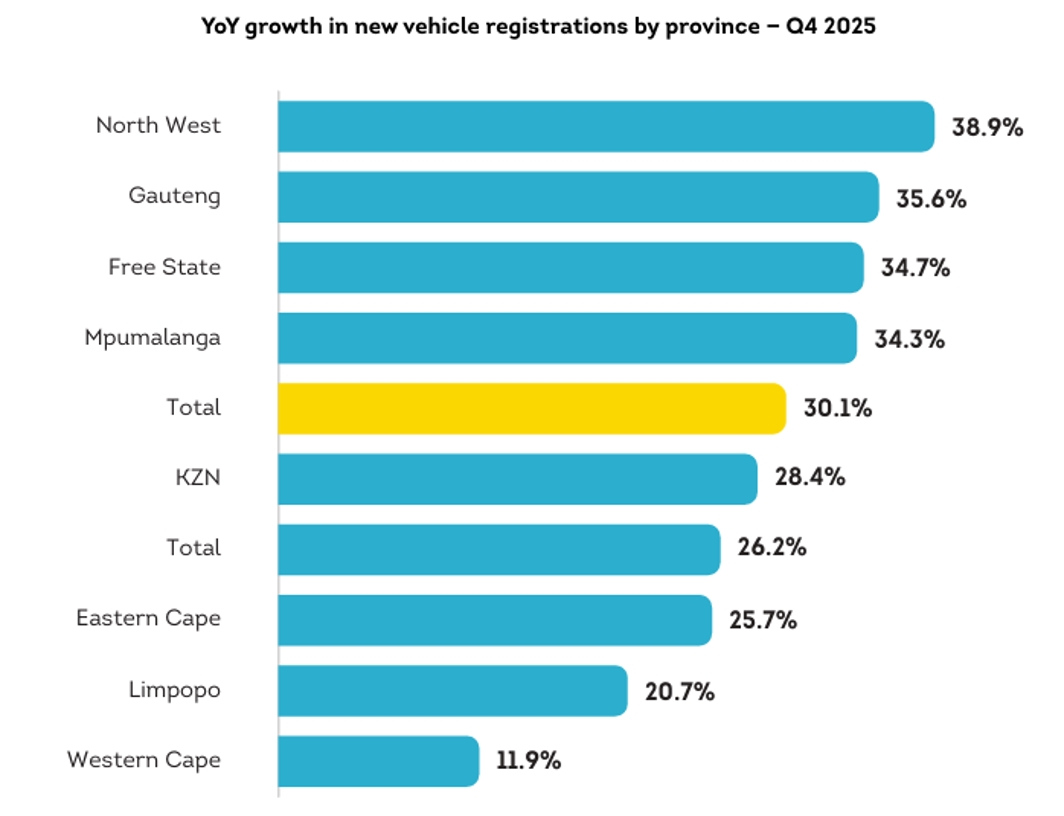
Interesting graphic indicating the year on year growth of vehicle registrations in the different provinces in the country.
Looking ahead:
As the industry enters 2026, the overall outlook remains cautiously positive. Economic growth is expected to remain modest, with forecasts suggesting expansion of around 1.4 percent to 1.6 percent over the next two years. While structural challenges remain, improving household finances and easing borrowing costs should continue to support vehicle demand.
Zero Carbon Charge (CHARGE) welcomes the government’s extension of short term fuel levy relief measures aimed at cushioning consumers from rising fuel prices, but cautions that these interventions do not address the underlying structural challenge facing South Africa’s transport economy.
At Auto China 2026 this weekend, President of Jetour International, Ke Chuandeng, made the announcement that from 2027, Jetour will be producing some of their models locally in South Africa
At Auto China 2026 this weekend, President of Jetour International, Ke Chuandeng, made the announcement that from 2027, Jetour will be producing some of their models locally in South Africa
Changan has unveiled its ambitious “1+4+4+5” global strategy, signalling a determined push to become one of the world’s top ten automotive brands by 2030.